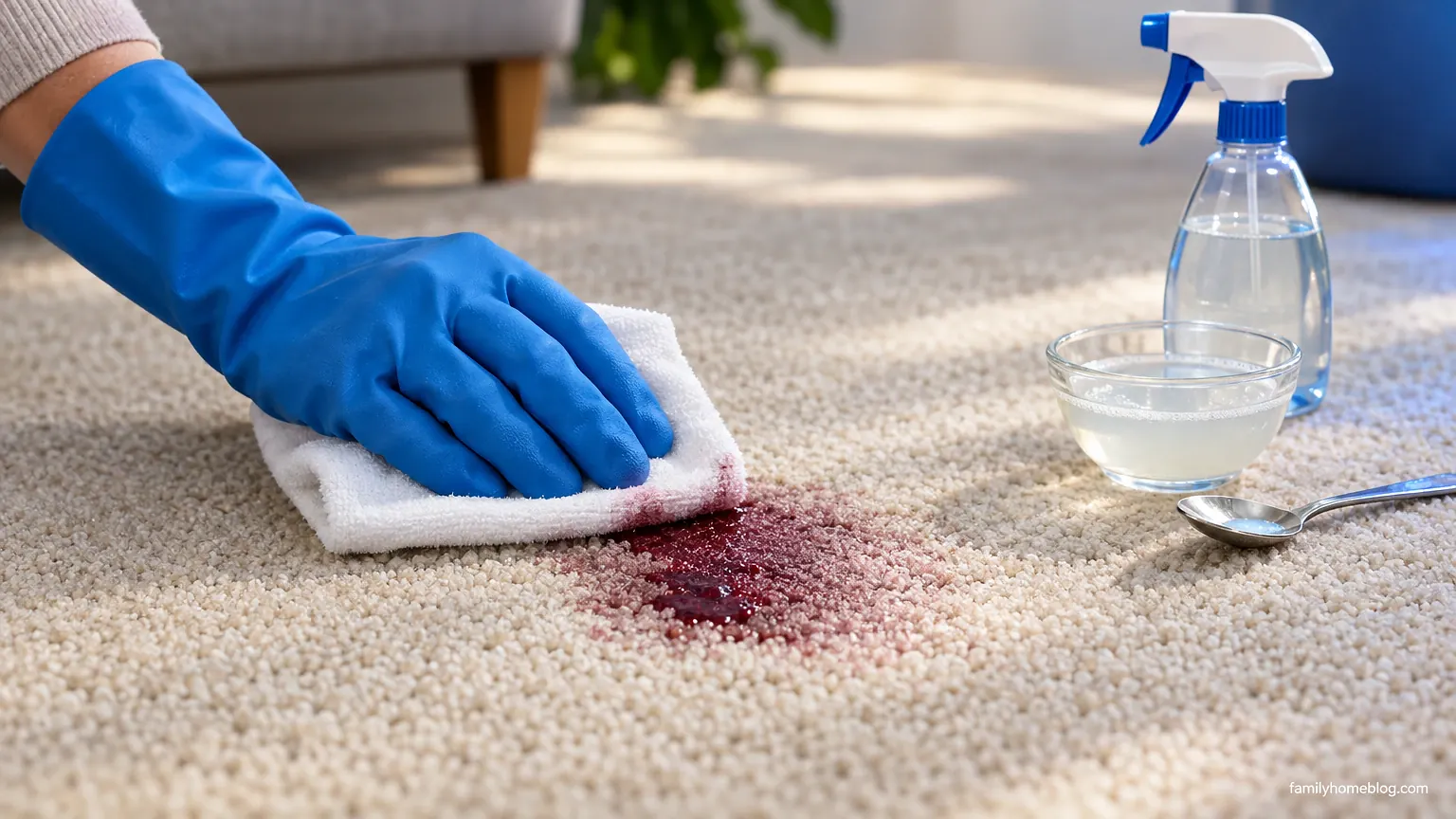
Fresh stains lift easily, but a stain that dries for 24 hours can bond to nylon fibers. Most carpet is nylon or polyester, so the same core method works on nearly everything. Blot, treat, rinse, blot again.
This guide covers how to remove stains from carpet using supplies you likely own. It names the combinations that are dangerous and the fibers that will be damaged. Before you start, check the weave of your carpet designs and test any solution on a hidden spot first.
The universal method for fresh stains
Work from the outside edge toward the center. That keeps the stain from spreading into clean fibers.
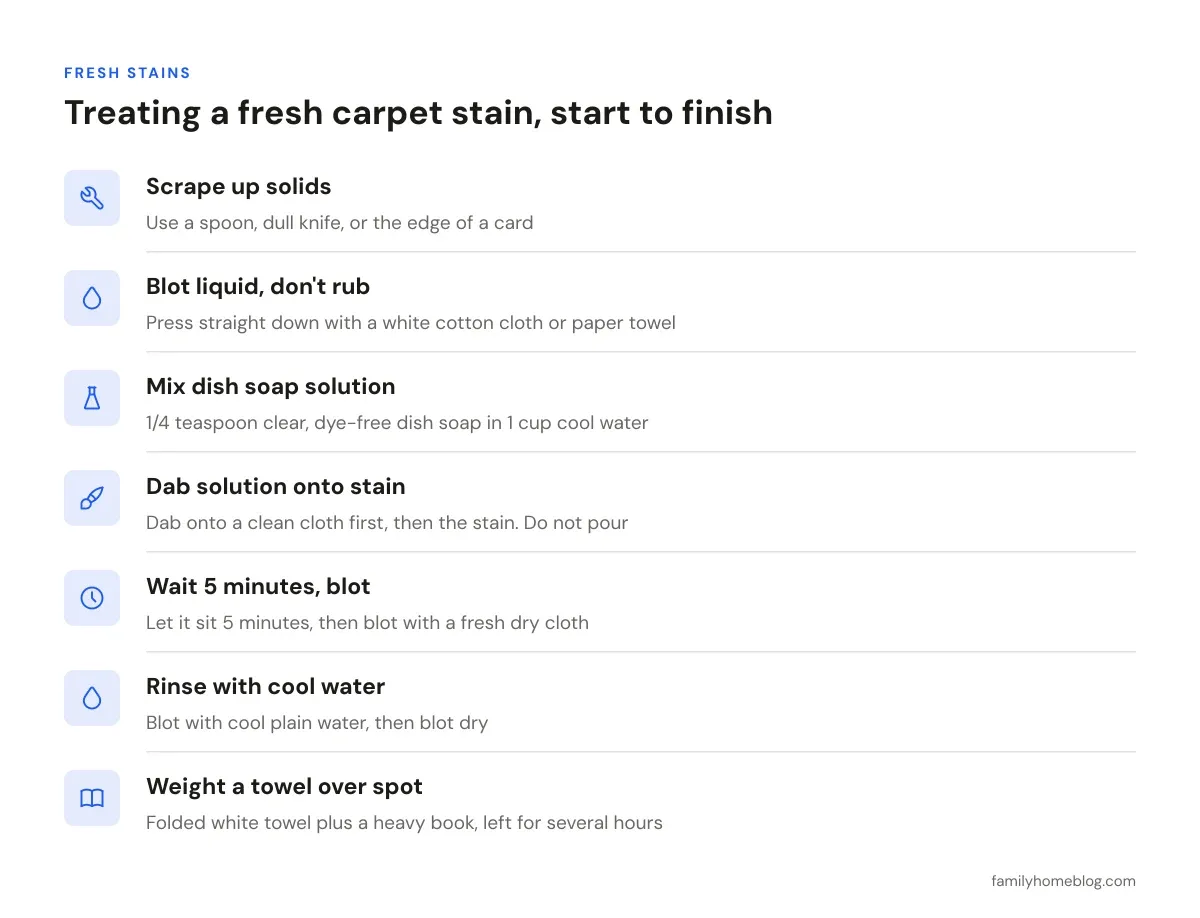
- Scrape up any solids with a spoon, dull knife, or the edge of a card.
- Blot liquid with a white cotton cloth or plain white paper towels. Press straight down. Never rub, because rubbing frays fibers and drives the stain into the backing.
- Mix 1/4 teaspoon of clear, dye-free dish soap into 1 cup of cool water.
- Dab the solution onto a clean cloth, then onto the stain. Do not pour it on.
- Let it sit 5 minutes, then blot with a fresh dry cloth.
- Rinse by blotting with cool plain water, then blot dry.
- Lay a folded white towel over the spot with a heavy book on top. Leave it for several hours so it wicks out remaining moisture.
Use white cloths only. A colored towel can transfer dye to wet carpet.
Match the stain to the treatment
The right treatment depends on what made the mark. Use this table once the dish soap step has not finished the job.
| Stain type | First treatment | Dwell time |
|---|---|---|
| Coffee, tea, juice | Dish soap solution, then 1:1 white vinegar and water | 5 minutes |
| Red wine | Blot, then dish soap solution; skip salt | 5 to 10 minutes |
| Grease, butter, makeup | Dry cornstarch or baking soda, then solvent-free dish soap | 15 minutes powder, 5 minutes soap |
| Pet urine | Enzyme cleaner made for carpet | Per label, often 10 to 15 minutes |
| Blood | Cold water only, then dish soap solution | 5 minutes |
| Ink | Isopropyl alcohol on a cloth, dabbed | Blot immediately |
Hot water sets protein stains such as blood, milk, and egg. Stay with cool or cold water for those.
Stains that need a different approach
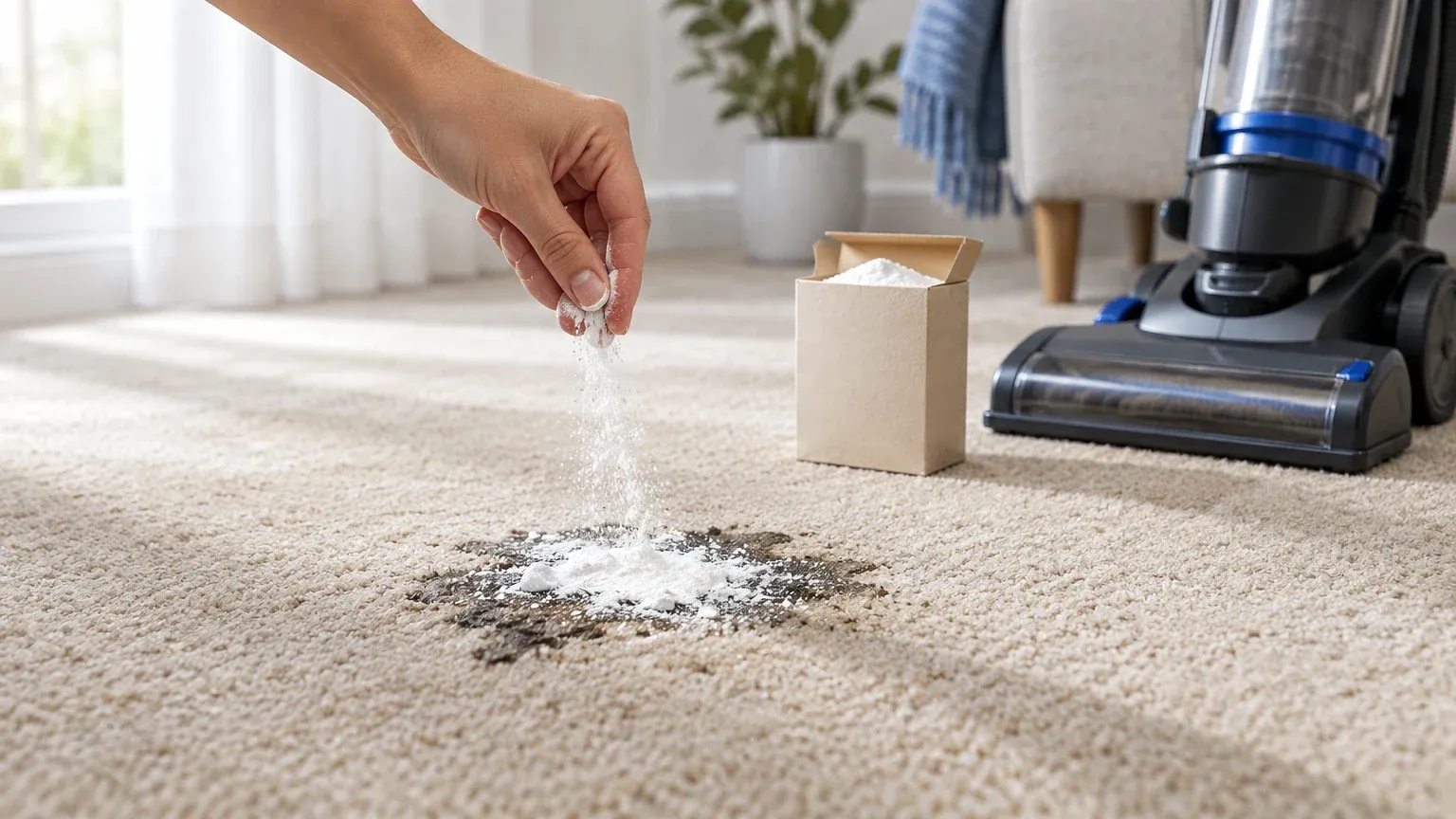
Grease repels water, so soap and water alone often leave a ring. Sprinkle cornstarch or baking soda over the spot and leave it 15 minutes. Vacuum it up, then treat with the dish soap solution. The powder pulls oil out of the fibers before you add moisture.
Ink is different again. Dab 70 percent isopropyl alcohol onto a cloth and blot the mark from the edges inward. Change cloth faces often so you are not redepositing ink. Never pour alcohol straight on the carpet, because it can dissolve latex backing glue.
Pet urine needs an enzyme cleaner, not a household substitute. The enzymes break down uric acid crystals. Without them, the smell returns on humid days and draws the pet back to the same spot. Soak the area according to the product label and let it air dry fully.
What not to mix, and what not to use
Never combine bleach with ammonia. Ammonia is in many glass cleaners and some pet-stain products. The two produce chloramine gas, which the CDC warns can cause coughing, chest pain, and breathing trouble. Never mix bleach with vinegar either, since that releases chlorine gas. Never mix hydrogen peroxide with vinegar in one container, because it forms peracetic acid, a corrosive irritant.
Use each product on its own, rinse between attempts, and open a window. Read the label on any commercial cleaner for ventilation instructions.
Some fibers punish the wrong product. Wool and silk are damaged by chlorine bleach and by alkaline cleaners, which can yellow or weaken the fiber. Most manufacturers advise using only wool-safe cleaning products. If you have wool, natural-fiber, or antique rugs, skip the home recipes and call a certified cleaner.
When the stain comes back
A stain that reappears after drying is called wicking. Residue and deeper moisture rise up the fibers as the carpet dries. Soap left behind makes it worse, because sticky residue attracts new dirt within days.
The fix is a thorough rinse. Blot with cool water until the cloth comes up clean, then lay a dry towel over the spot with a weight on top. Swap the towel when it feels damp. For stubborn browning on light carpet, spray a 1:1 white vinegar and water mix, blot, and let it dry before repeating.
If a stain fails twice, stop. Repeated wet treatments can soak the pad underneath and promote mildew. A rented hot-water extraction machine, or a professional, is the better second attempt. Heat-set protein stains and dye stains from products like hair color often need a pro regardless.
Quick finish and next steps
Once the spot is dry, run a vacuum over it to lift flattened fibers. Pile that still looks stiff can be brushed gently with a soft-bristle brush.
Keep a small kit within reach: white cloths, clear dish soap, a spray bottle, and isopropyl alcohol. Speed matters more than technique. Knowing how to remove stains from carpet in the first five minutes prevents most permanent marks.
If you are choosing or replacing flooring, stain behavior is one factor worth weighing. Textured, patterned, and mid-tone carpet designs hide marks better than solid light colors.
Frequently asked questions
Can I use baking soda and vinegar on carpet stains?
Yes, but separately. The fizz looks active, but the reaction mostly produces salty water and leaves residue. Use vinegar diluted 1:1 with water, blot, rinse, and use baking soda only to absorb grease or odor, then vacuum it up.
How long can a stain sit before it becomes permanent?
There is no fixed deadline. Wine, coffee, and pet urine start bonding with fibers within hours. Acid dyes in drink mixes can stain nylon within minutes. Treat anything within the first 10 minutes if you can.
Is it safe to use a steam cleaner on a fresh stain?
Not before you remove the stain. Heat sets protein stains such as blood, egg, and milk. Treat with cool water first. Steam or hot-water extraction works best afterward, as a deep rinse.
Does salt really lift red wine from carpet?
It absorbs some liquid, but it can leave a crusty residue and does not break down the pigment. Blotting and a dish soap solution work better. Skip club soda too, since it is mostly water.