

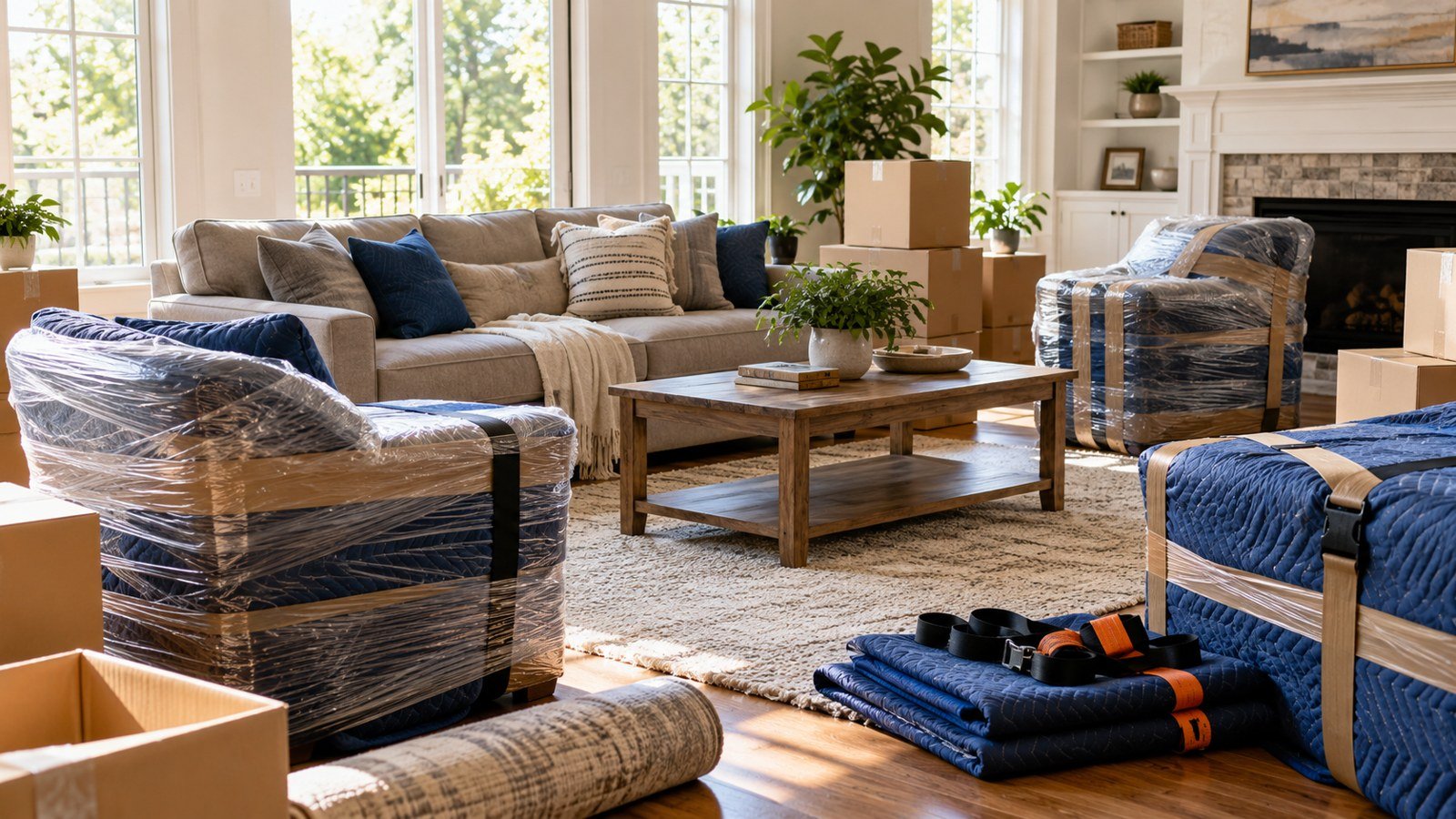
Hey there, future mover! Moving furniture is easier, and safer, when you know the mistakes to avoid. Are you going to take your couch? Does anybody want to move a couch and your grandma’s old dresser? Let’s be real, understanding what you should not do is just as crucial as understanding something that you should do.
Key takeaways
- Gather the right tools, like dollies, lifting straps, and sliders, before moving furniture day begins
- Plan a pivot path for bulky pieces and measure tight spots so you know which angle to use
- Load the truck with heavy furniture first, against the cab wall, and strap each tier securely
- Check your furniture for damage right after delivery and note any issues with your mover promptly
Forget about it, let us look at the classic blunders of moving furniture and looking at how we can avoid making the same mistakes.
Skip the Planning Phase? No Way
One of the biggest mistakes? Diving in without a game plan! Don’t just start moving furniture without:
- Measuring doorways and hallways
- Creating a clear path to move items
- Checking weather forecasts
- Planning which pieces go where in your new place
- Having the right tools and materials ready
Remember: A little planning now saves a lot of headaches later!
Don’t Go Solo
Heavy furniture and us do not mix very well. In such cases or even in the ordinary from time to time, sure you could benefit from help moving furniture. Most likely you will require assistance in relocating furniture – be it help from friends, family, or professional movers.
Don’t Forget to Disassemble
Keeping furniture intact when you should break it down is a classic rookie mistake. Don’t try to move:
- Bed frames without taking them apart
- Tables with removable legs still attached
- Sectional sofas in one piece
- Dressers with drawers full of items
Take photos before disassembly – your future self will thank you when it’s time to put everything back together.
Don’t Skip the Protection
Leaving furniture unprotected is like sending it into battle without armor. Don’t forget to:
- Wrap wood furniture to prevent scratches
- Cover upholstered items to keep them clean
- Protect corners and edges
- Use proper moving blankets (not just old bedsheets)
- Secure wrap and padding with quality tape
Improper Lifting Techniques? Just Don’t!
Your back is not your enemy, so don’t treat it like one. Avoid:
- Lifting with your back instead of your legs
- Twisting while carrying heavy items
- Trying to lift items that are too heavy
- Rushing through the moving process
- Ignoring your body when it says "enough"
Don’t Drag or Push
That old trick of sliding furniture across the floor? Leave it in the past. Don’t:
- Drag furniture across any type of flooring
- Push heavy items instead of lifting them
- Use makeshift slides that aren’t proper furniture sliders
- Risk damaging your floors or furniture
Don’t Ignore Weather Protection
Mother Nature doesn’t care about your moving schedule. Don’t:
- Move furniture in heavy rain without protection
- Leave items exposed to direct sunlight for long periods
- Ignore weather forecasts
- Skip weatherproofing when necessary
Don’t Forget About Your New Space
What fits in your current home might not work in your new one. Don’t:
- Assume furniture will fit through all doorways
- Forget about elevator dimensions
- Ignore building regulations about moving hours
- Skip measuring stairways and hallways
Why Professional Movers Make a Difference
When it comes to moving furniture, professional moving companies bring expertise that can make all the difference. They have:
- Proper equipment and tools
- Training in lifting techniques
- Experience with tricky spaces
- Insurance coverage
- Knowledge of building requirements
- The right number of people for each job
These pros know exactly how to handle everything from delicate antiques to bulky sectionals, making your move smoother and safer.
Final Don’ts to Remember
Don’t:
- Forget to empty all drawers and cabinets
- Leave items inside appliances
- Skip labeling furniture parts and hardware
- Rush the process
- Ignore the need for insurance
- Forget to protect your floors
- Skip the final walkthrough
The Smart Alternative
Consider this, in your quest to save money, a DIY move may appear to be ethical and effective on the outside, however, many unexpected costs arise arising from damage, injuries, or needless to say time. The professional services of a moving company would show how to move furniture properly and quickly. As well as spares the client energy and resources in the relocation of the position, especially for valuable or disproportionate ones.
Wrap-Up
The relocation of furniture or even simply moving house does not have to be a traumatic experience. It is now possible to move such possessions to a new house ecosystem safely by heeding and avoiding these mistakes. Taking time while moving should and will not entail moving from point A to Point B but moving in covering the consumer body as well as low investments.
And hey, if any of this still sounds wow, then that is exactly why there are usually professional movers. They have done everything and seen everything. They know exactly how to make sure these pitfalls do not happen. Let them handle the heavy lifting sometimes.
Essential Tools and Supplies for Moving Furniture Safely
Having the right equipment ready makes moving furniture safer and far less stressful. A hand truck or appliance dolly handles dressers, file cabinets, and appliances, while a four-wheel furniture dolly works well for long, heavy items like sofas and pianos. Lifting straps help two people share weight and keep their backs straighter. Check that each dolly has good tires and working straps before you load anything onto it.
Furniture sliders are useful for shifting heavy pieces short distances inside the house, as long as you choose the right type for your flooring, such as hard plastic for carpet and felt for hardwood. You will also need a basic tool kit, zip bags for screws and bolts, stretch wrap, moving blankets, and sturdy tape. Many of these items can be rented rather than bought. Rental shops and truck rental companies often offer dollies, straps, and blankets by the day, which can be cheaper than buying items you may only use once.
- Hand truck and four-wheel furniture dolly
- Lifting straps for two-person carries
- Sliders matched to your floor type
- Screwdrivers, hex keys, and labeled zip bags
- Moving blankets, stretch wrap, and strong tape
How to Get Bulky Furniture Through Tight Doorways and Stairs
Measuring is only half the job. You also need to plan how a piece will move through a space. Sofas often fit through narrow doors when stood on end and hooked around the frame, while armchairs may need to be tilted back and turned. Removing the door from its hinges can add a small but helpful amount of clearance. Protect door frames and banisters with blankets or corner guards before you start.
On stairs, the stronger person should usually take the bottom end, since they will carry more weight, and both people should agree on simple commands like lift, stop, and set down. Move slowly, keep the load close to your body, and rest on landings. If a piece truly will not fit, consider whether legs, feet, or cushions can come off, or whether a professional with hoisting experience is needed. Wear gloves for better grip and closed-toe shoes with good traction, and clear pets, toys, and rugs from the path before lifting.
Loading a Moving Truck the Right Way
How you load the truck affects whether your furniture arrives in one piece. Start with the heaviest and largest items, such as appliances, dressers, and headboards, placing them against the wall nearest the cab. Stand mattresses and sofas on end along the sides to save space, and keep weight evenly distributed from side to side. Keep a clear walkway from the house to the ramp, and never carry items up a ramp that is wet or icy. Use a loading ramp rather than lifting items straight into the truck bed whenever possible.
Build the load in tiers from floor to ceiling, filling gaps with boxes and soft items so nothing can shift. Use ratchet straps or rope to secure each tier to the truck’s tie-down rails. Place fragile or delicate pieces last so they are unloaded first and do not have heavy items resting on them. Keep a box of essentials, tools, and hardware bags near the door so they are easy to reach first.
At the new home, unload in reverse order and place each piece directly in its final room to avoid moving it twice. Have a floor plan or sketch ready showing where each large piece should go, so helpers can place items without waiting for directions. Reassemble beds first so everyone has a place to sleep on the first night in the new home.
Frequently Asked Questions
What is the safest way to move heavy furniture by yourself?
Ideally, do not move heavy furniture alone. If you must, use furniture sliders to shift items across the floor and a dolly for lifting and transport. Empty drawers, remove detachable parts, and never lift more than you can comfortably control. For very heavy or valuable pieces, get help or hire professional movers.
How do you move a couch through a narrow door?
Remove the legs and cushions, then measure the door and the couch’s depth and height. Many sofas fit when stood on end and angled around the door frame in a hooking motion. Taking the door off its hinges gives extra space. If it still will not fit, some sofas have removable arms or backs.
Should I wrap furniture in plastic when moving?
Stretch wrap is useful for keeping drawers closed and protecting upholstery from dirt, but avoid wrapping wood furniture directly in plastic for long periods, since trapped moisture can damage finishes. Wrap wood pieces in moving blankets first, then secure the blankets with stretch wrap or tape on the outside.
How much does it cost to hire movers for furniture only?
Prices vary by region, distance, number of items, and access challenges like stairs or elevators. Many movers charge by the hour with a minimum number of hours, while long-distance moves are often priced by weight or volume. Ask several companies for written estimates and confirm what insurance coverage is included.


