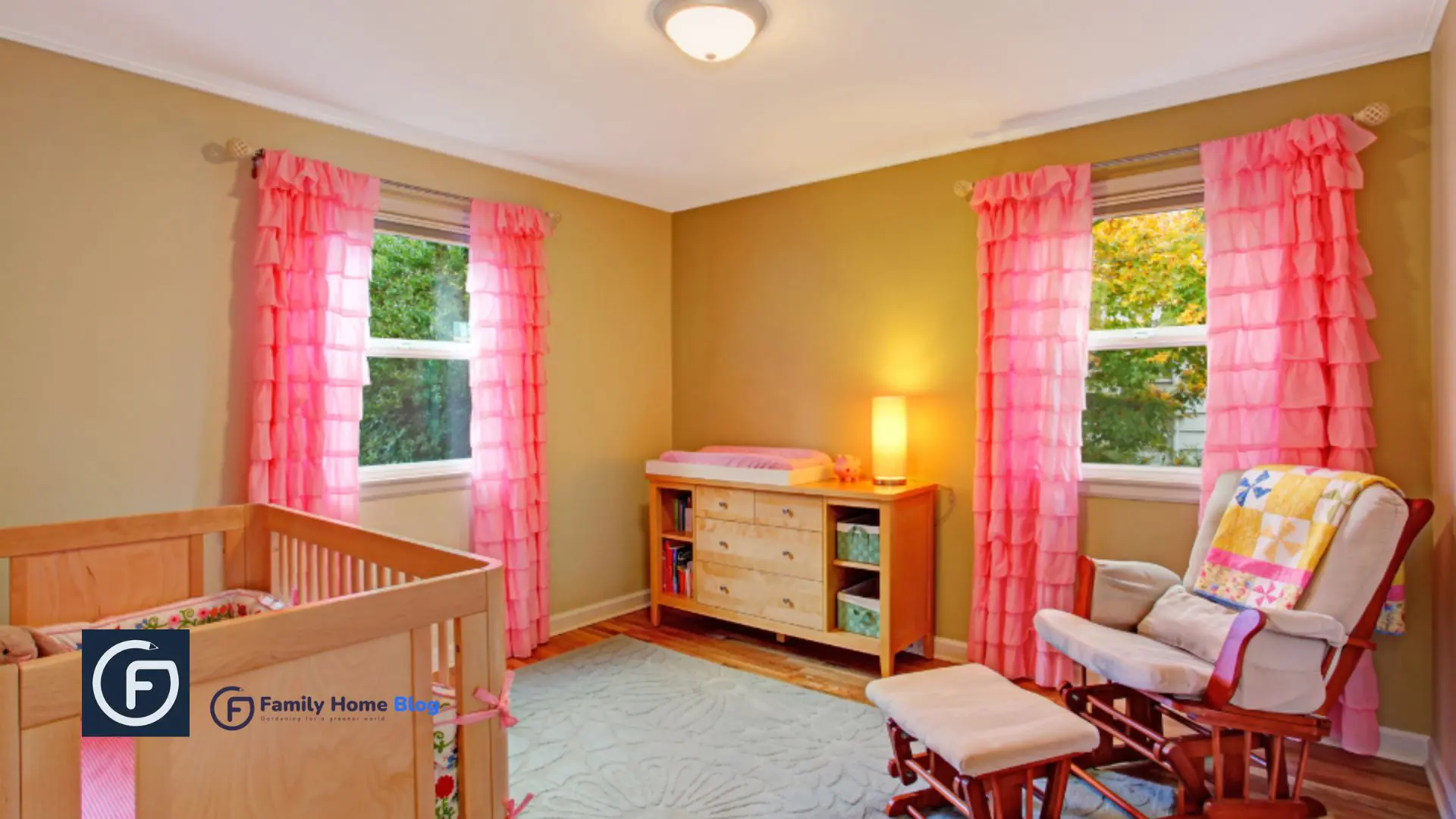
Nursery curtains are significant for making your baby a cozy and pretty room. They look great, aid with privacy and light, and are functional, too. The space for the infant is now warm and inviting, thanks to the curtains.
Key takeaways
- Choose cordless curtains or keep every cord and tieback well out of reach of the crib
- Blackout or room-darkening panels make daytime naps and light summer evenings much easier
- Mount the rod wider and higher than the window so curtains block more light and look taller
- Pick machine-washable fabrics so spit-up, dust, and allergens are simple to deal with
In a nursery, curtains function as window security blankets. You can find these in various colors and designs to complement any decor. Curtains have two jobs: they protect personal space and make a room look nice. As well as adorning the windows, they provide a mystical air to the baby’s room.
Power of Nursery Curtains
Curtains for a baby’s room are like throws for the windows. Curtains have two significant functions. They make the space softer by filtering out bright light. They also add beautiful colors and detailed designs to the decor. Therefore, they serve a useful purpose and contribute to the room’s aesthetic appeal.
They can let in sunlight or make the room darker for naptime. Curtains also keep the room private and make it feel warm and comfy. They come in different colors and designs that match the space and make it look friendly and happy.
Current Trends in Nursery Curtains
Nursery curtains are unique curtains for baby rooms. They have new and fun designs that make the room look nice. Here are some of the latest styles that people like:
Nature’s Embrace:
Nature prints are artworks inspired by or showing the natural world. These prints often show woodland animals and plants. These images bring the calm and beauty of nature into our indoor spaces.
Neutral Haven:
Greys, yellows, and earth tones are rising in interior design. The use of these tones may make any style of nursery look warm and inviting.
Modern Minimalism:
The patterns feature sharp corners and geometric forms like squares and triangles. There is no grayscale, just black and white. These layouts are the perfect compromise between tidiness and coziness.
Vintage Revival:
Examples of retro patterns are checkers, stripes, and florals. They bring back pleasant memories and lift our spirits. It’s like using gentle colors like soft pinks, greens, and blues because they make the room feel calm. They also put up curtains with pictures of animals, flowers, and shapes to make the room fun. It’s also use unique materials like cotton, see-through cloth, and fake fur to make the room look and feel nice.
Soft and Serene
Soft pastel curtains are the perfect finishing touch for a nursery, adding lovely blankets to the room. Pink, mint, and blue are some calming tones offered. The baby will feel protected and at peace, surrounded by beautiful colors. As the baby develops, you may quickly move these drapes to accommodate the room’s changing decor needs.
A baby’s room is decorated in soothing shades like pink, green, and blue. A room decorated in pink is warm and inviting. In green, it is energizing, and in blue, it is soothing; these hues create an environment conducive to rest and contentment for the infant.
Gender-Neutral Elegance
A recent trend has been toward a more attractive and welcoming nursery design. People use colors like grey, beige, and white because they are neutral and go with a wide variety of decor. Curtains are becoming increasingly commonplace, and not simply among girls or women. They have minimalist designs inspired by nature. These drapes are perfect for the nursery because they complement various design schemes.
Neutral shades like grey, beige, and white are ideal for a nursery. The space looks pleasant and may be decorated in various ways thanks to these colors. Soft patterns and colors make the area attractive without becoming overwhelming. It ensures that the nursery may be easily updated and always looks nice.
Whimsical Designs and Patterns
Curtains in a baby’s room are a great way to personalize the space. They transform the area into a wondrous kingdom where infants can learn and dream.
Stars, clouds, and other whimsical shapes on curtains add a touch of enchantment to a baby’s room. These unique decorations help babies feel amazed by creating an atmosphere like the sky or a magical place. Light filters in through the drapes, giving the shapes an endearing glow.
Sheer and Voile Curtains
Sheer and voile curtains are like magical curtains for baby rooms. They are very light and let a soft light come in, making the room feel dreamy and calm. These curtains also make the sunlight less bright and keep the space open and airy. They are great for making a baby’s room feel unique and charming.
Curtain Lengths and Styles
The perfect length for a baby’s nursery curtains is enough to reach the floor. The result will be a cozy and inviting atmosphere. You could also choose shorter curtains, such as cafe curtains or valances. It will create a cozier and more relaxed atmosphere. The curtains should not clash with the other nursery furnishings. Curtains with colorful patterns add to the upbeat ambiance. Choose curtains in soothing, neutral tones to set the mood.
Nursery Curtain Safety: Cords, Rods, and Crib Placement
Safety should come before style when you choose nursery curtains. Loops, pull cords, and long tiebacks can be a strangulation hazard for babies and toddlers, so look for cordless panels or tuck any cords high and out of reach with a cord cleat. Avoid decorative tassels, ribbons, or small attached trims that a curious child could chew or pull off.
Placement matters just as much. Keep the crib, changing table, and any climbable furniture away from the window so little hands cannot grab the curtains or the rod. Use sturdy brackets screwed into studs or proper wall anchors, because a toddler tugging on a panel puts real weight on the hardware. Check the rod and brackets every few months for loosening.
As your baby grows into a toddler, revisit the setup. Children who can stand in the crib or climb onto a chair reach much farther than you might expect. Tension rods and lightweight rods can pull down easily, so a securely mounted rod with end caps is a safer choice. Also avoid placing a toy shelf or dresser under the window, since it can become a step.
- Choose cordless or wand-operated options
- Skip tassels, bows, and loose trims
- Keep the crib at least an arm’s length from the window
- Anchor rod brackets securely into the wall
Blackout vs Room-Darkening Curtains for Better Naps
Many parents find that light control is the most practical job these curtains do. Blackout curtains use a dense weave or a special backing to block nearly all incoming light, which helps with daytime naps, early summer sunrises, and streetlights at night. Room-darkening curtains block a good portion of light but still let a soft glow through, which some families prefer for a gentler feel.
A popular approach is layering. Hang a sheer or light cotton panel for daytime play and pair it with a blackout panel on a double rod for sleep times. If light still sneaks in around the edges, choose wider panels, a wraparound rod that curves to the wall, or a curtain that sits closer to the window. Blackout fabric also adds a little insulation, which can help keep the room steadier in temperature.
How to Measure and Hang Curtains in a Baby’s Room
Start by measuring the window width, then add several inches on each side so the panels can pull fully clear of the glass and overlap the frame when closed. For fullness, many decorators suggest total panel width of about one and a half to two times the rod length. Measure height from where the rod will sit to the floor, and decide whether you want curtains that just skim the floor or stop at the sill.
Mounting the rod a few inches above the frame, or even closer to the ceiling, makes the window look taller and reduces light leaking over the top. Floor-length curtains look polished, but in a nursery they should not puddle on the floor where a crawling baby can pull on them. Once hung, give the fabric a quick steam and check that panels open and close smoothly without anyone needing to climb.
If you rent or prefer not to drill, look for heavy-duty adhesive or tension options rated for the weight of your panels, but test them firmly before use. Blackout panels are heavier than sheers, so hardware that holds a light curtain may sag under a lined one. When in doubt, a local handyman can hang rods securely in under an hour for many standard windows.
- Width: window plus several inches per side
- Fullness: roughly 1.5 to 2 times rod length
- Length: floor-skimming or sill-length, never puddled
- Rod height: a few inches above the frame or higher
Frequently Asked Questions
Are blackout nursery curtains worth it?
Yes, for most families blackout nursery curtains are worth it. They block most daylight so babies can nap during the day and sleep through early summer mornings. Many parents layer them behind a lighter decorative panel, so the room still feels bright and cheerful during playtime and dark when it is time to sleep.
What length should curtains in a baby room be?
They usually look best either just skimming the floor or ending at the windowsill. Avoid puddled lengths that pool on the floor, because crawling babies and toddlers may grab and pull them. Sill-length or slightly above-floor panels are easier to keep clean and out of reach, especially near play areas.
How do I keep curtain cords safe in a nursery?
The safest choice is cordless curtains or panels opened by hand or a wand. If your window treatment has cords, wrap them around a cleat mounted high on the wall and keep them out of reach at all times. Also move the crib and climbable furniture away from windows so children cannot reach cords or tiebacks.
How often should I wash curtains in a nursery?
Washing them every few months is a good general routine, or sooner if they get stained or dusty. Check the care label first, since blackout backings may need a gentle cycle and air drying. Regular vacuuming with a brush attachment between washes helps reduce dust, which is useful in a room where a baby spends so much time.
Conclusion
Baby-safe curtains serve as a window magic blanket. Various styles and hues are available, making each space feel unique and inviting. They use their creative powers to make the room a lovely place for the infant.
Have some fun with the nursery curtains design for the baby’s room. You can use different hues, prints, and fabrics to highlight your child’s uniqueness. Once you’ve finished setting it up, your baby’s room will be cozy, chic, and full of love.