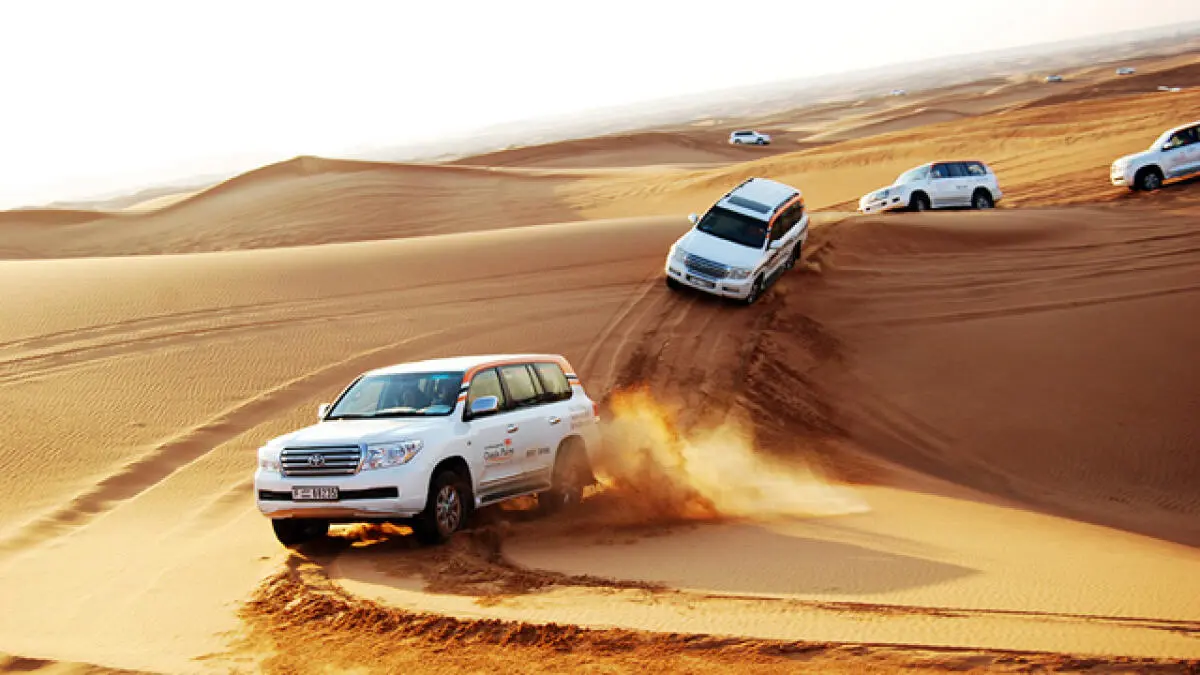
After a desert safari trip, Dubai has endless possibilities and countless things to do. From shopping at the world-renowned Dubai Mall and the souks to visiting the Burj Khalifa, the world’s tallest building. If you’re looking for an adrenaline rush, you can go skydiving, bungee jumping, or take a hot air balloon ride over the desert.
Key takeaways
- Plan a slow morning or rest day after an evening desert safari Dubai trip
- Schedule outdoor sights for cooler hours and save indoor attractions for midday heat
- Dress modestly for mosques, souks, and heritage areas, and carry a light scarf
- Book popular attractions and experiences ahead during busy cooler months
Whatever your interests, there’s sure to be something to suit your taste in Dubai. So, we will tell you some different things you can do after your desert safari Dubai trip.
Shopping at the Dubai Mall and souks
Shopping is one of the most popular things after a Luxury desert safari Dubai trip. The Dubai Mall is one of the largest malls in the world and offers a wide variety of luxury brands, as well as a cinema, aquarium, and ice rink.
The souks, or traditional markets, are also a must-visit for those looking for unique and traditional souvenirs. The souks include the Gold Souk, known for its gold jewelry, and the Spice Souk, where you can find a wide variety of spices, incense, and traditional herbs.
Visiting the Burj Khalifa
The Burj Khalifa, the world’s tallest building, is a must-see attraction in Dubai. Experience breathtaking, panoramic views of the city by taking the elevator to the 124th-floor observation deck. The building also houses luxury apartments and hotels so you can experience Dubai’s luxurious lifestyle.
Skiing at the indoor ski resort
Dubai is home to the first indoor ski resort in the Middle East, Ski Dubai. The resort has five ski slopes of different levels, a snow park, and a chairlift. It’s a great way to cool off from the desert heat and experience snow in the middle of the desert.
Take a dhow cruise along Dubai Creek
A dhow cruise is a traditional boat ride along Dubai Creek, where you can see the city’s old and new architecture. You can enjoy a delicious dinner, traditional music and dance performances, and even a henna tattoo during the cruise. It’s a great way to experience the culture and history of Dubai.
Visiting the Palm Jumeirah
The Palm Jumeirah is an artificial island in the shape of a palm tree built to increase the city’s tourism and real estate. The island features luxury hotels, villas, apartments, shopping centers, restaurants, and a water park. Visitors can take a monorail or boat to the island and enjoy the beautiful views of the city.
Relaxing at a luxurious spa
Dubai is known for its luxurious spas, where you can enjoy traditional treatments such as a hammam or a massage. Many of the city’s hotels have spas, but stand-alone spas offer a wide variety of treatments. It’s a great way to pamper yourself and relax after a day of exploring the city.
Take the plunge and try skydiving to get your heart racing
For those looking for an adrenaline rush, Dubai offers a variety of adventure sports, such as skydiving and bungee jumping. Visitors can jump from an airplane or a helicopter over the desert or take a bungee jump from a platform. It’s a great way to experience the desert from a different perspective.
Hot air balloon ride over the desert
Another way to experience the desert is by taking a hot air balloon ride. The ride takes you over the desert, allowing you to see the beautiful dunes and the sunrise or sunset. It’s a peaceful and unique way to experience the desert.
Visiting cultural and historical sites
Visitors can visit the Dubai Museum, which showcases the city’s history and culture, or the Jumeirah Mosque, one of the few mosques in Dubai that allow non-Muslims to enter. It’s a great way to learn more about the city’s past and culture.
Enjoying the nightlife at one of Dubai’s many various venues
Dubai offers a variety of entertainment options for those looking to experience the city’s night scene. There are many different venues to choose from, each offering a unique atmosphere and activities. From rooftop venues with picturesque views, to underground venues with live entertainment, there’s something for everyone. Visitors can enjoy the city’s nightlife while socializing with friends or simply taking in the sights and sounds of the city.
Some popular options include the chic 40 Kong, the lively Irish Village, or the exclusive VIP Room. Whether you’re looking to socialize or simply take in the sights and sounds of the city, Dubai offers a diverse range of nightlife experiences.
How to Plan Your Days After a Desert Safari Dubai Adventure
Evening safaris often end late, and dune driving, sand, and sun can leave everyone tired, especially children. It usually makes sense to keep the following morning light, with a late breakfast, pool time, or a relaxed mall visit. Save early starts like hot air balloon rides for a day that does not follow a late night in the desert.
Grouping activities by area also saves time and taxi fares. Downtown Dubai pairs the Dubai Mall and Burj Khalifa, while Old Dubai combines the souks, Dubai Creek, and heritage districts. The Palm Jumeirah and nearby beaches work well together for a beach day. The metro is a convenient option for many central sights, and taxis and ride-hailing apps fill in the gaps.
Consider how much energy everyone has left. Many visitors pair a busy sightseeing day with an easy one, alternating big attractions with beach or pool time. For families, building in an afternoon rest at the hotel during the hottest hours can make evening outings far more enjoyable. Booking the most popular attractions in advance helps avoid long queues and sold-out time slots.
- Keep the morning after a safari relaxed
- Group sights by neighborhood to cut travel time
- Use the metro for central attractions
- Save sunrise activities for well-rested days
Family-Friendly Budget Tips for Dubai
Dubai has a reputation for luxury, but families can enjoy plenty without overspending. Walking the souks, watching the fountain shows near the Dubai Mall, strolling public beaches, and crossing Dubai Creek on a traditional abra boat are typically free or very low cost. Public parks and waterfront promenades are also pleasant in the cooler evenings.
For paid attractions, combo tickets or online booking can sometimes offer better value than buying at the door, though prices vary by season and demand. Eating at food courts, local cafeterias, or casual Emirati and South Asian restaurants is often much cheaper than hotel dining. Refillable water bottles are also a smart idea, since staying hydrated in the heat is essential.
Think about timing for popular spots. Sunset slots at observation decks, weekend brunches, and evening cruises can fill up quickly, and prices may be higher for peak times. Visiting on weekdays or in the morning often means shorter lines and a calmer experience. Keep an eye on seasonal events and festivals too, since they can offer free shows and entertainment.
Local Etiquette and Weather Tips for Visitors
Dubai welcomes visitors from around the world, but it helps to respect local customs. In malls, souks, and cultural sites, clothing that covers shoulders and knees is a good rule of thumb, and mosques that welcome visitors usually provide guidance on dress. Public displays of affection are best kept minimal, and it is polite to ask before photographing people, particularly women and families.
Weather plays a big role in planning. The cooler months, generally from about November to March, are the most comfortable for outdoor sightseeing and desert trips. In summer, midday temperatures can be intense, so plan indoor attractions like Ski Dubai, the aquarium, or museums for the hottest hours. During Ramadan, check opening hours and be mindful about eating in public during daylight.
Finally, keep a copy of your passport and important documents on your phone, carry some local currency for small purchases in the souks, and save your hotel address in the local language for taxi drivers. Travel insurance that covers adventure activities is worth considering if you plan to try skydiving, dune bashing, or other high-energy experiences.
- Carry a light scarf or cover-up
- Use high SPF sunscreen and wear a hat
- Drink water throughout the day
- Check Ramadan and holiday opening hours
Frequently Asked Questions
What is the best time of year for a desert safari Dubai trip?
The cooler months, roughly November through March, are generally the most comfortable for a safari and other outdoor activities. Daytime temperatures are milder and evenings in the desert can even feel cool. Safaris run year-round, but summer trips are best booked for late afternoon or evening to avoid the strongest heat.
Is Dubai a good destination for families with young children?
Yes, Dubai is generally very family-friendly. It offers water parks, indoor play areas, aquariums, beaches, and malls with plenty of kid-focused attractions. Most places have good facilities for families. Plan around the heat, build in rest time, and choose age-appropriate activities, since some adventure experiences have minimum age or height limits.
What should I wear when sightseeing in Dubai?
Light, breathable clothing that covers the shoulders and knees works well for most sightseeing. Swimwear is fine at hotel pools and beaches but should be covered elsewhere. Bring a scarf for mosque visits, comfortable walking shoes, a hat, and sunglasses. Malls and indoor attractions can be cool from air conditioning, so a light layer helps.
How many days do I need to see Dubai beyond a desert safari?
Around four to five days is often enough to cover the main highlights at a comfortable pace, including the Burj Khalifa, the souks, a creek cruise, the Palm Jumeirah, and a beach day. With more time, you can add theme parks, day trips to Abu Dhabi, or simply enjoy more relaxed family downtime.