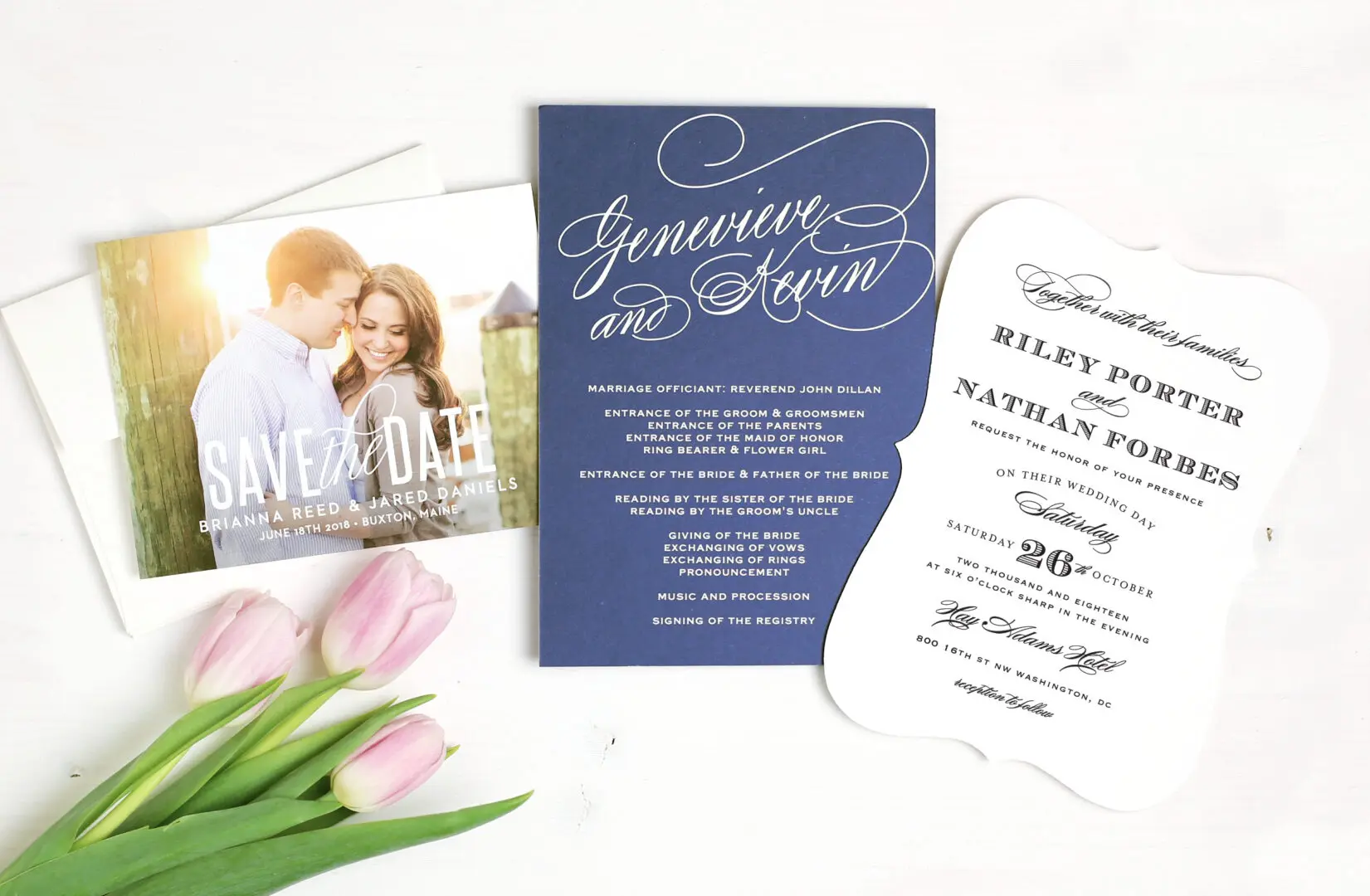
If you are holding an at-home wedding, you must include everything you need on your wedding invitations. The last thing you want is for your guests to be disappointed. You can do a few things to ensure that your invitations are perfect.
Key takeaways
- Include hosts, names, date, time, full home address, parking notes, dress code, and RSVP details
- Tell guests about outdoor seating, uneven ground, or weather plans so they can prepare
- Mail invitations early enough to give guests time to plan travel and respond
- Proofread every detail twice and have someone else check names, dates, and addresses

Don’t Include Your Parents’ Names
Wedding invitations wording can be a challenge. It can be especially tricky if you go for a more casual or informal event. Including your parents’ names on your wedding invitation is not always a good idea. Traditionally, a bride’s mother is listed on the first line of an invitation. The second line of the invitation includes the bride’s father’s name. You may also include the names of your bride’s stepparents. If your wedding is a small affair, you may list all the guests’ names.
One of the more common forms of wedding invitation wording is “One Set of Parents Hosting.” This invitation form recognizes that the bride’s parents are paying for everything. Another example of a less formal wedding is “Two Parents Hosting.” This method of invitation refers to the groom’s parents. Wedding invitation wording can be challenging if you have a complicated family. In the case of a long-term couple, writing both of their names is very important.
Include Dress Code Information
If you plan an at-home wedding, it is probably safe to assume that your guests will not be dressed to impress. However, your wedding invitations should mention some important details. First, include the wedding venue. This includes the city, state and complete address. It can be helpful to include a map of the venue so that guests can see where the ceremony and reception will take place.
Second, be sure to provide an RSVP deadline. This will give your guests time to respond and finalize the guest list for your caterer. A good time to send your wedding invites is about three to four weeks before the big day. Finally, you will want to mention a dress code. Many couples will provide a style guide of sorts for their guests to use. This could contain photos of outfits for men and women. It may also be helpful to mention the time, date and venue on your wedding invitations. This is a nice gesture.
Address a Wedding Invitation from a Widowed Parent
Addressing a wedding invitation from a widowed parent is a bit tricky. You want to include the correct information to ensure that all your guests know where the ceremony and reception will be. Here are some tips to help you write the perfect invitation. The first line of the wedding invitation will list who will be hosting the wedding. You may also want to state the wedding save the date time. If the reception is going to be held in more than one location, you will need to provide that information in separate cards. In addition to the main invitation, sending save-the-dates is also a good idea. These should list the guests’ names if you are unsure of their addresses.
Don’t Use Capital Letters at the Beginning of a Sentence
When writing your wedding invitations, you don’t want to use capital letters at the beginning of a sentence. Capitalization is a typical writing mistake. It can make your writing look incomplete, and it cannot be very comfortable. For example, you may want to capitalize the name of your bridesmaids, but you don’t want to capitalize the word “sister”. However, you could capitalize the word “aunt”.
For example, you may not want to capitalize the word “sister” in a title that mentions the name of a grandmother. But you might want to capitalize the word “grandmother”. A brand name such as Sony is a proper noun, so it should be capitalized. You can always check with a style guide to get the proper capitalization.
Conclusion
You want to capitalize each line’s first letter when writing a poem. You may not want to capitalize the first word of every sentence if you have a very long verse. Titles and names of people are also essential to capitalize. However, the rules on titles can vary widely. This is because titles often include adjectives, prepositions, or conjunctions. This can vary depending on whether the bride and groom are hosting the event themselves or whether the parents are. When it comes to the latter, the wording should change slightly.
Practical Details Guests Need for an At-Home Wedding
An at-home wedding means guests will be arriving at a private residence rather than a venue with signs, staff, and a parking lot. Your wedding invitations, or an insert tucked inside them, should cover the practical details a venue normally handles. Tell guests where to park, whether street parking is limited, and if a shuttle or carpool is available. If the house is hard to find, a short note about landmarks can prevent late arrivals.
It also helps to mention the setting. If the ceremony is in the backyard on grass, guests may want to skip stiletto heels. If seating is limited or the event is partly outdoors, a quick line such as dress for the garden sets expectations without sounding fussy. Keep the main invitation clean and place these extras on a separate details card.
If the celebration includes a meal, mention whether it is a full dinner, a buffet, or light refreshments, so guests can plan accordingly. For evening events, a note about lighting on paths or steps is helpful for older relatives. You can also tell guests if restrooms are inside the house or in a rented trailer. These small courtesies reduce questions in the weeks before the wedding and help everyone arrive relaxed and ready to celebrate with you at home.
- Parking and arrival instructions
- Indoor or outdoor setting
- Footwear or weather notes
- Accessibility information
- Whether children are included
When to Send Wedding Invitations and How to Handle RSVPs
Many couples send save-the-dates several months ahead, especially if guests need to travel, followed by the formal invitations closer to the date. For a home wedding, where space is often tight, an accurate headcount matters even more because you may be renting chairs, tables, tents, and portable restrooms. Set your RSVP deadline early enough to confirm rentals and catering numbers with your vendors.
Decide how guests should reply before you print anything. A reply card with a stamped envelope feels traditional, while a simple wedding website or an email address keeps things easy for everyone. Whatever method you choose, list it clearly and include a date. Plan to follow up with a friendly call or text to anyone who has not answered a few days after the deadline.
Home weddings also need a backup plan for weather, and your guests should know about it. If you have arranged a tent or plan to move indoors in case of rain, say so on the details card or your website. A simple line such as rain or shine, ceremony will be held under a tent reassures guests. If the plan might change at short notice, tell them where to look for updates, such as a group text or a website page.
Common Wedding Invitation Mistakes to Avoid
Small errors on printed invitations are expensive and stressful to fix. The most common problems are a wrong date or time, a misspelled name, and an incomplete address. Read every line out loud, then ask a detail-oriented friend or family member to check it again with fresh eyes. Compare the date against a calendar to confirm the day of the week matches.
Another mistake is cramming too much onto the main card. Keep the invitation focused on who, what, when, and where, and move directions, dress code notes, and website details to an insert. Finally, weigh one finished invitation with all its inserts at the post office before mailing, since square envelopes and heavier suites may need extra postage, and costs vary.
- Typos in names or dates
- Missing or partial address
- Too much text on one card
- Wrong postage for the envelope
Frequently Asked Questions
What should be included on wedding invitations for a home wedding?
For a home wedding, include the hosts, the couple’s names, the date and time, and the full address of the home. Add RSVP instructions and a deadline, plus a details card covering parking, dress code, and whether the event is outdoors. Keep the main card simple and put extras on an insert.
Is it okay to put a home address on a wedding invitation?
Yes, it is fine and necessary to include the home address so guests can find the ceremony. If you have privacy concerns, you can share the address only on the printed invitation rather than on a public wedding website. Adding a short note about parking or the entrance helps guests arrive smoothly.
How formal should invitations be for a backyard wedding?
Invitations for a backyard wedding can be as formal or casual as the event itself. The wording, paper, and design give guests their first clue about the dress code. A relaxed garden party might use simple, friendly wording, while an elegant evening event at home can still use classic formal phrasing.
How do you word a dress code on a wedding invitation?
Use a short phrase such as cocktail attire, garden party attire, or casual dress, usually on the details card rather than the main invitation. For an outdoor home wedding, you can add a gentle note about grass or evening temperatures so guests can choose suitable shoes and bring a layer.