Minimalist design is a famous style for both the inside and outside of a building. It means removing everything that isn’t essential, so a minimalist bathroom is just as stylish as a minimalist living room.
Key takeaways
- Start by removing everything you do not use weekly before choosing any new fixtures or finishes
- Stick to two or three materials and a tight neutral palette so the room feels calm
- Plan concealed storage early, such as recessed niches and wall-hung vanities with deep drawers
- Good ventilation and easy-clean surfaces keep a pared-back space looking sharp with little effort
Even though minimalism means not having a lot of things or decorations around, it doesn’t mean you can’t have it in style.
In this blog post, we’ll discuss how to make a stylish minimalist bathroom using premium supplies, crisp lines, and unique storage solutions.
How Do You Define a Minimalist Bathroom?
A minimalist bathroom does not have any things you don’t need. They are made to have only what you need and nothing else. People often mix up a minimalist bathroom with a modern bathroom because they both have clean lines and a focus on natural lighting. However, they are different.
- Elegant Minimalist Design for Bathroom
People frequently associate minimalist interiors with dullness and drabness. However, there is a better situation. Even though minimalism in interior design stresses simplicity, a bathroom can still be attractive and stylish.
With clean, straight lines and inventive storage solutions, such as baskets under sinks or freestanding shelves, simple layouts can make your bathroom feel soothing, luxurious, and functional.
- Minimalist Signifies Fewer
A minimalist bedroom has fewer items than other rooms because you spend most of your time there sleeping. Unnecessary items detract from its function as a place to rest and refuel for another day of experiencing life to the fullest.
The same is true for bathrooms, which are designed to simplify getting ready rather than provide you with more options for bathroom items. It’s all about selecting functional items and using them to decorate your minimalist space.
- Minimalist Doesn’t Mean Brand New
If you love design, try using some of your skills to design your bathroom minimally before you buy anything new. Minimalism is about having less, not more. If you need to buy things for your bathroom, ensure they go well together and keep the room neat and neat.
Tips to Create a Minimalist Bathroom
1. Freestanding Tub With a Solid Top
Source: Pexels
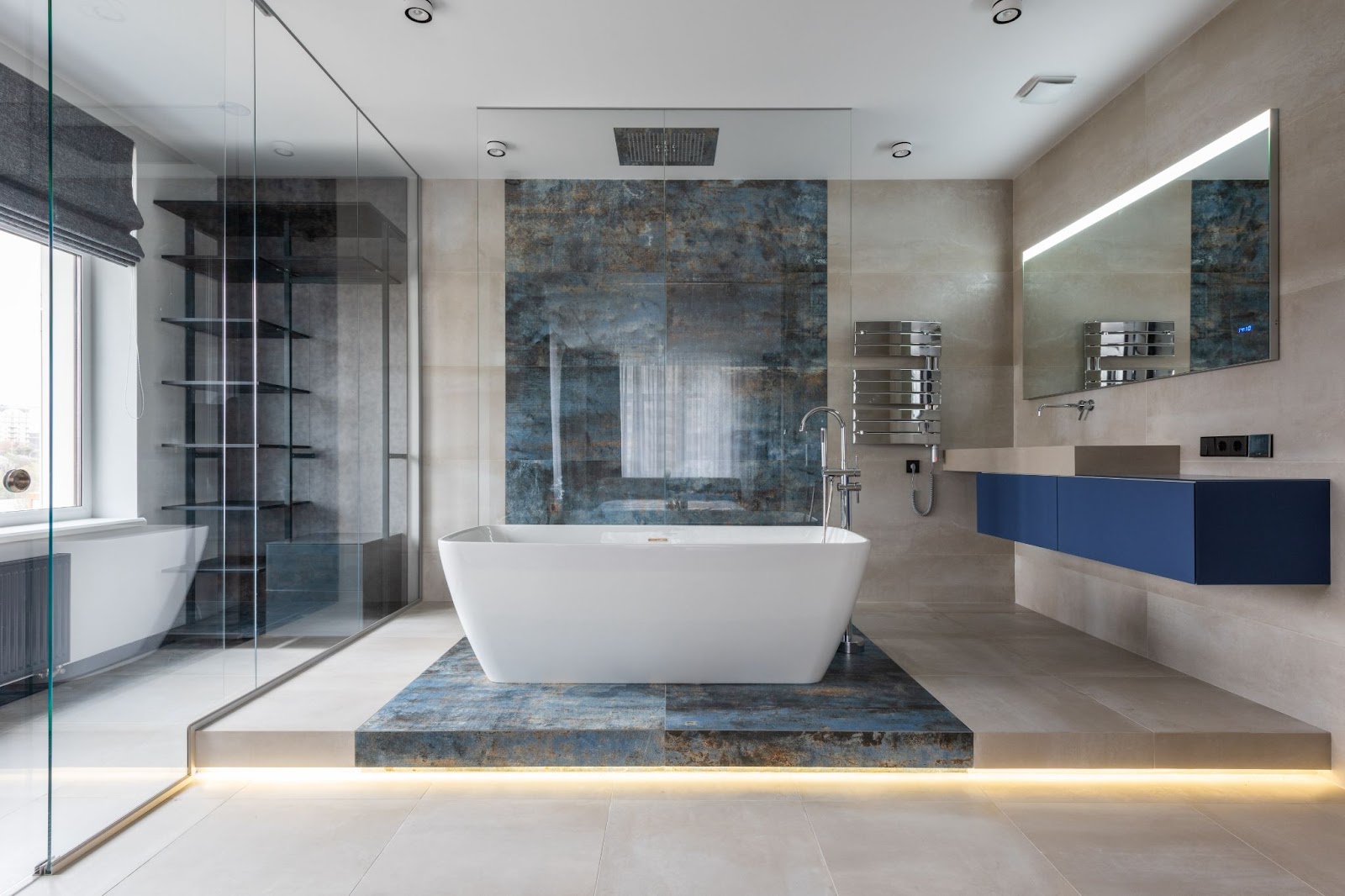
High-quality bathtubs can change the look of a modern, simple bathroom in a big way. Bathtub designs can be a beautiful showpiece or a modern center of attention in the bathroom. One can thoroughly unwind in a solid-surface bathtub.
You can choose a freestanding bathtub as the main attraction of your minimalist bathroom design without disturbing the tranquil atmosphere. Round organic shapes and matte white finish express simplicity and elegance.
You can search for a guide to installing freestanding tubs and choose from various forms, ranging from circular to
asymmetrical to make sure that your tub fits the minimalist vibe.
2. Neutrals
Neutrals are always a good choice. For a minimalist bathroom, most interior designers use a color scheme with neutral colors. A room can look clean and straightforward if the tiles, paint, countertops, fixtures, bathtubs and decorations are all neutral colors.
The sunlight from the windows and the white tile, gray cabinets, white bathtub installation and gray floors give the room a clean, modern look. In a minimalist bathroom, less is better. Most people consider lighter colors as neutrals, but dark gray is also an excellent bathroom color.
3. Dark hues
Even though neutral colors can make a room feel more open and fresh, you shouldn’t be afraid to use dark colors. Darker colors can make a beautiful difference in a bathroom with only a few shades. For instance, a simple walk-in shower with gray tiles makes the room feel elegant. The darker tile has a classy look that the lighter gray tiles can’t match.
4. Modern Elements
There should be no surprise that minimalism and modernism go hand in hand. Both movements are characterized by their simplified designs, which feature clear lines, neutral color palettes, and minimal clutter. The quality of the modern details is the only thing that matters in the design because there is no trash to draw attention to.
5. Tile
Tiles can update a room for less money. A simple tile can add more personality to your bathroom without compromising your minimalist style. Adding just a touch of texture, color, or variety to the tile in one part of the bathroom is another great way to make a simple bathroom.
6. Lighting
Lighting can make all the difference in a simple bathroom. Beautiful lights with simple shapes and colors can warm the room. After all, you don’t want it to look or feel like a hospital. A chandelier would be more your style, giving your simple room the desired detail.
No matter what, there are many things to choose from. Even though the lighting was soft and warm, you can also make lighting elements that stand out more.
7. Mirrors
Source: Pexels
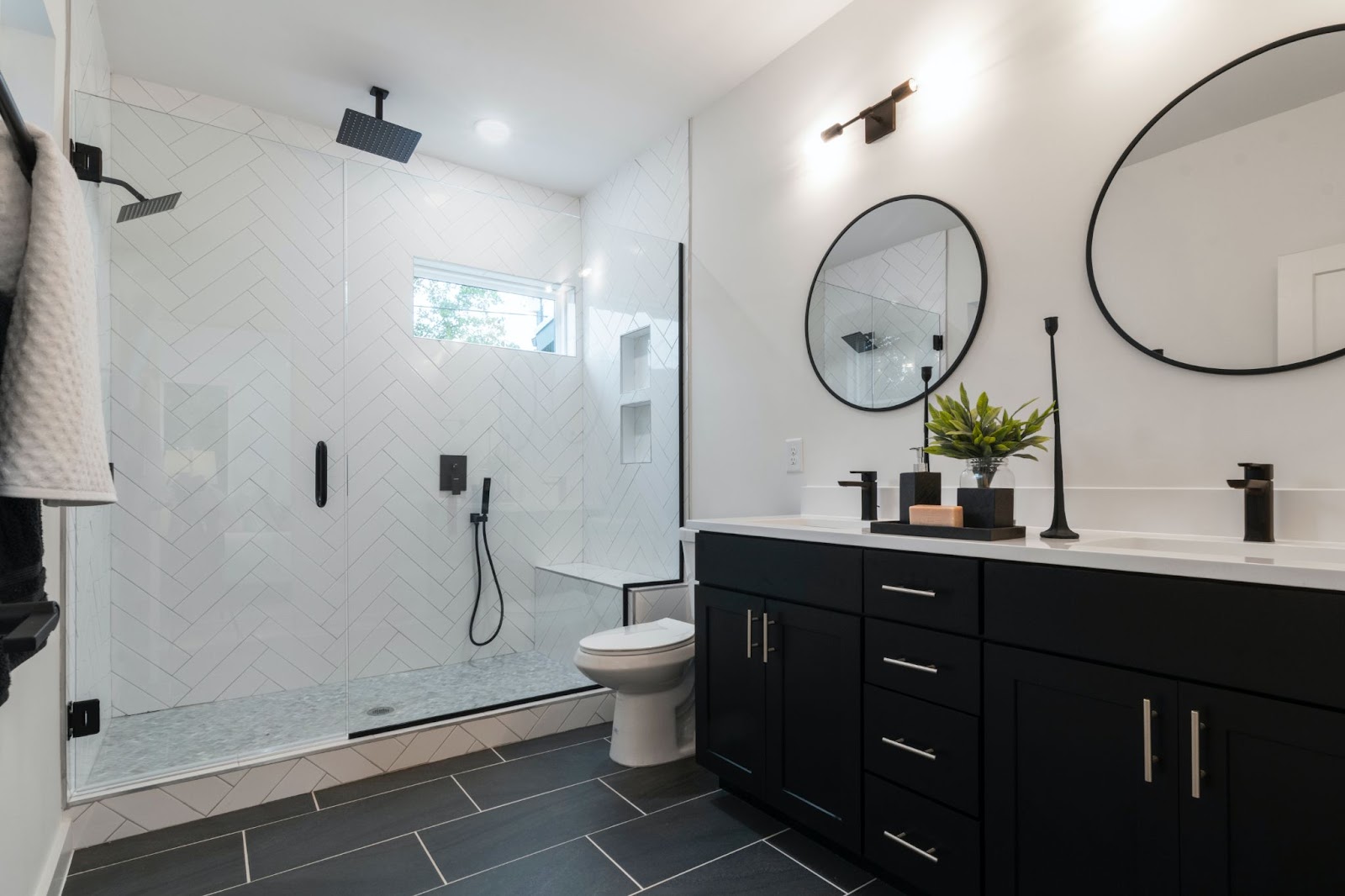
Playing with different mirror forms can give your minimalist bathroom a new look. You can choose a trendy look by picking a square, rectangular, or circular shape. Or you could mess around with accents! You can choose a mirror with a gold frame to match your gold bathroom features.
8. Accents
Adding beautiful accents to a minimalist bathroom is an inventive design technique. It enables you to experiment with color while maintaining simplicity.
With a backdrop of enormous subway tiles, blooms with a high contrast stand out. You may want to feel a bit posh and create a bathroom with an elegant appearance. Gold accents in a predominantly white restroom are an excellent strategy for some upscale designs.
9. Decor
Practicing minimalism does not preclude you from decorating your bathroom. Even though its purpose is to reduce congestion, your style is still unique. A hint of greenery in the form of a plant or a painting that suits your vision are examples of items that will add spice to your bathroom without causing it to become disorganized again.
The key is to position them strategically. Use intricate patterns and darker hues to counteract your simplicity by breaking up your white space.
How to Plan a Minimalist Bathroom Step by Step
Begin with a ruthless edit. Empty the vanity, cabinets, and shower shelves, then put back only what you use at least once a week. Duplicate bottles, expired products, and gadgets you rarely touch can live in a hall closet or leave the house entirely. Knowing exactly what must stay in the room tells you how much storage you really need, which is usually far less than people expect.
Next, sketch the layout and decide which fixtures stay put. Keeping the toilet and shower drains in their current locations is often the biggest way to control costs, because moving plumbing adds labor and can require permits. With the footprint settled, choose your key materials, typically one main tile, one countertop or vanity surface, and one metal finish for faucets, hooks, and handles. Limiting choices to this short list is what gives the room its quiet, finished look.
Finally, plan lighting and ventilation before finishes are installed. Layered light, such as a ceiling fixture plus soft light around the mirror, avoids harsh shadows on a pared-back palette. Settle exhaust fan placement and any wiring for heated floors or towel warmers at this stage, because changing them after tile goes up is disruptive and expensive. A short checklist signed off before demolition keeps the project on track.
- Declutter first, then measure your storage needs
- Keep plumbing in place where possible
- Choose one tile, one surface, and one metal finish
- Order fixtures before demolition to avoid delays
Hidden Storage Ideas That Keep Surfaces Clear
Minimalism depends on having a home for everything, so storage needs to be built in rather than added later. Recessed shower niches hold shampoo and soap without bulky caddies, and a recessed medicine cabinet behind the mirror keeps toothbrushes and daily items off the counter. If you are opening walls anyway, these additions are usually simple for a contractor to frame between studs, though exterior walls and plumbing runs may limit where they can go.
A wall-hung vanity with full-extension drawers is often more useful than one with doors, because drawers let you see and reach everything without digging. Drawer dividers keep small items tidy. Where space allows, a slim floor-to-ceiling cabinet can hold towels and spare supplies, and it reads as part of the wall when painted to match. The goal is that the only things you see day to day are a hand towel, soap, and perhaps a single plant.
If you are not opening walls, you still have options. Freestanding storage in the same finish as the vanity, lidded baskets inside cabinets, and a single slim ladder shelf for towels can all work without construction. Choose pieces with legs so the floor stays visible, which makes the room feel larger. Whatever you add, measure door swings and walkways first so nothing crowds the space.
Common Mistakes That Make Simple Bathrooms Feel Cold
One frequent mistake is confusing minimal with cold. An all-white room with glossy tile and harsh overhead lighting can feel clinical. Adding texture through a matte tile, a wood vanity, linen towels, or warm-toned bulbs keeps the space inviting while staying uncluttered. Another misstep is choosing open shelving everywhere; it looks great in photos but quickly fills up with everyday items and becomes visual clutter.
Skipping ventilation is also a problem. Clean, bare surfaces show water spots, soap film, and mildew more clearly, so a properly sized exhaust fan that vents outside matters more in a pared-back room. Finally, avoid too many finishes. Mixing brushed brass, chrome, and black hardware undoes the calm effect. Pick one finish and carry it through faucets, shower trim, towel bars, and cabinet pulls for a cohesive result.
It also pays to think about maintenance before you buy. Large-format tiles mean fewer grout lines to scrub, and a wall-hung toilet or vanity makes the floor easier to mop. Frameless glass stays clearer with a quick squeegee after showers. Choosing surfaces that are easy to keep spotless is what allows a simple, uncluttered bathroom to look as good in a year as it does on day one.
- Balance white surfaces with warm textures
- Limit open shelving to a few curated items
- Install an exhaust fan that vents outdoors
- Use a single hardware finish throughout
Frequently Asked Questions
How much does a minimalist bathroom remodel cost?
The cost varies widely depending on bathroom size, materials, and whether plumbing moves. A cosmetic refresh with new fixtures and paint is often far cheaper than a full gut renovation with new tile and layout changes. Prices also vary by region, so get several itemized quotes and keep plumbing in place to control your budget.
What colors work best in a pared-back bathroom?
Soft whites, warm grays, beige, and muted earth tones work best because they create a calm backdrop. Darker shades such as charcoal or deep green can also look striking if used on one surface. Keep the palette to two or three colors and add warmth through natural textures like wood, stone, or linen.
Can a small bathroom be minimalist?
Yes, small bathrooms are often ideal for a minimalist approach. Fewer items and clean lines make a compact room feel larger. Use a wall-hung vanity to show more floor, a frameless glass shower screen, large-format tiles with fewer grout lines, and a mirrored cabinet so storage does not eat into limited space.
How do I keep a simple bathroom clean and clutter-free?
Give every item a closed storage spot and put things away after each use. A quick daily wipe of the counter and glass prevents buildup that stands out on bare surfaces. Good ventilation reduces mildew, and a short monthly edit of products stops clutter from creeping back into drawers and niches.
Conclusion
Even though less isn’t always better, bathrooms usually look better with clear shelves, few ornaments, and an overall clean and organized feel. But that doesn’t mean you must give up your style and look modern or Scandinavian.
You can be as strong or subtle as you want with a minimalist style. Creating a minimalist bathroom demands thorough preparation and deliberation. It entails streamlining your bathroom’s design and décor to create a tranquil and practical space.