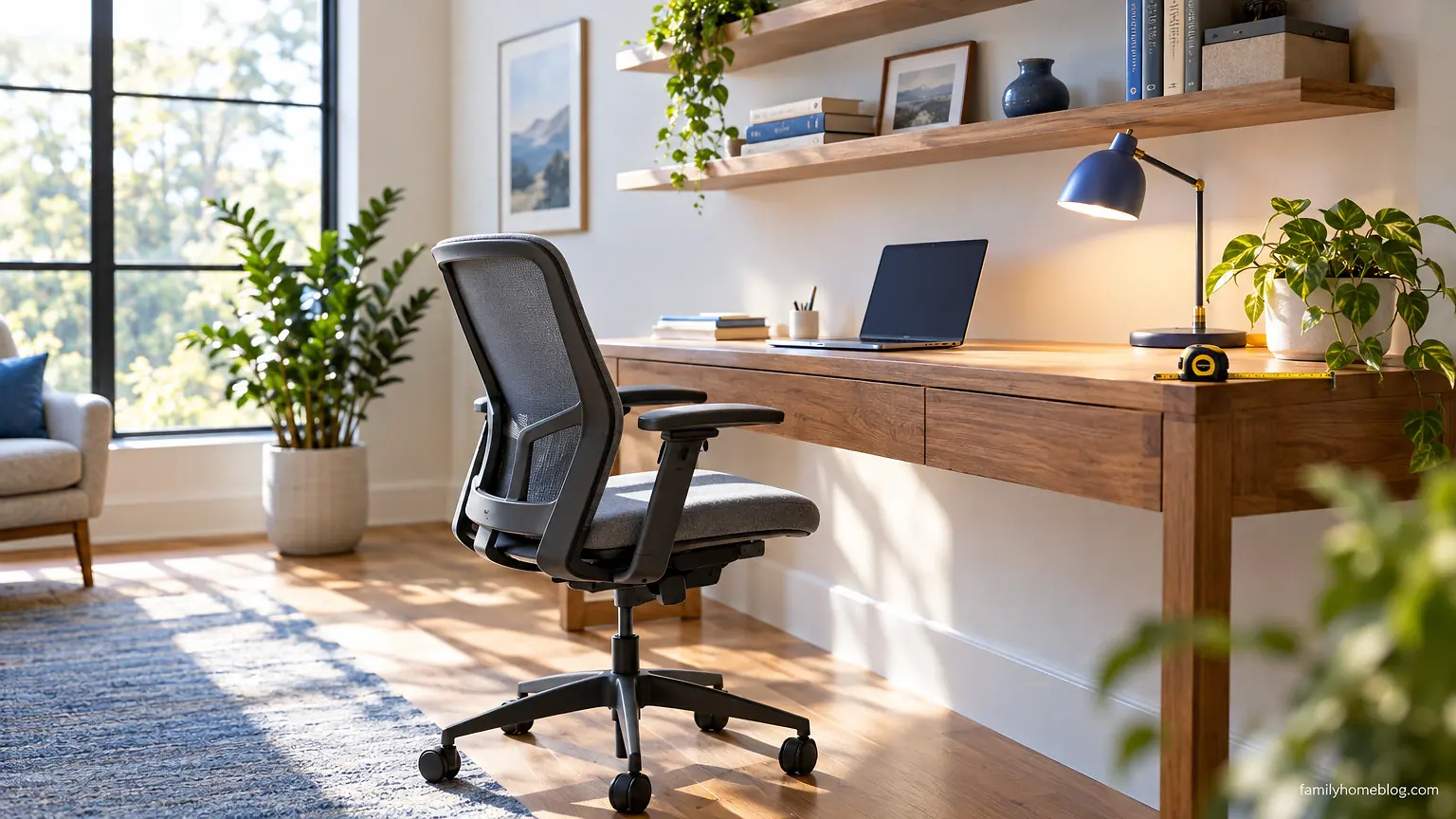
You cleared a corner of the dining table, and now the laptop shares space with cereal bowls at 8 a.m. Every call means moving the fruit basket. This guide collects home office ideas sorted by the constraint that decides most layouts: the space you actually have. Start by measuring, because a good setup is mostly arithmetic. If you want a desk built to your exact dimensions, customizable office tables tailor to the room instead of the other way around.
Measure the space before you pick anything
Grab a tape measure and write down five numbers. Wall width, wall depth, ceiling height, window position, and outlet location. Most layouts fail because someone bought furniture first and checked clearances second.
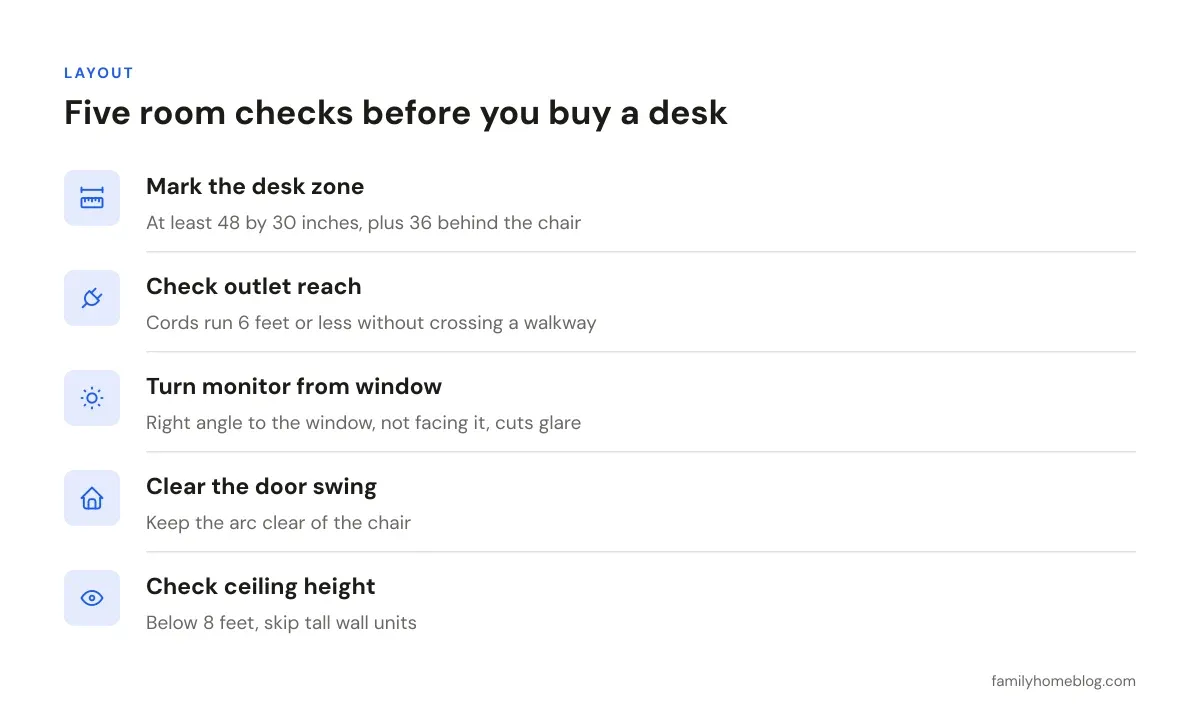
Use this short checklist:
- Desk zone: at least 48 inches wide by 30 inches deep, plus 36 inches behind the chair for rolling out.
- Outlet reach: a cord should run 6 feet or less without crossing a walkway.
- Window side: place the monitor at a right angle to the window, not facing it, to cut glare.
- Door swing: keep the arc clear of the chair.
- Ceiling height: below 8 feet, skip tall wall units.
Renting? Mark which ideas below need no drilling. Those are flagged “renter-friendly” in each section.
Small home office ideas for closets, corners, and hallways
Under 25 square feet, the goal is a desk that disappears. A closet office works when the closet is at least 24 inches deep. Remove the doors, set a shelf at 29 to 30 inches high as the desktop, and add a clamp light.
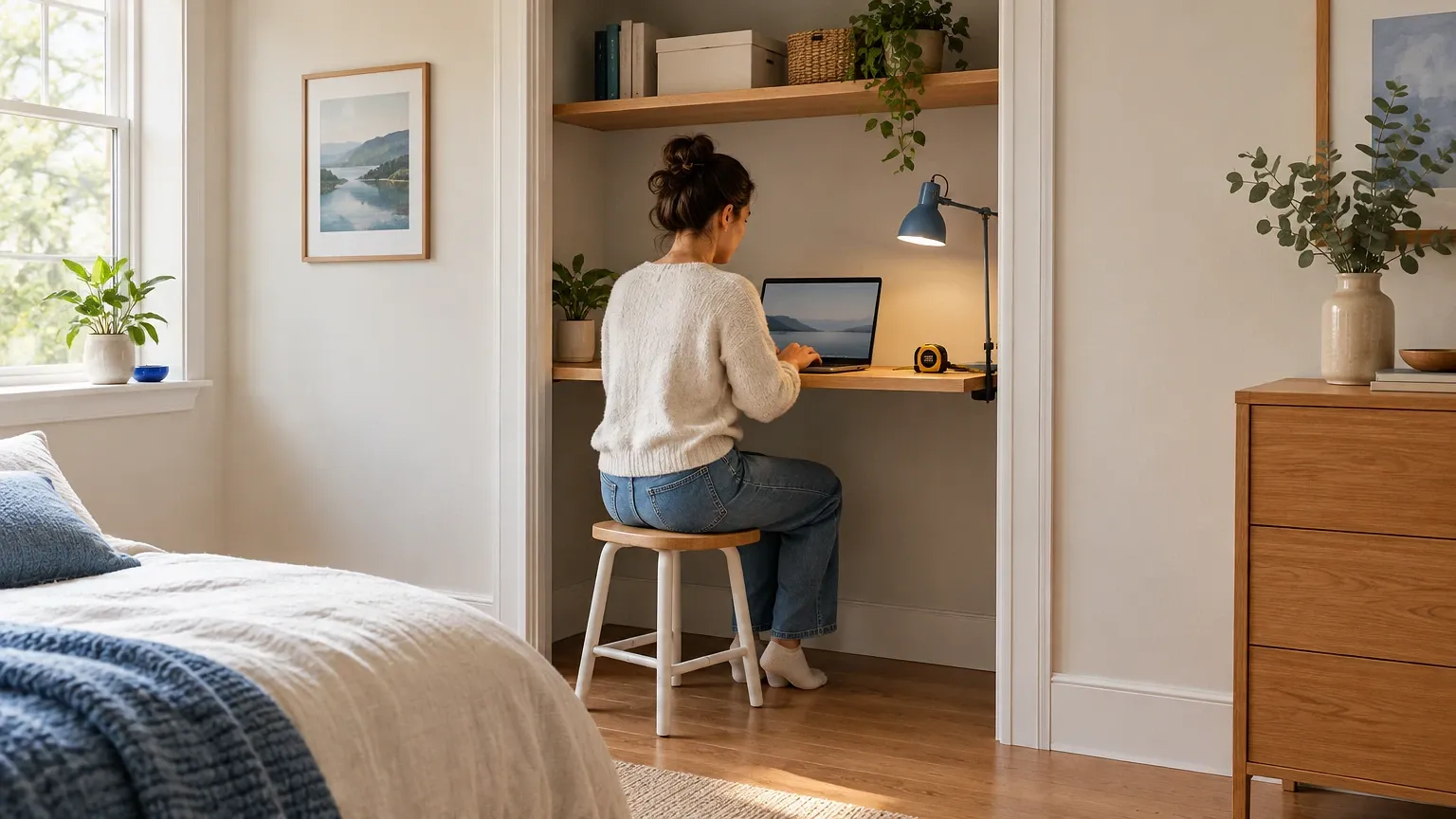
Corners reward an L-shaped plan. Two 24-inch-deep surfaces meeting at 90 degrees give you a main work area and a side station for printer or paperwork. Hallways suit a narrow 15 to 18 inch console desk, though it only works for light laptop use.
A fold-down wall desk is the classic small-space answer, and it carries a real risk. It must be anchored into studs, which sit 16 inches apart on center in most US framing (24 inches in some). Check the manufacturer’s load rating for the hinge hardware and stay under it. Drywall anchors alone will pull out under a monitor and a leaning elbow.
Renter-friendly: closet conversions that use freestanding shelves, and corner desks that rest on the floor.
Home office desk ideas that fit how you work
Pick the desk by task, not looks. Writers and email workers do fine with a 42 to 48 inch top. Anyone running two monitors plus paper needs 60 inches.
Common options:
- Standing-height converter: sits on a standard desk and lifts the work surface. Cheaper than a full electric frame.
- Electric sit-stand frame: best for people who will actually change position through the day. Check the lift capacity in pounds against your monitor and equipment weight.
- Credenza desk: a low cabinet with a pull-out surface that closes at day’s end. Strong for shared living areas.
- Floating shelf desk: minimal footprint, wall-mounted, limited depth.
- Repurposed table: a sofa table around 14 inches deep handles a laptop only.
Desk height matters more than people think. The standard is about 29 to 30 inches, and ergonomics guidance from OSHA says your elbows should sit near 90 degrees with wrists straight. A keyboard tray fixes a desk that runs too tall.
For tight rooms, compact office tables show how much work surface fits in a small footprint.
Modern home office ideas that stay clean
A modern look usually means hidden cables and fewer objects. The look breaks the moment the system needs daily discipline, so build in the tidying.
Run a power strip under the desk on a mounted cable tray, and bundle the rest with reusable hook-and-loop ties. Choose closed storage over open shelving for paper, since open shelves collect clutter within weeks. A two-drawer file cabinet around 15 inches wide handles most household paperwork.
Pick a matte desktop to cut screen reflections. Stick to two or three materials, such as wood, black metal, and white, which keeps a small room from feeling busy.
One failure mode to avoid: floating shelves loaded with books. A typical bracket-mounted shelf has a posted capacity per bracket, and books are heavy. A full row of hardcovers can exceed it fast, so read the rating and screw into studs.
Shared and multipurpose rooms
Not everyone gets a spare room. The dining room, bedroom corner, and guest room all double as offices, and each has a catch.
In a bedroom, face the desk away from the bed so you stop seeing unmade sheets mid-call. In a dining room, a rolling cart holds laptop, notebook, and charger, then parks in a closet at 5 p.m. In a guest room, a wall bed or sleeper sofa leaves the desk in place permanently.
Decision rule: if you work from home three or more days a week, give the desk a permanent spot. If it is one or two days, use the pack-away cart. Daily setup and teardown fails for most people within a month.
Renter-friendly: every option here, as long as you use freestanding furniture.
Storage, light, and ergonomics that get overlooked
Quick picks for the details that make any layout work:
- Monitor top at or slightly below eye level, roughly an arm’s length away.
- Chair seat height so feet rest flat and knees sit near 90 degrees.
- A task lamp on the side opposite your writing hand.
- Overhead light around 4000K, which reads as neutral daylight.
- Vertical storage up to 48 inches high, reachable without standing.
- A footrest if the desk height cannot change.
BIFMA publishes the performance standards that office chairs are tested against, so a chair rated to them gives you a stronger baseline than an unrated one. Light matters too: pair daylight from a window with a lamp, because relying on the window alone leaves you squinting by late afternoon.
What goes wrong, and how to avoid it
Most failed home offices fail for three reasons: weak mounting, no cord plan, and a chair bought for looks.
Mounting is the serious one. Anything on the wall needs a stud, and a stud finder confirms the location. Toggle bolts rated for the load can work in hollow walls, but check the manufacturer’s weight limit and leave a safety margin. If a heavy unit goes over a door or seat, hire a licensed handyman. The cost is small next to a collapsed shelf.
Cords cause the next problem. A strip lying across a walkway is a trip hazard, and an overloaded outlet is a fire concern. Check the strip’s amp rating and avoid daisy-chaining. Run new outlets only through a licensed electrician.
Finally, the chair. Three hours on a dining chair teaches this lesson without help.
Your next move
Tape the footprint of your chosen desk on the floor with painter’s tape and live with it for two days. If you keep bumping it, shrink the plan. If it feels roomy, you have found your layout.
Good home office ideas share one trait: they match the room’s real dimensions and the household’s real habits. Start with the measurements from the first section, choose the desk type that fits your work, and add storage you will genuinely use. Buy the chair first if budget is tight.
Frequently asked questions
How much space do you need for a home office?
A workable desk zone is about 48 by 30 inches, plus 36 inches behind for the chair. That is roughly 15 to 20 square feet including a walking path.
What is the best desk size for a small home office?
For laptop work, 42 to 48 inches wide and 24 inches deep is plenty. Add width only if you run two monitors or spread out paper.
Can you set up a home office in a rental?
Yes. Use freestanding desks, closet conversions, and rolling carts. Skip wall-mounted pieces unless your lease allows drilling and you can hit studs.
How high should a desk be?
Most desks sit around 29 to 30 inches. OSHA ergonomics guidance targets elbows near 90 degrees, so adjust chair height first and add a footrest or keyboard tray if needed.
More home office ideas
Go deeper on one part of the setup. Each guide below covers a single topic in detail: