When it comes to building a backyard oasis or considering a refreshing addition to your property, swimming pools undoubtedly top the list for many homeowners. But choosing the right pool type can be a daunting task with numerous options available. This article explores various pool types to help you make an informed decision that suits your needs and preferences. By understanding different pool types pros and cons, you can confidently select the one that aligns perfectly with your lifestyle and budget.
Key takeaways
- Match your pool type to your yard size, climate, budget, and how your family will swim
- Consider long-term upkeep and replacement costs, not just the upfront installation price
- Check local permits, setback rules, and fencing requirements before choosing a pool
- Plan barriers, alarms, and water safety skills to protect children around any pool
The Classic In-ground Pool
The Timeless Choice
In-ground pools have been a favorite for decades, offering a classic and elegant appeal. They are typically constructed by digging a hole and then adding a lining and support structure. In-ground pools provide a permanent fixture to your property, offering a wide range of customization options in terms of size, shape, and materials. They are perfect for those seeking a long-term investment and a touch of luxury.
Above-Ground Pools
Affordability and Portability
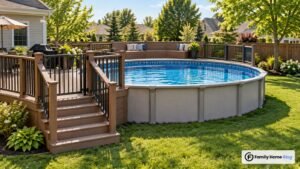
Above-ground pools are an excellent option for those on a budget or looking for a more temporary solution. They are easy to install and can be relocated if needed. Although they may not have the same aesthetic appeal as in-ground pools, they offer a great way to cool off during hot summer days without breaking the bank.
Fiberglass Pools
Sleek and Low-Maintenance
Fiberglass pools are gaining popularity due to their sleek and modern look. They come as pre-formed shells, which are lowered into a prepared hole. Fiberglass pools are known for their low maintenance requirements and durability. They are resistant to algae growth and provide a smooth surface, making them easy on the skin.
Vinyl Liner Pools
Budget-Friendly Customization
Vinyl liner pools are a cost-effective alternative to fiberglass or concrete pools. These pools have a vinyl lining installed over a steel or aluminum frame. While they may not be as durable as some other options, they offer a wide variety of shapes and sizes. Vinyl liners can be easily replaced when needed, providing flexibility in customization.
Natural Pools
Eco-Friendly and Aesthetic
For those who value sustainability and a harmonious blend with nature, natural pools are a fantastic choice. These pools use plants and biofiltration systems to maintain water quality, creating a more environmentally friendly option. Natural pools also provide a unique and beautiful look, with the water seamlessly merging with the surroundings.
Saltwater Pools
Gentle on the Skin
Saltwater pools have gained popularity as an alternative to traditional chlorine pools. They use a salt chlorination system to create chlorine naturally, resulting in gentler water that is kinder to the skin and eyes. While they may have a higher initial cost, they are known for lower maintenance in the long run.
Lap Pools
Perfect for Fitness Enthusiasts
Lap pools are designed for swimmers who want to focus on fitness. They are typically long and narrow, providing a continuous swim experience. These pools are a great addition for health-conscious individuals who want to incorporate swimming into their daily exercise routine.
Spool or Cocktail Pool
Compact Luxury
If space is limited but you still desire a pool experience, a spool (a combination of a spa and a pool) might be the perfect choice. These compact pools offer relaxation and hydrotherapy benefits while saving space compared to larger options.
Summing it Up:
In conclusion, selecting the right pool type involves considering your budget, available space, and personal preferences. By understanding the pool types pros and cons, you can confidently make the choice that best compliments your lifestyle and financial plan. Each pool type has its own unique characteristics and advantages. Whether you opt for a classic in-ground pool, an affordable above-ground pool, or a trendy fiberglass pool, there’s a pool type to suit every homeowner’s needs.
Remember to factor in maintenance costs, long-term plans, and your desired aesthetic when making your decision. Also, consulting with a professional pool builder can help you navigate the options and make an informed choice that will provide enjoyment and value for years to come.
How to Compare Pool Types Before You Commit
Choosing a pool type is easier when you compare a few practical factors side by side. Start with your yard. Measure the space, note slopes, trees, and septic or utility lines, and check local setback rules that control how close a pool can sit to property lines and buildings. Some pool types are more flexible in tight or oddly shaped lots than others.
Next, think about how you will use the pool. Families with young kids often want a shallow area for play, fitness swimmers may want a long lap lane, and people who mostly lounge may be happy with a small spool. Climate matters too, since a short swimming season can make an expensive permanent pool harder to justify.
Finally, consider how long you plan to stay in the home. A permanent in-ground pool is a long-term commitment that can take weeks or months to build, while an above-ground pool can be a lower-risk way to see how much your family actually swims. Some buyers love having a pool and others see it as extra upkeep, so it helps to talk with a local real estate professional if resale matters to you.
- Yard size, slope, and access for equipment
- Who will swim and for what purpose
- Length of your local swimming season
- How long you expect to stay in the home
Upfront and Ongoing Costs by Pool Type
Pool costs go well beyond installation, and they vary widely by region, size, site conditions, and features. As a general pattern, above-ground pools usually cost the least to install, vinyl liner in-ground pools sit in the middle, and fiberglass and concrete pools tend to cost more upfront. Decking, fencing, landscaping, and electrical work can add significantly to any project.
Ongoing costs matter just as much. Budget for chemicals or salt, electricity to run pumps and heaters, water top-ups, a cover, and routine cleaning. Plan for periodic big-ticket items too, such as liner replacement for vinyl pools, resurfacing for concrete pools, or a salt cell replacement for saltwater systems. Your homeowner’s insurance premium may also change, so ask your insurer before you build.
To keep your budget realistic, ask each installer for a written, itemized quote that lists excavation, the pool shell or liner, equipment, decking, fencing, permits, and cleanup separately. Comparing quotes line by line makes it easier to spot what one contractor includes and another leaves out. It is also wise to set aside a contingency fund, since hidden rock, poor soil, or drainage issues can add unexpected work.
Pool Safety Essentials for Families
Whatever pool type you choose, safety planning should come first, especially with children in the home. Many areas require a fence or barrier around residential pools, often with self-closing and self-latching gates, so check your local code before construction. Even where it is not required, a barrier that fully separates the pool from the house and yard is widely recommended.
Layers of protection work best together. Pool alarms, door alarms, and safety covers add extra warning or prevention, but they do not replace active supervision. Designate a water watcher who is not distracted by phones or chores whenever kids swim, and consider swim lessons and CPR training for family members. Keep rescue equipment, such as a reaching pole and life ring, near the pool.
Good pool habits matter as much as equipment. Set clear family rules, such as no swimming without an adult present, walking instead of running on the deck, and no diving in shallow areas. Remove toys from the water after swimming so children are not tempted to reach for them later, and keep chemicals stored securely, away from kids and out of direct sunlight.
- Install a fence with self-latching gates
- Add door and pool alarms
- Assign a dedicated water watcher
- Learn CPR and enroll kids in swim lessons
Frequently Asked Questions
Which pool type is best for a small backyard?
For small yards, a spool, plunge pool, compact fiberglass shell, or modest above-ground pool is often the most practical pool type. These options fit tighter spaces while still offering a place to cool off. Check local setback rules first, since they can limit where any pool can go and how large it can be.
What is the lowest maintenance pool type?
Fiberglass pools are often considered among the lowest maintenance because their smooth, non-porous surface resists algae and needs less scrubbing. Saltwater systems can also reduce day-to-day chemical handling, although salt cells still need periodic cleaning and eventual replacement. Every pool still needs regular water testing, skimming, and filter care. Ask your installer what routine care each option needs.
How long do different types of pools last?
Lifespans vary with climate, installation quality, and care. Concrete and fiberglass pool structures can last for decades with good maintenance, though concrete needs resurfacing periodically. Vinyl liner pools have durable frames, but the liners themselves usually need replacing every several years. Above-ground pools generally have shorter lifespans than in-ground options.
Do I need a permit to install a pool?
In most places, in-ground pools require a building permit, and many areas also regulate above-ground pools, especially deeper ones. Permits often come with fencing, electrical, and setback requirements. Rules vary by city and county, so contact your local building department or ask your pool installer to confirm what is needed before work begins. Getting approvals in writing before digging starts can prevent costly changes later.