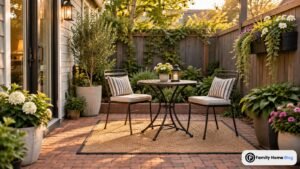
Apartment patio ideas have to work within limits most homeowner decorating articles never mention: a lease, a weight limit, a shared wall, and often a flat “no drilling” rule from the property manager. The good news is that a rented balcony or patio slab can still become a real outdoor room without a single hole in the railing or a call from your landlord. This guide walks through what usually needs permission first, no-drill and removable furnishing options, weight and drainage limits on balconies, the grill rules that catch new renters off guard, and container gardening that fits a space as small as 30 square feet.
The things that matter
- Check your lease before drilling, painting, or installing anything permanent; most leases treat balconies as common or restricted exterior space.
- Command-style hooks, tension rods, and railing planters give you real apartment patio ideas without a single drilled hole.
- Charcoal and propane grills are commonly banned on balconies by fire codes and lease terms in multi-unit buildings.
- Wet, soil-filled containers add real weight fast, so spread heavy planters out instead of clustering them in one corner.
- A 12-to-16-inch container and a sunny railing spot can grow herbs, lettuce, and compact peppers even on a small balcony.
What usually needs landlord permission on an apartment patio?
Anything that changes the structure, the exterior appearance, or the shared systems of the building typically needs written approval first. That covers drilling into railings or exterior walls, installing a permanent privacy screen, running electrical extension cords through shared walls, and hanging anything from a ceiling that is not your own unit’s structure.
Painting a rented patio floor, replacing railing components, or adding a fixed awning almost always requires sign-off, and many leases specifically call out balconies as limited common elements the building still controls. Before you buy anything for your apartment patio ideas board, reread your lease’s exterior alterations clause and, if it is vague, email your property manager and get the answer in writing.
No-drill, renter-friendly decorating solutions
Furnish a rented patio the way you would furnish a rented wall indoors: with removable hardware and freestanding pieces instead of anything screwed in. Command-style adhesive hooks rated for outdoor use hold string lights and small lightweight planters without marking paint or railings. Over-the-rail planter boxes clip onto a railing’s top edge and lift straight off when you move, no drilling required.
Tension rods work well for hanging a lightweight curtain or fabric screen between two walls or posts on a covered balcony, and freestanding shelving units or a small bakers rack add vertical storage without touching the walls at all. A washable outdoor rug also transforms a bare concrete slab fast; browse plastic outdoor rugs for options that roll up easily on moving day. If your household includes young kids, treat any tall, top-heavy piece of furniture on the patio the same way you would indoors: the Anchor It furniture safety campaign recommends anchoring furniture with drawers, doors, or shelves that a child could climb, and notes that most anchoring kits cost under $20 and use two straps per piece, a cheap step worth taking even on a small balcony bookshelf or plant stand.
Weight limits and drainage on balconies
Balconies are engineered to a specific structural load, and older buildings in particular may carry a lower limit than a newer construction. Rather than guessing, ask your property manager or building maintenance office for the balcony’s rated capacity before you fill it with heavy furniture and full-size planters.
Soil holds water, and wet soil is dramatically heavier than dry soil, so a cluster of large ceramic pots in one corner adds up fast. Spread your heaviest containers along the perimeter near the load-bearing edge rather than piling them in the center of the floor, and always set pots on feet or a stand so water can drain rather than pooling against the decking or flooring below. Standing water on a balcony floor can seep into the unit beneath yours, so a saucer under every pot is not optional if you want to stay on good terms with your downstairs neighbor.
Can you grill on an apartment balcony?
Often, no. Many apartment communities and local fire codes prohibit charcoal and propane grills on balconies and patios attached to multi-unit buildings because of the fire risk to shared structures, and violating that rule can mean a lease violation notice even if nothing ever catches fire. Check your lease’s specific language and your building’s posted rules before you bring any open-flame grill onto a rented patio.
Electric grills are the common workaround, since many buildings that ban gas and charcoal still allow electric models rated for outdoor or patio use. If you are unsure, call your property management office directly and ask in writing rather than relying on what a neighbor tells you, since enforcement and insurance requirements vary by building and by city.
Setting up your patio on a budget, step by step
Work through your space in this order so you do not buy furniture that does not fit or plants that cannot survive the light you actually have.
- Measure the full footprint, including door swing and any fixed obstructions, before shopping for furniture. Many apartment balconies land well under the roughly 50-to-100-square-foot range that the Angi patio size guide calls suitable for a small bistro table, so measure twice before buying a set that will not fit through the door.
- Check your lease and confirm weight limits with your property manager, in writing if possible.
- Track the sun for a full day to see how many hours of direct light the space gets before choosing plants.
- Choose furniture that folds or stacks so the patio still functions during bad weather or when you need floor space back; a compact wrought iron patio furniture bistro set is a durable option that still moves easily.
- Add no-drill vertical storage and lighting such as railing planters, tension-rod curtains, and adhesive hook string lights.
- Fill in with containers last, once you know how much floor space and weight capacity you have left.
Container gardening for small outdoor spaces
Container gardening is the single best apartment patio idea for adding life to a small space without needing ground soil at all. According to container plant care guidance from the University of Minnesota Extension, container plants often need watering at least once a day during hot, dry weather, sometimes more depending on the container’s size and material, so a small terra cotta pot on a sunny southern balcony will dry out faster than a larger plastic or glazed container. The same extension guidance recommends starting a fertilizing schedule roughly two to six weeks after planting, and suggests applying a half-strength dose weekly as a gentler alternative to a full dose every two weeks.
The table below compares common container types for a small patio or balcony garden.
| Container type | Best for | Drainage | Weight consideration |
|---|---|---|---|
| Plastic or resin pots | Herbs, lettuce, annual flowers | Easy to drill extra drainage holes | Lightest option, good for weight-limited balconies |
| Glazed ceramic pots | Statement plantings, small shrubs | Usually one bottom hole; needs a saucer | Heavy, especially once soil is wet |
| Fabric grow bags | Tomatoes, peppers, root vegetables | Excellent, water drains through the fabric | Light empty, moderate once filled |
| Railing planter boxes | Trailing flowers, herbs along a rail | Built-in drainage trays | Distributes weight along the railing, not the floor |
| Self-watering containers | Vacation-friendly plants, busy schedules | Reservoir controlled, reduces daily watering | Adds reservoir water weight |
For color without much soil at all, mosquito repellent plants like citronella-scented geraniums do double duty in a rail planter, and a large planter pot placed against the sturdiest part of the floor can anchor a small seating area visually without overloading a weaker section of decking.
Privacy screening that does not require drilling
Freestanding folding screens, tall potted grasses or bamboo in large planters, and outdoor curtains hung from a tension rod between two fixed points all add privacy without touching the building’s structure. Woven reed or bamboo fencing rolls can be zip-tied to an existing railing rather than bolted on, which keeps the installation fully reversible when you move out.
Vertical gardening also doubles as a screen. A tiered plant stand, a set of DIY wall planter ideas mounted on a freestanding trellis, or a row of trailing vines in railing planters can soften sightlines from a neighboring unit while adding exactly the kind of greenery that makes small apartment patio ideas feel more like a room and less like a slab of concrete.
Common mistakes renters make
A few habits show up again and again on rented patios, and most are easy to avoid once you know to watch for them.
- Skipping the lease check. Drilling a single hole for a hanging planter can violate a no-alterations clause you never read closely.
- Overloading one corner. Stacking every heavy pot in the same spot concentrates weight instead of spreading it across the floor.
- Bringing a charcoal or propane grill anyway. This is one of the most common lease violations on shared balconies.
- Forgetting drainage. A pot without a saucer can send water straight onto the balcony below yours.
- Choosing plants for the wrong light. Full-sun vegetables planted on a shaded north-facing balcony will struggle no matter how good the containers are.
Good budget-friendly outdoor space ideas usually solve two or three of these problems at once, since lightweight furniture and container plants naturally keep weight and drainage in check.
Safety and permits: when to call your property manager
Contact your property manager before installing any fixed shade structure, running new electrical wiring, or making any change to the railing itself, since railing height and spacing are typically governed by local building code and altering them can create a liability issue for the building. Never remove or modify a railing to fit larger furniture through, and never use a balcony to store items that block the door in a fire emergency.
If your balcony shows visible cracks, rust on structural supports, or noticeable flex underfoot, report it immediately and hold off on adding furniture or planters until maintenance confirms it is safe. These are structural issues for the building’s maintenance team or a licensed inspector, not something to assess yourself.
A few more questions
What furniture works best for a small rented patio?
Folding or stacking bistro sets, lightweight resin chairs, and collapsible side tables work well because they store flat when you need the floor space back or when you move. Look for weather-resistant materials like resin wicker or powder-coated aluminum that will not need to come inside every time it rains.
How do you add shade to an apartment balcony without drilling?
A freestanding cantilever umbrella with a weighted base, a portable shade sail secured with removable clamps, or a tall potted tree positioned to block afternoon sun can all add shade without touching the structure. Check the umbrella base weight against your balcony’s load limit before buying the largest option available.
Do apartment patios attract pests more than houses?
Not inherently, but standing water in saucers and food left out after grilling or dining can draw insects to any outdoor space, apartment or house. Emptying saucers after rain and cleaning up food debris promptly reduces the draw regardless of what kind of building you live in.
Is it worth buying nice furniture for a rental patio?
It can be, if you choose pieces that travel well between apartments, such as modular or foldable furniture rather than built-in-style sets. Weigh the piece’s resale or reuse value against how long you expect to stay, since furniture that survives a move is a better investment than something sized for one specific balcony.
Start with your lease and a tape measure before you buy anything. Confirm what needs permission, note your balcony’s weight guidance from your property manager, and track the sun for a day so your container choices actually survive. From there, layer in no-drill storage, a folding furniture set, and a few well-placed containers, and a rented slab of concrete starts to function like a real outdoor room. None of it needs to be permanent to feel worth doing well.