Good pool deck ideas start with a simple test: can you walk across the surface barefoot on a July afternoon without hopping, and can you still get traction on it two seconds after a cannonball soaks it? For an in-ground pool, the deck is doing three jobs at once, keeping feet cool, keeping feet from sliding, and keeping water moving away from the coping instead of back into the pool. Get those three right first, then layer in the fencing your local code requires and the sun, shade, and dining zones that make the space worth using every day.
Pool deck ideas for a surface that stays cool underfoot
Surface temperature comes down to color and material more than anything else. Dark gray or charcoal pavers, dark stained concrete, and dark composite decking all absorb heat and can become uncomfortable to stand on by midafternoon. Lighter tones, whether that is a tan poured concrete, a white-toned travertine, or a light sand-colored paver, reflect more sunlight and stay walkable longer into the day.
Texture also matters. A smooth troweled concrete slab traps heat at the surface, while a broom-finished or exposed-aggregate slab has a slightly rougher profile that sheds heat a little faster. Natural stone such as travertine stays cooler than concrete or tile even in darker tones, since the stone itself does not conduct heat the way a dense manufactured surface does. In a hot climate, weigh that cooling benefit against the higher cost before ruling stone out.
Slip resistance when the deck is wet
A pool deck that looks great dry can turn dangerous once it gets splashed. Smooth, polished, or glazed finishes are the worst offenders because water sits on top of the surface instead of settling into texture a foot can grip. Look for a coefficient of friction rating when comparing pavers or tile, and ask any concrete contractor for a slip-resistant broom or exposed-aggregate finish rather than a smooth trowel.
Textured pavers, heavily patterned stamped concrete, and flamed or tumbled natural stone all perform better wet than polished finishes. On an existing smooth deck, a penetrating anti-slip sealer can improve grip without a full tear-out, though it needs reapplication every few years as foot traffic wears it down.
Pool deck materials compared
Every material trades off differently on heat, grip, and price. The table below uses Angi’s 2026 per-square-foot pricing for decking materials as a starting point, with heat and slip characteristics based on general material properties.
| Material | Cost per sq ft | Heat underfoot | Slip resistance wet |
|---|---|---|---|
| Poured concrete (broom finish) | $4–$8 | Moderate; lighter colors stay cooler | Good with texture |
| Pavers (concrete or brick) | $6–$8 | Moderate; gaps release some heat | Good with textured face |
| Natural stone (travertine, etc.) | $3–$25 | Low; naturally cool surface | Good when tumbled or flamed |
| Composite decking | $4–$12 | High in dark colors | Fair; check grooved profiles |
| Stamped concrete | $15–$30 | Moderate to high in dark tints | Fair to good depending on texture depth |
| Pool deck tile | $15–$20 | High if glazed; low if matte | Poor if glazed; avoid near pools |
Real prices swing with region, contractor demand, and product line, so treat these as planning ranges, not quotes. Composite suppliers such as the ones covered in our composite decking materials comparison also make grooved, textured boards for wet areas, worth asking about if you want composite’s low-maintenance appeal near the water.
Coping and edge details where the deck meets the water
Coping is the cap that runs along the pool’s edge, and it is a separate material decision from the deck field around it. Bullnose concrete, natural stone, and precast pavers are the three most common coping choices, each rounded or chamfered so swimmers do not scrape a sharp edge climbing out. Coping typically sits slightly proud of the water line and overhangs the pool shell a bit, which helps direct splash back toward the deck rather than down the pool wall.
Color contrast between coping and field also improves safety. A lighter coping band against a darker deck, or the reverse, makes the pool edge easier to see at dusk, which matters more than most homeowners realize until someone catches a toe on an edge they didn’t see clearly.
Drainage: keeping water away from the pool
Standing water on a deck is a slip hazard and, over time, a structural problem, since water pooling against coping can work into joints and undermine the base beneath the deck. The general rule contractors use is a slope of roughly a quarter inch per foot, running away from the pool toward a lawn area, a drain, or a dry well. On a sloped lot, the deck often needs its own grading independent of the yard’s natural slope, which can mean some cut-and-fill work before the slab or pavers go down.
If your yard already fights drainage problems, especially on a slope, it is worth solving that before you build the deck rather than after. Our retaining wall installation guide covers how a low wall can redirect water and create a level pad for a deck on uneven ground.
Pool barriers, fences, and self-closing gates
How tall does a pool fence need to be? Most residential guidance calls for a barrier at least four feet tall around the entire pool area, built so it cannot be easily climbed, with any gate that opens toward the pool self-closing and self-latching, according to the Pool Safely campaign run by the U.S. Consumer Product Safety Commission. The federal Virginia Graeme Baker Pool and Spa Safety Act adds requirements around drain covers and entrapment prevention, and it is the reason newer drain covers look different from older flat grates (Pool Safely, 2026).
Local codes vary on fence height, picket gap sizes, and latch placement, so check with your city or county building department before finalizing a fence plan or pulling a permit. If your existing yard fence already serves part of the barrier, it may need modification rather than replacement. Our guide to upgrading your property’s fencing is a starting point for comparing materials, though a licensed installer should confirm your layout meets pool code.
Beyond the fence itself, the Pool Safely FAQ recommends layering protection: a designated “water watcher” free of phone or other distractions whenever anyone is in or near the water, swim lessons for kids, door and pool alarms, and CPR training for adults in the household. None of that replaces a compliant barrier, but together they close gaps a fence alone cannot.
Layout zones: sun, shade, and dining
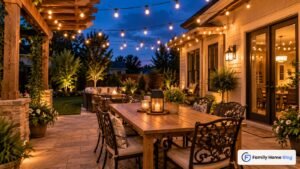
A deck that works well for a family usually splits into at least three zones instead of one open slab. A sun zone near the water holds loungers for swimmers drying off. A shade zone, whether under a pergola, umbrella, or covered porch extension, gives non-swimmers and younger kids a place to sit out of direct sun for hours at a stretch. A dining or lounge zone, set back a few feet from the splash line, keeps food and cushioned furniture away from constant wet feet tracking through.
Step by step: planning your zones
Start by measuring the usable deck footprint and marking a 4 to 6 foot buffer around the pool’s edge, since that band gets wet constantly and should stay clear of furniture. Next, decide where morning and afternoon shade falls naturally in your yard and put the shade zone there rather than fighting the sun with a structure alone. Then lay out the dining zone on the driest, most level section remaining, sized for the table and chairs you actually own or plan to buy. Finally, walk the space with a hose running to see how water actually moves before you commit to hardscaping, since real drainage rarely matches the plan on paper.
Container plantings are an easy way to soften the line between zones without permanent construction. Large planters grouped at the edge of the dining zone can screen it visually from the pool without blocking sightlines a water watcher needs; see our piece on large planter pots for sizing and material options that hold up outdoors.
Where pool deck plans go wrong
Among pool deck ideas that look good on paper, the most frequent mistake is picking a beautiful dark material without testing it in full sun first, then discovering by June that no one can walk on it barefoot. Ask a supplier for a full-size sample and set it in direct sun for a few hours before ordering. A second common error is skipping the slope calculation and pouring a flat slab, which looks fine until the first rain leaves puddles at the coping line.
Undersizing the fenced area is a third mistake, often because homeowners fence just the pool shell rather than the whole wet deck zone, leaving a gap where a toddler could reach water without passing through a gate. Many people also forget lighting until after the hardscape is finished, meaning conduit has to be cut into a finished slab later. Plan low-voltage lighting runs during design even if fixtures go in the following season.
Pool deck costs and budget planning
Beyond the material costs above, budget for coping separately, since it is usually priced and installed as its own line item rather than folded into the field cost. Fencing, gates, and electrical work for lighting or an alarm system are additional costs a pool deck quote will not always include unless you ask. Labor commonly makes up a large share of the total project, so get at least two itemized quotes before comparing materials (Angi, 2026).
Phasing the project can spread out cost: build the deck and required fencing first, since those are non-negotiable for safety, then add shade structures, furniture, and decorative lighting once the core work is paid off.
Jobs worth handing to a contractor
Pool fencing, gates, and any electrical work near water are not do-it-yourself projects if you want them to meet code and keep your family safe. A licensed fence contractor can confirm your barrier meets local height, gap, and latch rules, and a licensed electrician should handle pool-adjacent lighting or outlets, since GFCI protection near water is required, not optional. For the deck itself, a concrete or hardscape contractor familiar with pool work will know how to slope and finish correctly around coping, a harder detail than a standard patio.
Questions worth asking first
How much does a pool deck cost per square foot?
Decking material costs for an in-ground pool range from about $4 to $8 per square foot for poured concrete up to $15 to $30 for stamped concrete, according to Angi’s 2026 pricing data. Pavers run roughly $6 to $8 and natural stone spans $3 to $25 depending on the stone type. Add coping, fencing, and labor on top of these material figures, and expect real quotes to vary by region and contractor.
What is the coolest material for a pool deck?
Light-colored natural stone such as travertine tends to stay coolest underfoot because the material itself doesn’t conduct and hold heat the way dense concrete or composite decking does. Light-toned, textured concrete is the more budget-friendly runner-up. Dark pavers, dark composite, and glazed tile all get noticeably hot in direct sun and are worth avoiding for a deck used barefoot.
How tall does a pool fence need to be?
Most residential pool safety guidance calls for a barrier at least four feet tall that a child cannot easily climb, with a gate that self-closes and self-latches, per the Pool Safely campaign run by the CPSC. Exact height, picket gap, and latch placement rules vary by city and county, so confirm the specifics with your local building department before installing or modifying a fence.
Do I need a permit for a new pool deck?
In most jurisdictions, yes, especially if the deck ties into fencing or electrical work required for pool safety compliance. Permit requirements depend on your local building department and sometimes on deck size or height, so check before pouring concrete or setting pavers. A licensed contractor working in your area will usually handle the permit application as part of the job.
What is the best non-slip surface for a pool deck?
A broom-finished or exposed-aggregate concrete, a textured paver, or a flamed or tumbled natural stone all provide real grip when wet, unlike smooth or polished finishes. Ask any supplier for the surface’s coefficient of friction rating and request a wet-tested sample before you commit to a material for the area immediately surrounding the pool.
Start turning these pool deck ideas into a plan with the surface test: get samples of your top two or three materials, set them in full sun, and hose them down to check both heat and grip before you sign a contract. From there, confirm your fencing and gate plan with your local building department first, since that decision affects where the deck’s edges and gate openings can go. Once the safety layer is settled, the sun, shade, and dining zones are the fun part, and they are much easier to get right when the drainage and coping details underneath them are already correct.