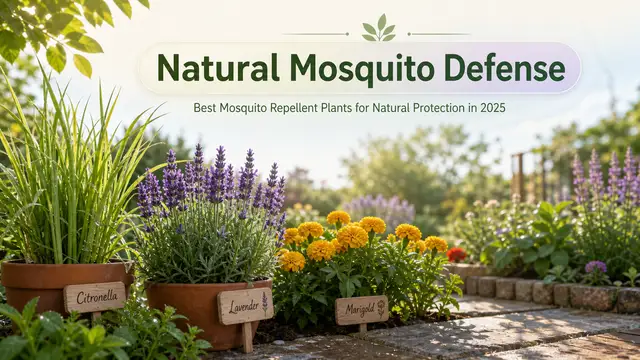
Chemical bug sprays work fast but leave residue on your skin. Mosquito repellent plants offer a cleaner solution. The key is choosing varieties with proven compounds and placing them strategically.
Most homeowners plant random herbs and wonder why mosquitoes still bite. Success requires specific plants with measurable oil concentrations. You need the right compounds in the right locations.
The Science Behind Plant-Based Mosquito Defense
Mosquitoes track humans using carbon dioxide and body heat from 100 feet away. Certain plants release oils that jam these detection systems. The insects lose your scent trail within 3-6 feet of active plants.
Two compounds deliver the strongest results. Citronellol blocks mosquito scent receptors for 2-4 hours after contact. Geraniol disrupts their nervous system on direct exposure.
Commercial DEET sprays contain 10-30% active ingredients. Plants release the same compounds at 0.5-2% concentration when leaves are crushed or heated by sun. This creates protection zones rather than full-body coverage.
Fresh citronella grass releases oils when wind moves through the stalks. A mature clump protects roughly 25 square feet. Beyond that range, compound levels drop below effective thresholds.
Laboratory tests show catnip outperforms DEET by 10 times in controlled conditions. The plant’s nepetalactone triggers strong avoidance in multiple mosquito species.
Five Mosquito Repellent Plants That Actually Reduce Bites
Citronella grass produces 15-20 oil-rich stalks per plant. Place large containers near patios for wind-activated protection. Full sun and weekly summer watering maintain peak oil production. Expect 60-70% fewer encounters within effective range.
Catnip contains the strongest natural repellent compounds. Fresh leaves rubbed on skin provide 2-3 hours of protection. Plant in contained areas since it spreads aggressively through underground runners.
French marigolds release pyrethrum, the same compound in commercial insecticides. African marigold varieties show weaker effects. Plant as border rows around seating areas for zone defense. Replace annually for consistent potency.
Peppermint works through dual action. Menthol scent masks human odors while plant oils create irritant barriers. Established plants spread rapidly. Use large pots to control growth while maximizing oil production.
Rosemary releases oils naturally without leaf damage. Mediterranean varieties contain the highest compound concentrations. The woody herb thrives in hot, dry conditions where mosquitoes often breed nearby.
Smart Placement Creates Protection Zones
Mosquitoes follow predictable flight paths based on wind and breeding sites. Position plants between problem areas and outdoor living spaces. This intercepts insects before they reach you.
Cover entry points with 2-3 citronella clumps within 4 feet of doors. People brushing past releases oils for temporary protection. Windows need similar coverage on the exterior side.
Seating areas require overlapping plant coverage. Arrange containers in rough circles 5-6 feet from furniture. Mix tall rosemary with ground-level marigolds for multi-layer defense.
Water features attract egg-laying females. Plant peppermint and catnip upwind from ponds or fountains. Oils drift across water surfaces and disrupt breeding behavior.
Avoid mixing repellent plants with fragrant flowers in the same bed. Competing scents reduce effectiveness of both plant types.
Timing and Care for Peak Oil Production
Plant potency fluctuates throughout growing seasons. Most varieties show strongest effects during active growth in late spring and early summer. Oil concentrations drop during flowering and dormant periods.
Pruning schedules directly impact compound levels. Pinch flower buds on basil and mint to focus energy on leaf production. Trim citronella grass to 8-10 inches monthly during growing season.
Slightly water-stressed plants often produce higher oil concentrations. Deep weekly watering works better than daily light applications. Soil should dry between watering sessions.
Apply balanced fertilizer in early spring only. Switch to low-nitrogen options after midsummer. High nitrogen late in season reduces protective oil production by 30-40%.
Replace annual marigolds each season. Perennial varieties maintain effectiveness for 3-4 years before oil production declines noticeably.
Understanding the Limits of Plant Protection
Plant-based control reduces mosquito encounters by 40-70% within effective ranges. This works well for casual outdoor dining but may not suffice during peak season or in heavily infested areas.
Newly planted varieties need 4-6 weeks to establish and begin producing meaningful oil levels. Plan spring installations for summer protection. Container plants establish faster than direct-planted varieties.
Weather significantly affects performance. Hot, dry days increase oil release and extend protection zones. Cool, humid conditions reduce effectiveness by 30-40%. Rain washes oils from surfaces, requiring 24-48 hours for regeneration.
Different mosquito species show varying responses. Aedes aegypti (yellow fever mosquitoes) avoid citronellol-based plants consistently. Culex pipiens (house mosquitoes) show less predictable avoidance patterns.
Combine plants with other natural methods for comprehensive control. Remove standing water, install circulation fans, and encourage dragonflies that prey on adult mosquitoes.
Building Your Natural Defense System
Start with proven varieties rather than experimenting with every option. Citronella grass, French marigolds, and catnip provide reliable baseline protection. Add specialty plants based on specific landscape needs.
Container growing offers placement flexibility for renters. Use 12-inch minimum diameter pots for adequate root development. Group containers for concentrated protection zones around priority areas.
Direct planting works better for permanent installations covering larger areas. Space plants 18-24 inches apart for mature growth without overcrowding. Match soil and sun requirements to plant specifications.
Budget $150-300 for comprehensive coverage of 500-800 square feet. Container plants cost $15-25 each. Direct-planted varieties run $8-15 per plant. Factor in annual replacements and soil amendments.
Test effectiveness in your specific location before large installations. Regional mosquito populations vary significantly. Track results during 15-minute observation periods in treated versus untreated areas. Many homeowners discover that combining multiple plant varieties with strategic placement timing creates more reliable protection than any single approach alone.
Common Mistakes That Reduce Plant Effectiveness
Many homeowners expect immediate results from newly planted mosquito repellent varieties. Plants need full root establishment before producing adequate oil levels. Rushing the timeline leads to disappointment and abandoned natural control efforts.
Overwatering kills oil production in Mediterranean herbs like rosemary and lavender. These plants evolved in dry climates where stress triggers defensive compound release. Daily watering reduces protective oils by 50-60% compared to weekly deep soaking.
Wrong plant spacing creates gaps in coverage zones. Citronella grass needs 4-5 foot spacing for overlapping protection circles. Closer planting wastes money without improving results. Wider spacing leaves unprotected areas where mosquitoes concentrate.
Mixing incompatible plants reduces overall effectiveness. Sweet-scented flowers like jasmine or honeysuckle attract insects that repellent plants are trying to deter. Keep ornamental and functional plantings in separate garden areas.
Neglecting seasonal maintenance allows plants to lose potency. Dead-heading spent blooms redirects energy into oil-producing foliage. Pruning woody herbs like rosemary prevents them from becoming less effective older wood.
Maximizing Results Through Strategic Garden Design
Create layered defense systems using plants of different heights and bloom times. Ground-level marigolds provide immediate contact protection. Mid-height peppermint creates scent barriers. Tall citronella grass releases oils above head level.
Position the strongest varieties upwind from problem areas. Prevailing summer breezes carry protective compounds across larger spaces. A single mature citronella clump can protect 40-50 square feet when properly positioned relative to wind patterns.
Use hardscaping to amplify plant effectiveness. Stone or concrete surfaces reflect heat that increases oil release during peak mosquito activity hours. Place containers against south-facing walls for maximum thermal activation.
Group plants in odd numbers for natural appearance and better coverage overlap. Three large pots create more effective protection than two identical containers. Five smaller plants work better than four for border plantings.
Plan for year-round protection in mild climates. Evergreen rosemary provides winter mosquito control when annual varieties die back. Perennial catnip maintains root systems for faster spring emergence and earlier protection.
Getting Started This Season
Begin with a starter collection of three proven varieties in containers. Citronella grass, French marigolds, and peppermint cost $45-60 total and protect 150-200 square feet effectively. This tests the approach without major investment.
Time initial plantings for 6-8 weeks before peak mosquito season in your area. Most regions see heaviest activity from June through August. April or May planting allows establishment before insects become problematic.
Source plants from reputable nurseries that guarantee variety accuracy. Many garden centers sell ornamental grasses labeled as citronella that lack repellent properties. True citronella grass has a distinct lemony scent when leaves are crushed.
Track results using simple before-and-after counts during 15-minute outdoor periods. Note wind direction, time of day, and recent watering when recording observations. This data helps optimize placement and care routines for your specific conditions.
Consider your long-term commitment to natural mosquito control. Container plants require regular watering and seasonal care. Direct plantings need less maintenance but represent permanent landscape changes. Choose the approach that matches your gardening style and housing situation.
Protecting Your Investment Year After Year
Most mosquito repellent plants maintain effectiveness for 3-5 growing seasons with proper care. Annual varieties like marigolds need replacement each spring. Perennial herbs require division every 3-4 years to maintain oil production.
Store tender varieties indoors during winter in cold climates. Citronella grass and scented geraniums survive as houseplants with bright window exposure. Cut back to 6-8 inches and reduce watering through dormant months.
Collect seeds from annual varieties to reduce replacement costs. French marigolds self-seed readily in favorable conditions. Harvest seeds in late summer and store in cool, dry conditions for spring planting.
Monitor plants for pest and disease issues that reduce oil production. Aphids and spider mites commonly attack stressed repellent plants. Weekly inspection catches problems before they significantly impact effectiveness.
Plan succession plantings of annual varieties for extended protection. Start new marigold seeds every 4-6 weeks from spring through midsummer. This ensures continuous bloom and peak oil production throughout mosquito season.
Your natural mosquito defense system improves with experience and observation. Start small, track results, and expand successful approaches. Within 2-3 seasons, most homeowners develop reliable plant-based protection that significantly reduces their reliance on chemical sprays.
Frequently Asked Questions
How effective are mosquito repellent plants compared to DEET sprays?
Plants reduce encounters by 40-70% within 3-6 feet of the source. DEET provides 85-95% protection with direct skin contact. Plants work best for stationary activities like outdoor dining or reading.
Which varieties are safest around children and pets?
Citronella grass, marigolds, and rosemary pose minimal safety risks. Limit catnip if you own cats to prevent overstimulation. Container-grow peppermint to control its aggressive spreading habit.
When do newly planted mosquito repellent plants start working?
Plants need 4-6 weeks after installation to develop root systems and meaningful oil production. Peak effectiveness occurs during active growth periods in late spring and early summer months.
Do these plants work against other flying insects?
Many varieties also repel flies, gnats, and some ant species. Marigolds specifically target garden pests like aphids and whiteflies. Peppermint deters mice and spiders as additional benefits.
Can I grow mosquito repellent plants successfully indoors?
Small potted peppermint and catnip work near windows and doorways. Indoor plants produce lower oil concentrations due to reduced sunlight. Crush leaves occasionally to release stronger protective compounds.