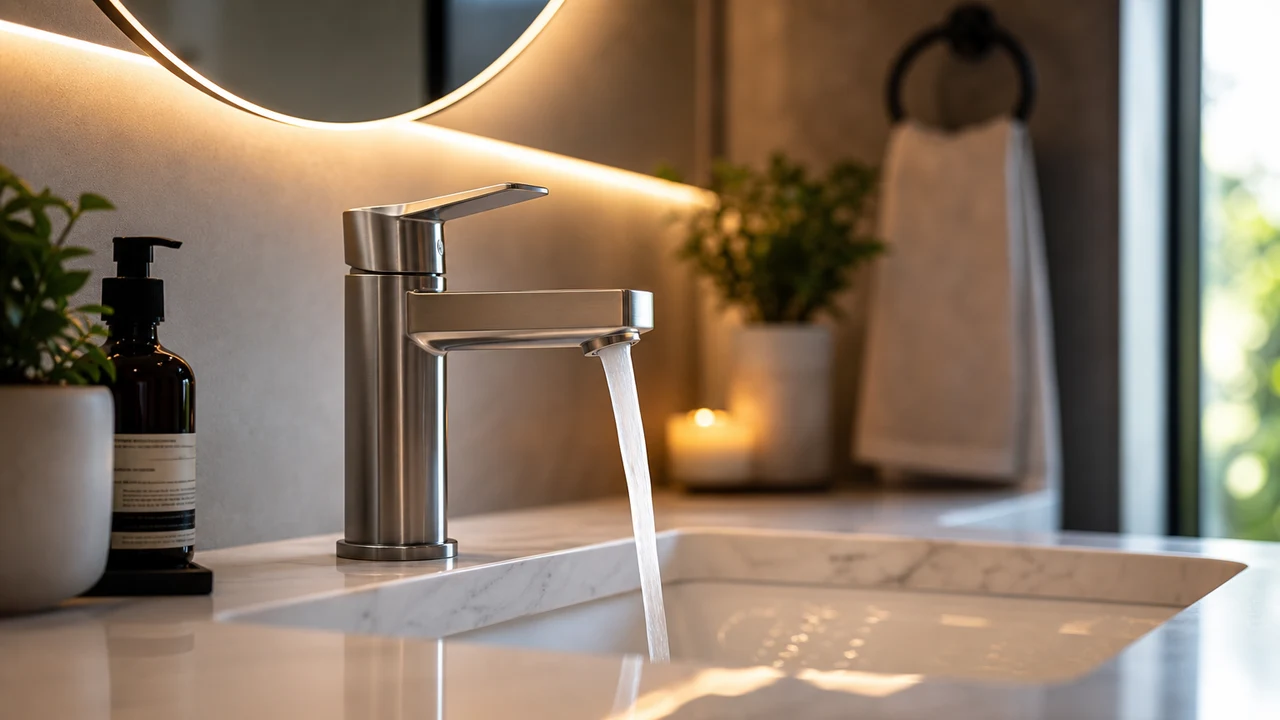
Most homeowners replace bathroom fixtures every 15-20 years. Many miss the upgrade that delivers the biggest visual impact. A single hole bathroom faucet combines sleek design with practical installation that takes just 45 minutes to complete.
These streamlined fixtures need only one mounting hole versus three for traditional designs. The result creates clean counter lines while boosting home value by $300-$500 per bathroom renovation.
Why Single Hole Designs Lead Modern Bathroom Updates
Single hole bathroom faucets captured 72% of new installations in 2024. Their popularity stems from minimalist appeal and space-saving efficiency. They work in any size bathroom.
The compact design requires just 1.25 inches of mounting space. Traditional widespread faucets need 8-10 inches between handles. This difference allows larger sinks or extra counter storage in tight spaces.
Installation complexity drops significantly with single hole models. They use 60% fewer connection points than multi-piece alternatives. Most connect through flexible supply lines. These adapt to existing plumbing without custom fittings.
Modern cartridge technology eliminates the temperature mixing problems of early designs. Current ceramic disc valves operate smoothly for 200,000+ cycles. That equals 18-25 years of typical household use.
Essential Quality Features Every Model Should Include
Premium single hole faucets use ceramic disc valves instead of rubber washers. Rubber washers degrade over time. These valves contain two ceramic plates that create watertight seals. They need no maintenance. Kohler and Moen guarantee these components for 10-15 years.
Water flow optimization balances pressure with conservation requirements. Look for models rated at 1.2-1.5 gallons per minute. These meet EPA WaterSense standards. This flow rate saves 35% more water than older 2.2 GPM fixtures.
Spout dimensions determine daily usability more than decorative elements. Standard models measure 4-6 inches in height. They reach 5-7 inches from mounting point. Vessel sinks require taller spouts of 8-12 inches to clear bowl rims properly.
Finish durability protects your investment through years of daily use. Physical vapor deposition coatings resist scratches and water spots for 7-10 years. Brushed nickel and matte black hide minor wear better than polished surfaces.
Pre-Installation Measurements and Planning
Start by measuring your existing faucet hole diameter with a ruler. Standard single hole installations require 1.25-1.5 inch openings. Check the distance from hole center to sink edge. Most models need 2-3 inches of rear clearance.
Examine the space beneath your sink for supply line access. Look for shutoff valves. Typical installations require 6-8 inches of vertical clearance below the mounting surface. Measure the distance between hot and cold supply lines. This verifies connector compatibility.
Document your current setup with photos before disconnection. Note which supply line connects to hot versus cold water. Mark the positions of shutoff valves. Note any access panels that might need removal.
Verify that your electrical system can handle any electronic features. Touchless operation models require 120V AC power. This comes through a nearby outlet or hardwired connection under the sink cabinet.
Required Tools and Materials List
Gather these essential tools before starting. You need adjustable wrench, basin wrench, and channel-lock pliers. Add flashlight and measuring tape. Most single hole faucets include mounting hardware. Confirm that washers and nuts match your specific model.
Purchase plumber’s putty or clear silicone sealant for the base seal. Get Teflon tape for threaded connections. Bring a bucket for catching residual water. Keep paper towels handy for cleanup during installation.
Turn off water supply at the shutoff valves located under the sink. Test the shut-off by running your existing faucet until water stops completely. Leave faucet handles open. This drains remaining water from the lines.
Place protective covering over finished surfaces near your work area. Installation involves working in tight spaces. Tools can slip and scratch countertops or cabinet finishes.
Step-by-Step Installation Process
Remove your old faucet by disconnecting supply lines with an adjustable wrench. Loosen the mounting nut from underneath using a basin wrench. This tool reaches into tight spaces better than standard wrenches. Clean the sink surface thoroughly after removal.
Apply a thin bead of plumber’s putty around the new faucet base before positioning. Insert the faucet through the mounting hole. Press down firmly to spread the putty evenly. Remove excess squeeze-out immediately.
Thread the mounting nut onto the faucet stem from underneath the sink. Hand-tighten first. Then use a basin wrench to snug the connection. Avoid over-tightening. This can crack ceramic sinks or strip brass threads.
Connect supply lines to hot and cold water valves. Use the included flexible connectors. Apply Teflon tape to threaded connections in a clockwise direction. Tighten connections 1.5-2 full turns past hand-tight. This prevents leaks.
Popular Styles and Design Options
Contemporary lever-handle models offer intuitive operation with smooth temperature control. The Delta Trinsic series features angular lines. It has 4.5-inch spout height for standard undermount sinks. Prices range $185-$340 depending on finish selection.
Traditional knob-style faucets provide classic appeal while maintaining single hole efficiency. Kohler’s Devonshire collection combines vintage aesthetics with modern cartridge technology. It offers 5.2-inch spout reach. These models cost $230-$395 for premium finishes.
High-arc designs maximize sink clearance for washing hair or filling containers. The Moen Arbor collection offers 8.1-inch spout height. It includes optional pull-down functionality. Expect prices of $290-$465 for these versatile models.
Waterfall spouts create distinctive visual effects while maintaining installation simplicity. These wide-flow designs work best with vessel sinks. Water cascade becomes a design feature. Brands like Kraus offer waterfall models from $170-$310.
Maintenance Schedule for Long-Term Performance
Clean your faucet weekly with mild soap and water. This prevents mineral buildup. Avoid abrasive cleaners that damage protective finishes. In hard water areas, wipe surfaces after each use. This prevents calcium deposits.
Service the cartridge every 2-3 years to maintain smooth operation. Remove the handle and cartridge according to manufacturer instructions. Soak components in white vinegar for 30 minutes. This dissolves mineral accumulation.
> Pro tip: Apply a thin coat of plumber’s silicone grease to O-rings during cartridge reinstallation to prevent binding and extend seal life.
Clean the aerator every 3-4 months to maintain proper water flow. Unscrew the aerator from the spout tip. Rinse away debris. Soak stubborn deposits in vinegar solution for 15 minutes before reassembly.
Inspect supply line connections annually for signs of wear or corrosion. Replace flexible connectors showing cracks or bulging immediately. A burst supply line can cause $5,000-$15,000 in water damage within hours.
Troubleshooting Common Installation Issues
Over-tightening mounting nuts causes 40% of installation problems. This damages faucets and sinks. Hand-tighten connections first. Then use tools to snug just enough to eliminate movement. Excessive force cracks ceramic or strips brass fittings.
Incorrect supply line routing creates stress points. This leads to premature failure. Ensure adequate loop length in flexible connectors for thermal expansion. Kinked lines fail within 2-3 years. Properly installed connections last 8-10 years.
Skipping sealant application allows water seepage beneath the faucet base. This causes cabinet damage and potential mold growth over time. Apply thin, even beads around mounting points before installation.
Test all functions for 2-3 minutes before completing installation. Run hot and cold water to check for leaks. Check proper temperature mixing. Address issues while tools and materials remain accessible.
Maximizing Your Faucet Investment Value
The right single hole bathroom faucet balances style preferences with practical household demands. Busy family bathrooms benefit from ceramic disc valves and easy-clean finishes. Guest powder rooms can accommodate more decorative options.
Models from established manufacturers provide years of reliable service and enhanced aesthetics. Comprehensive warranties protect your purchase while ensuring replacement parts availability. Focus on proven ceramic disc technology over complex electronic features.
Your selection should complement existing fixtures while meeting daily functionality needs. A well-chosen single hole bathroom faucet becomes a long-term design anchor. It adapts to future bathroom updates through timeless simplicity.
Frequently asked questions
How do I know if my sink works with single hole faucets?
Measure your existing mounting hole diameter – single hole faucets need holes between 1.25-1.5 inches. Three-hole sinks can use cover plates for conversion, or you can choose widespread designs instead.
What makes ceramic disc valves better than regular cartridges?
Ceramic disc valves use two ceramic plates that slide together for water control, lasting 200,000+ cycles. Traditional cartridge valves use rubber seals that wear faster but cost less to replace.
Can I install a single hole faucet without professional help?
Most homeowners complete installation in 45-75 minutes using basic tools. The single connection point simplifies the process compared to widespread models, though you need a basin wrench for under-sink access.
How much water do these faucets save compared to older models?
Modern single hole faucets flow at 1.2-1.5 gallons per minute versus 2.2 GPM for older fixtures. This saves 35-45% on water usage while maintaining adequate pressure for daily tasks.
Which finish handles daily use best in busy bathrooms?
Brushed nickel and matte black finishes hide water spots and scratches better than polished chrome. These surfaces maintain appearance with basic cleaning and don’t require special polishing products.