

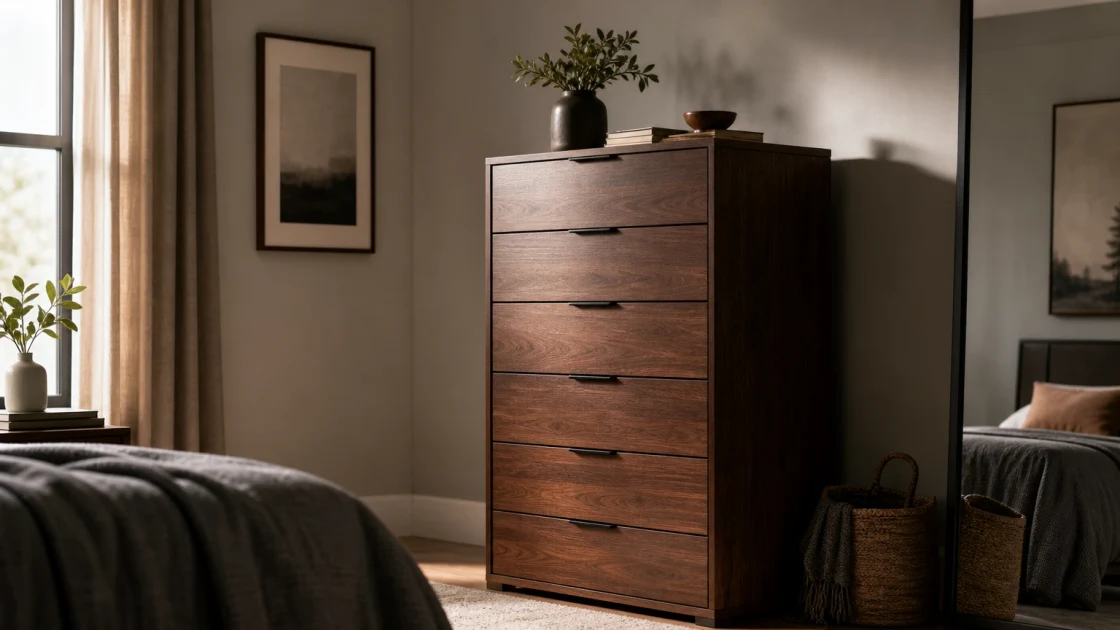
Most furniture buyers think tall dressers sacrifice storage for height. This assumption costs them hundreds of dollars in wasted space and poor organization. Quality tall dressers actually maximize vertical storage while occupying minimal floor area.
Modern tall dressers offer 40-60% more storage capacity than standard 6-drawer models. The right tall dresser transforms cramped bedrooms into organized spaces while providing decades of reliable service.
Height Standards and Space Requirements
Tall dressers typically measure 48-72 inches in height, with 54-60 inches being the sweet spot for most bedrooms. Standard models require 24-30 inches of floor depth and 32-48 inches of width. You need at least 36 inches of ceiling clearance above the dresser for comfortable access to top drawers.
Most tall dressers feature 6-8 drawers arranged in a single column or split configuration. Single-column designs measure 18-24 inches wide, while split models range from 32-48 inches wide. The narrow footprint makes tall dressers ideal for small bedrooms, walk-in closets, and narrow hallways.
Room layout affects placement significantly. Position your tall dresser at least 30 inches from the bed edge for comfortable movement. Corner placement works well but requires 24 inches of clearance on the opening side.
Construction Quality and Materials
Solid wood construction costs 60-80% more than engineered wood but lasts 3-4 times longer. Hardwood species like oak, maple, and cherry resist warping and handle daily use for 20-30 years. Engineered wood options include plywood, MDF, and particleboard with varying durability levels.
Plywood construction offers the best balance of cost and durability among engineered materials. Quality plywood dressers feature 3/4-inch thick sides and 1/2-inch drawer bottoms. Avoid particleboard construction, which fails within 5-7 years under normal use.
Joinery methods determine long-term stability. Dovetail joints provide maximum strength for drawer construction. Mortise-and-tenon joints work best for frame assembly. Avoid dressers assembled entirely with screws or cam locks, which loosen over time.
Drawer Configuration and Organization
Eight-drawer configurations provide optimal storage versatility for most users. Top drawers measure 4-6 inches deep for accessories and undergarments. Middle drawers range from 6-8 inches deep for folded clothing. Bottom drawers typically measure 8-12 inches deep for bulky items like sweaters and linens.
Split-drawer designs maximize organization potential. Two narrow top drawers separate jewelry from socks better than one wide drawer. Some models feature divided drawers with removable organizers that cost $15-25 but increase usable space by 30%.
Full-extension drawer slides allow complete access to drawer contents. Soft-close mechanisms add $50-100 to dresser cost but prevent slamming damage. Ball-bearing slides support 75-100 pounds per drawer compared to 35-50 pounds for basic plastic guides.
Top Tall Dresser Models by Category
Budget-Friendly Options (Under $400):
- IKEA HEMNES 8-drawer dresser offers solid pine construction for $299
- Prepac Astrid 6-drawer tall dresser provides laminate durability for $349
- South Shore Versa 5-drawer dresser maximizes narrow spaces for $279
Mid-Range Selections ($400-800):
- Better Homes & Gardens Grayson Crossing features engineered wood with rustic finish
- Walker Edison Furniture Company offers contemporary metal and wood combinations
- Homelegance Mayville provides traditional styling with dovetail drawer construction
Premium Investment Pieces ($800+):
- West Elm Mid-Century 6-drawer dresser showcases walnut veneer craftsmanship
- Crate & Barrel Tate 8-drawer dresser combines solid acacia wood with modern hardware
- Room & Board Linear 7-drawer dresser features American hardwood construction
Each category serves different needs and budgets while maintaining essential functionality.
Bedroom Layout Integration Strategies
Small Bedroom Placement
Narrow tall dressers work best in 10×10 foot bedrooms or smaller. Position the dresser against the longest wall to maintain traffic flow. Avoid placing tall dressers opposite windows, which blocks natural light and creates visual weight imbalance.
Master Bedroom Configurations
Larger bedrooms accommodate wider tall dressers or dual-dresser arrangements. Place matching tall dressers on either side of a king bed for symmetrical storage. This configuration provides his-and-hers organization while maintaining design cohesion.
Multi-Function Integration
Modern tall dressers often include mirror attachments, jewelry storage, and charging stations. Built-in mirrors eliminate the need for separate vanity areas. USB charging ports cost an additional $75-125 but reduce bedroom clutter significantly.
Assembly and Installation Considerations
Most tall dressers require 2-4 hours of assembly time with basic tools. Pre-drilled holes and numbered hardware simplify the process. Heavy models weighing 150+ pounds need two people for safe assembly and positioning.
Wall anchoring prevents tip-over accidents, especially important for dressers over 48 inches tall. Use appropriate wall anchors for your wall type – toggle bolts for drywall, wood screws for studs. Anti-tip hardware typically includes 2-3 anchor points and adjustable straps.
Professional assembly services cost $75-150 but include proper anchoring and warranty coverage. Many retailers offer white-glove delivery with assembly included for $100-200 additional.
Maintenance and Longevity Factors
Proper care extends tall dresser lifespan significantly. Dust weekly with microfiber cloths to prevent finish damage. Clean spills immediately to avoid water stains and warping. Avoid harsh chemicals that strip protective finishes.
Drawer maintenance involves periodic lubrication of slides and hardware tightening. Quality ball-bearing slides need lubrication every 12-18 months. Check and tighten loose screws annually to prevent structural damage.
Climate control affects wood stability. Maintain 30-50% humidity levels to prevent cracking and warping. Position dressers away from heat sources like radiators and direct sunlight, which cause uneven expansion and fading.
Long-Term Value and Investment Returns
Quality tall dressers retain 40-60% of original value after 10 years compared to 10-20% for budget models. Solid wood construction appreciates in vintage furniture markets. Mid-century and craftsman styles command premium resale prices.
Consider cost per year of ownership when evaluating options. A $800 dresser lasting 25 years costs $32 annually. A $300 dresser lasting 8 years costs $37.50 annually. Higher initial investment often provides better long-term value.
Modular designs allow component replacement and upgrades. Replaceable drawer fronts, hardware, and slides extend usable life beyond 20 years. This flexibility justifies higher upfront costs for quality construction.
Frequently asked questions
What height qualifies as a tall dresser versus standard dresser?
Tall dressers measure 48 inches or higher, while standard dressers range from 30-40 inches tall. The 48-inch threshold provides meaningful vertical storage advantages while maintaining comfortable top-drawer access for most users.
How much weight can tall dresser drawers safely hold?
Quality ball-bearing slides support 75-100 pounds per drawer when properly installed. Budget plastic slides limit capacity to 35-50 pounds. Distribute weight evenly and avoid overloading single drawers to prevent slide failure and structural damage.
Do tall dressers require wall anchoring for safety?
Yes, tall dressers over 48 inches must be anchored to prevent tip-over accidents. Use manufacturer-provided hardware or purchase separate anti-tip kits rated for your dresser’s weight. Proper anchoring prevents 95% of furniture tip-over injuries according to safety data.
What room dimensions work best for tall dressers?
Rooms need minimum 9-foot ceilings for comfortable tall dresser use. Floor space requirements include 30 inches of clearance in front and 24 inches on the opening side. Bedrooms smaller than 8×10 feet work better with narrow single-column designs under 24 inches wide.
How do maintenance costs compare between solid wood and engineered tall dressers?
Solid wood dressers require annual conditioning treatments costing $15-25 but last 20-30 years. Engineered wood needs minimal maintenance but requires complete replacement after 8-12 years. Total ownership costs favor solid wood for users planning 15+ year ownership periods.


