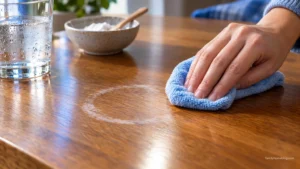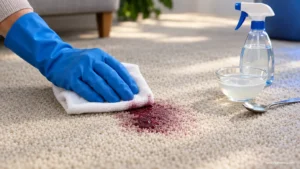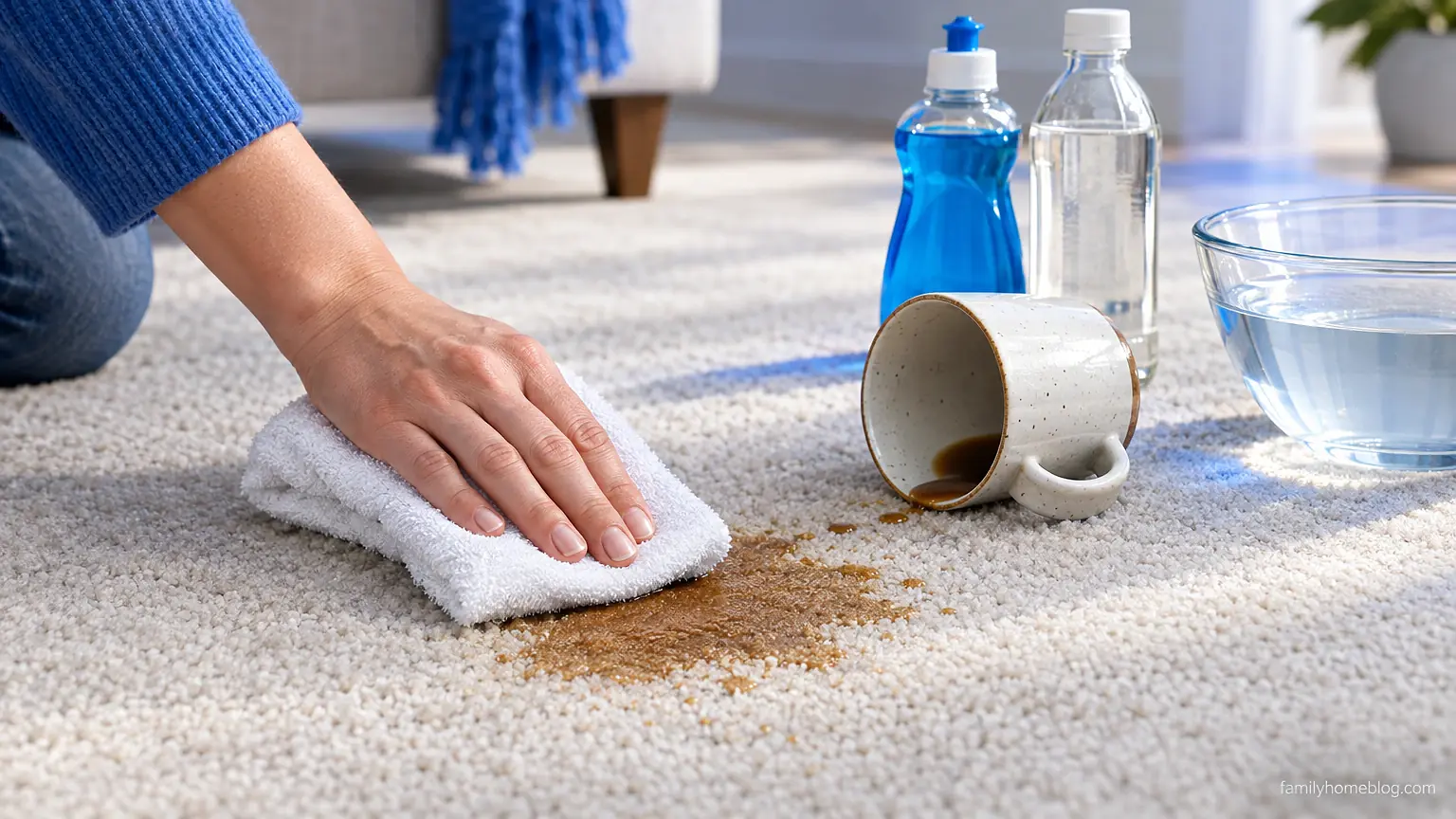
You knocked a mug over, and now there’s a brown map spreading across the carpet or your favorite shirt. Don’t rub it. Rubbing pushes coffee deeper into the fibers and spreads the stain outward.
Here’s the short version of how to remove coffee stains. Blot up the liquid, flush with cool water, then work in a drop of clear dish soap mixed with a splash of white vinegar. Rinse, blot dry, and repeat once if a ghost of the stain remains.
The first two minutes decide the outcome
Fresh coffee sits on top of fibers for a short window. After that, tannins bind to the material and the job gets harder.
Grab a clean white cloth or plain paper towels. Press down hard and lift straight up. Do not drag. Switch to a dry section each time the cloth turns brown.
For carpet, pour a little cool water on the spot first, then blot again. This thins the coffee so the cloth can pull it out. Use cool water, never hot. Heat can set tannin stains permanently, especially on synthetic fibers.
Color matters here. White cloths show you how much stain you’re actually lifting. A dyed towel can transfer color onto wet carpet or upholstery.
The core method for carpet and upholstery
This is the sequence that works on most household carpets and washable upholstery. It follows the general approach in the Clemson Cooperative Extension stain guidance, which recommends dish detergent and white vinegar for coffee.

- Blot the spill until the cloth comes up nearly dry.
- Mix 1 tablespoon of clear liquid dish soap, 1 tablespoon of white vinegar, and 2 cups of cool water.
- Dampen a clean white cloth with the solution. Dab the stain from the outside edge toward the center so it doesn’t spread.
- Let the solution sit for 5 minutes.
- Blot with a cloth dampened in plain cool water to rinse out the soap.
- Press a dry towel on the spot, then weigh it down with a stack of books overnight to wick out moisture.
Use clear soap, not a blue or green one. Dyed detergent can leave a tint on pale carpet.
Never add bleach to any of this. Bleach mixed with vinegar releases chlorine gas, and the CDC warns against combining bleach with acids or ammonia. Keep each product separate and rinse thoroughly between any two different cleaners.
Fabrics, clothing, and what to do at the sink
Washable clothing is the easy case. Flip the garment so the stain faces the drain, and run cool water through the back of the fabric for 30 seconds. This pushes coffee out the way it came in.
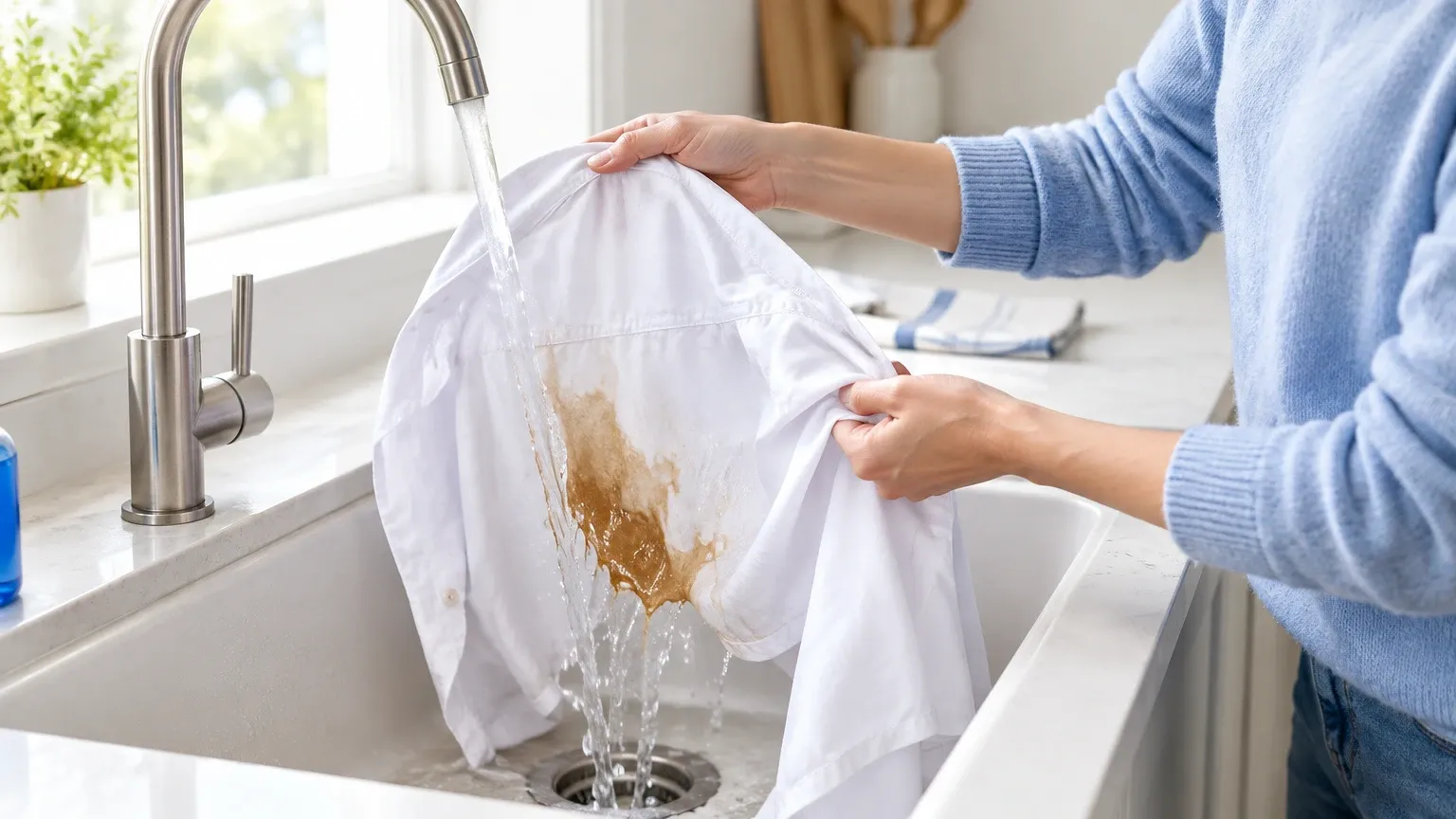
Work a few drops of liquid laundry detergent into the stain with your fingertip. Wait 10 minutes. Then wash on the warmest setting the care label allows.
Check the stain before the dryer. Dryer heat bonds leftover tannin to fibers, and a stain that survives one cycle often becomes permanent. If any brown shadow remains, repeat the soak instead of drying.
For old stains that have already dried, soak the item for 30 minutes in cool water with a scoop of oxygen-based bleach, such as sodium percarbonate powder. Follow the dilution on the package. Oxygen bleach is color-safe for most fabrics, but test an inside seam first.
Do not use it on wool, silk, or leather. Those fibers are protein-based and oxygen bleach can weaken or discolor them. Send those pieces to a dry cleaner and point out the stain.
Which method for which surface
Not every surface tolerates the same treatment. Match the approach to the material before you start.
| Surface | Safe approach | Avoid |
|---|---|---|
| Cotton, polyester | Cool rinse, detergent, oxygen bleach soak | Hot water before the stain is gone |
| Wool, silk | Blot, cool water, dry clean | Vinegar soaks, oxygen bleach |
| Synthetic carpet | Dish soap and vinegar solution | Steam cleaning on a fresh stain |
| Wool carpet | Mild wool-safe detergent, minimal water | Vinegar, soaking the backing |
| Hard countertops | Warm soapy water, baking soda paste | Abrasive pads on polished stone |
| Ceramic mugs | Baking soda paste, 15 minutes | Steel wool |
Natural stone like marble and travertine is the one to watch. Vinegar is acidic and etches the surface, leaving a dull spot that looks worse than the coffee ever did. Use plain warm water with a drop of dish soap on stone.
When the stain comes back
You blotted the spot, it dried, and the brown ring returned a day later. This is called wicking. The pad under the carpet was soaked, and as the surface dried, the coffee drifted back up through the fibers.
The fix is to treat the cause, not the surface. Dampen the area, lay a folded white towel on it, and stand a heavy flat object on top for 6 to 8 hours. The towel draws trapped coffee upward and out.
Cream and sugar change things too. Milk adds protein and fat, and sugar leaves a sticky residue that attracts dirt. If your coffee had either, clean once with the dish soap solution to cut the grease, then a second time with a few drops of ammonia-free carpet spotter.
Here is the decision rule. If the stain is still visible after two full treatments, stop. A third round of scrubbing usually frays carpet pile and creates a bleached patch. Call a carpet cleaner or try a hot water extraction rental machine instead.
Fixing coffee stains that have already set
Old stains respond to a different order of operations. Start by dampening the spot, so the dried coffee loosens.
For carpet, mix 1 tablespoon of 3% hydrogen peroxide with 1 tablespoon of clear dish soap. Test on a hidden corner for 5 minutes first, since peroxide can lighten dyes. If the color holds, dab it on the stain and wait 10 minutes before rinsing and blotting dry.
Peroxide is a mild bleach, so it works best on light or neutral carpets. Skip it on dark, richly dyed rugs, where it can leave a pale halo.
Never mix peroxide with vinegar in the same container. The combination forms peracetic acid, which irritates skin, eyes, and lungs. Apply one product, rinse it fully, and only then try the next.
On a deep, stubborn stain, a rented hot water extraction machine does what hand blotting can’t. It flushes the fibers and vacuums the dirty water out. Rental runs roughly $30 to $50 per day at most home improvement stores, though prices vary by region.
Your next move
Keep a small kit where spills happen: white cloths, clear dish soap, and a spray bottle of cool water. Reaching for the right things in the first two minutes does more than any product.
If the stain is fresh, start the blotting step now. If it’s dry and old, begin with the peroxide test on a hidden spot. Whatever the surface, work gently, rinse well, and never rush to dry with heat.
Frequently asked questions
Does vinegar really remove coffee stains?
Yes, in a diluted mix. White vinegar breaks down tannins when paired with dish soap and cool water. Skip it on wool, natural stone, and anything the care label forbids.
Can you remove an old coffee stain that has dried?
Often, yes. Dampen the spot, apply the peroxide and dish soap mix on light carpet, or soak washable fabric in oxygen bleach for 30 minutes. Expect two rounds, and stop after that to protect the fibers.
Why does coffee leave a brown ring after it dries?
Coffee carries tannins and oils that settle at the edge of a wet area as it dries. Rinse beyond the visible stain and blot the edges thoroughly so the ring has nothing left to form from.
Is baking soda safe for coffee stains on carpet?
Baking soda helps lift odor and light staining, but it can leave a powdery residue that’s hard to vacuum out of deep pile. Use it sparingly, let it dry fully, then vacuum slowly.