

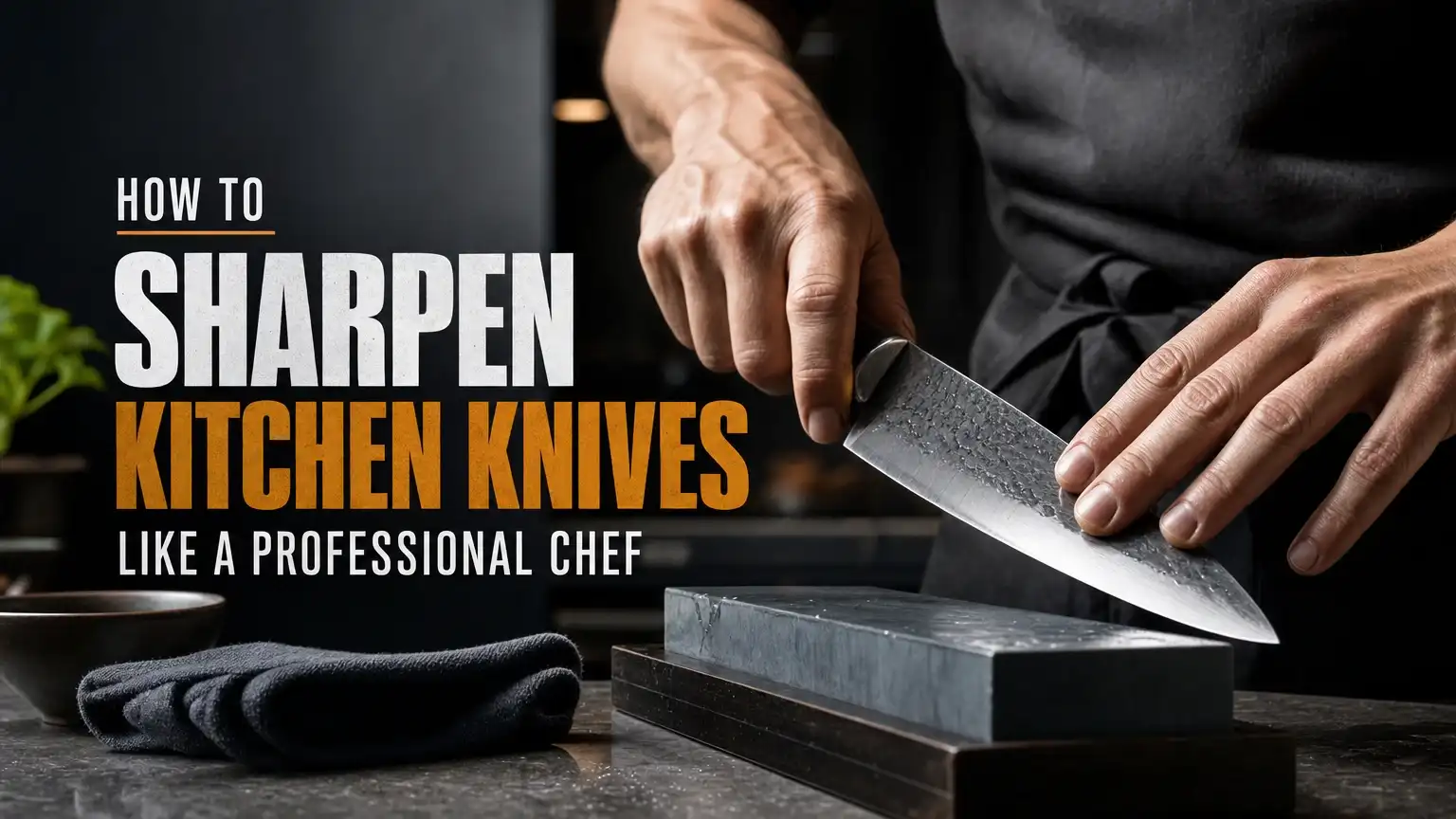
Most home cooks think a sharp knife stays sharp forever. It doesn’t. Even a $300 Japanese blade dulls with daily use. Learning how to sharpen kitchen knives changes the way you cook. It also protects the money you spent on good steel.
Sharp blades do more than slice fast. They keep your fingers safer and your cuts cleaner. A keen edge can cut prep time by roughly 40%. It also stops ingredients from bruising or tearing.
Understanding Knife Edge Angles and Geometry
Your knife’s edge angle controls both sharpness and durability. European knives sit at 20-22 degrees per side for toughness. Japanese blades run 15-17 degrees for finer slicing.
Thinner angles cut better but dull faster. German brands like Wüsthof favor thicker, sturdier edges. Japanese makers grind razor-thin bevels that glide through a tomato skin.
Want a quick test? Try cutting newspaper. A sharp blade slices it in one clean stroke. A dull one tears or forces you to saw. That simple check tells you when your $200-$400 chef’s knife needs work.
Always inspect the edge first. Light dullness needs a quick touch-up. Deep nicks need a coarse stone and patience.
How to Sharpen Kitchen Knives on a Whetstone
Whetstones give you restaurant-quality edges at home. Grits range from 400 for damaged blades to 8000 for mirror polishing. Most cooks only need 1000 grit for sharpening and 4000 for finishing.
A King combination stone runs $60-$80. It handles about 90% of home tasks. Soak it for 15-20 minutes first. Water carries away metal dust and keeps the surface smooth.
Hold a steady 20-degree angle the whole time. Count your strokes to keep both sides even. Do 20 strokes per side on the coarse grit. Then finish with 15 strokes on the fine side.
> Pro tip: Set a kitchen timer for soaking. Under-soaked stones cut unevenly and can scratch your edge.
Electric Sharpeners for Foolproof Results
Electric sharpeners take the guesswork out. The Chef’sChoice Model 15 Trizor XV costs $150-$200. It works on both European and Asian blades.
Three stages do the job in order. Stage one reshapes the edge with diamond abrasives. Stage two sets the main bevel. Stage three strops the blade to a polish.
Each stage takes 30-45 seconds per knife. That speed suits a busy kitchen with several blades to maintain. The trade-off is real. These machines strip more metal than stones, so blades wear sooner.
Better models have separate 20-degree and 15-degree slots. That covers German and Japanese knives in one unit. Pick diamond abrasives over ceramic for longer life.
Honing Steel Maintenance Between Sharpenings
A honing steel realigns the edge without grinding metal away. It straightens the tiny bends that form during normal cutting. A good rod costs $40-$80 and lasts decades.
Ceramic rods beat old-school steel for modern alloys. The Messermeister ceramic steel runs 12 inches long. Its fine surface straightens edges without scratching premium finishes.
Stand the rod tip-down on your cutting board. Draw the blade down at a 20-degree angle, heel to tip. Five to eight strokes per side before cooking is plenty.
> Pro tip: Listen for a steady ring. Scraping sounds mean your angle or pressure is off.
Professional Sharpening Service Options
Sometimes you need a pro. Chipped edges, deep damage, or a costly handmade knife all qualify. Most services charge $8-$15 per knife. Turnaround usually takes 48-72 hours.
Williams Sonoma offers in-store sharpening at many locations. Their staff use commercial gear and know different steels well. They also fix small chips that home tools can’t touch.
Local knife shops often beat the chains. They tune edge angles to your cooking style. Build a relationship with one for steady care.
Send frequently used knives out 2-3 times a year. That stops damage from piling up between home touch-ups.
Storage and Daily Care Practices
Good storage protects every edge you work hard to create. Magnetic strips keep blades apart and within reach. A Zwilling strip mounts on the wall and holds 6-8 knives.
Never toss knives loose in a drawer. Blade-on-blade contact chips edges over time. In-drawer trays solve that while keeping things tidy.
Glass and stone boards ruin edges fast. Bamboo and end-grain wood hold sharpness far longer. A John Boos end-grain board costs $100-$200 and pays off for years.
Wash blades right after use with warm, soapy water. Acidic foods etch steel if you leave it sitting. Dry by hand to avoid water spots.
Building Your Complete Knife Care System
Sharp knives turn cooking from a chore into something you enjoy. A daily 30-second honing pushes your next full sharpening back by months. Mark honing and pro-service dates on a kitchen calendar. The habit sticks faster than you’d think.
Match your tools to your collection’s value. A $50 whetstone keeps $300 knives keen for decades. Two pro sharpenings a year cost far less than a replacement blade. The math favors maintenance every time.
A solid routine pays off in clean cuts and fewer accidents. Master these steps and your blades will perform for life. Next, look into cutting board materials and smart storage to round out your setup.
Frequently asked questions
How often should I sharpen my kitchen knives?
Sharpen every 3-6 months, depending on how often you cook. Daily use needs more frequent attention than weekend meals. Hone before each session to keep the edge true between sharpenings.
Can I damage expensive knives with home sharpening?
Good stones and steady technique won’t hurt premium blades. Practice angle control on a cheaper knife first. Use electric sharpeners sparingly on Japanese steel, since they remove extra metal.
What’s the difference between honing and sharpening?
Honing realigns the existing edge without taking off metal. Sharpening grinds away steel to form a new edge. Think of honing as upkeep and sharpening as a reset.
Should I use different techniques for different knife types?
European blades take 20-22 degrees, Japanese ones 15-17 degrees. Serrated knives need their own tools. Most whetstones and electric units handle both Western and Asian shapes.
How do I know when my knife needs professional attention?
Chips, deep nicks, or rounded edges call for a pro. If home sharpening can’t restore the cut, get expert help. They fix damage that home methods can’t reach safely.


