

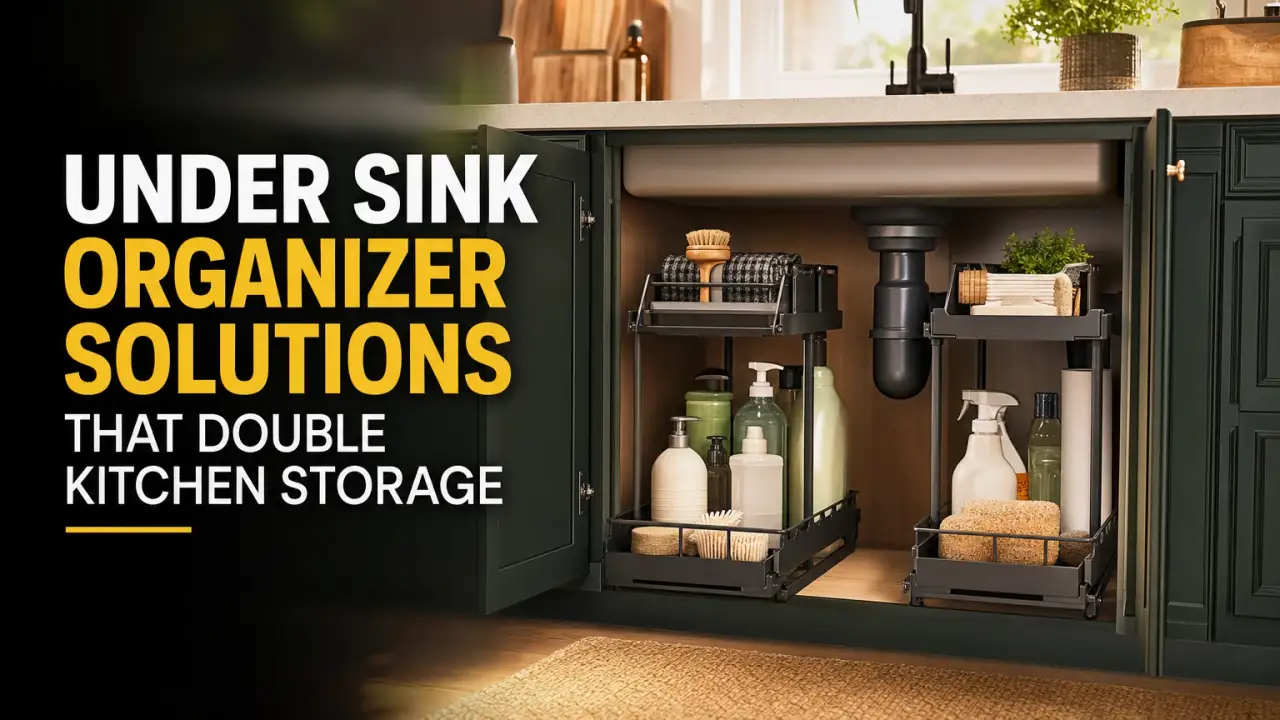
Most kitchens waste about 65% of the space under the sink, which is exactly where an under sink organizer pays off. Cleaning supplies pile up. Bottles tip over every time you reach for one.
Key takeaways
- Measure cabinet width, height, depth, and pipe location before buying any organizer
- Mix sliding drawers, door storage, and a corner carousel to use every inch of the cabinet
- Keep cleaning chemicals up high or behind a safety latch if young children live at home
- Add a waterproof liner and check for drips monthly so small leaks never ruin your storage
A good under sink organizer fixes that mess fast. The right setup can double what fits in the same cabinet. You stop digging and start finding things in seconds.
Two-Tier Sliding Drawers for Maximum Access
Sliding drawers give you the most storage per square inch. The better models hold up to 100 pounds and close softly. You can install one in about 35 minutes with basic tools.
Quality drawers use 18-gauge steel. They slide out 22 inches deep, so you reach the cabinet back easily. Most come with movable dividers for custom layouts.
Two-tier setups fit nicely in 30-inch cabinets. Keep dish soap and sponges up top for daily grabs. Store bulk supplies and paper towels below. The Rev-A-Shelf system uses ball-bearing slides. Owners say access feels far easier than fixed shelves.
Tiered Bamboo Shelves for Vertical Organization
Bamboo shelving builds three storage levels inside a standard cabinet. Each 1-inch-thick shelf holds around 50 pounds. Bamboo shrugs off moisture without any chemical coating.
A three-shelf layout works best in 24-inch-tall spaces. Set the bottom shelf 6 inches up for tall bottles. Space the rest about 8 inches apart for easy reach.
The Seville Classics bamboo organizer adjusts without tools. You gain roughly 70% more storage than a single shelf. No drilling needed. Wire racks are another option. They keep contents fully visible and match steel hardware well.
Pull-Out Bins with Full Extension
Pull-out bins mix drawer ease with lift-out flexibility. The best ones ride full-extension slides rated for 75 pounds. Each bin pops out completely for a quick rinse.
Dual bins fit a 33-inch cabinet well. Keep cleaning sprays in one and towels in the other. That stops cross-contamination. Single bins suit spaces under 24 inches.
The simplehuman pull-out bin has wipeable surfaces and movable dividers. It holds everything from 8-ounce sprays to 64-ounce jugs. Rounded corners keep bins from snagging on cabinet edges. Clear options let you see what’s inside at a glance.
Magnetic Door Storage for Hidden Capacity
Your cabinet doors hide about 15 square feet of unused space. Magnetic strips turn that door into a storage zone. No drilling required. Setup takes around 10 minutes with adhesive backing.
A 12-inch magnetic strip grips metal tools and spray caps. Mount it 18 inches from the floor for comfortable reach. Your most-used items stay in plain sight.
The StickTILE magnetic strips hold 8 pounds each. Over-door pockets just 3 inches deep store extra bottles without blocking the door. Command strips peel off later without wrecking the finish. Heavy-duty hooks add 5 pounds of capacity each. Together, doors add roughly 40% more storage.
Corner Carousel Systems for Difficult Areas
Corner cabinets waste half their space without help. A carousel fixes that by spinning back items to the front. Better units use ball-bearing mechanisms for a smooth turn.
Kidney-shaped shelves curve around your existing pipes. No plumbing changes needed. A two-tier carousel gives you about 32 inches of shelf space. Each tier spins on its own, so you grab one item without shifting the rest.
The Lazy Susan carousel handles 75 pounds per shelf. Owners report much easier access to deep corners. Soft-close stops the slam that chips glassware. Shelves lift out for cleaning. A screwdriver is all you need to install it.
Adjustable Insert Systems for Custom Layouts
Modular inserts handle odd cabinet shapes and stubborn pipe layouts. They build around the plumbing instead of fighting it. Assembly stays tool-free, so changes later are simple.
Interlocking pieces fit any layout with no cutting. The base sits around your pipes. Upper modules stack on top for more room. The Container Store modular line offers about 15 component types.
Acrylic inserts keep things visible. Bamboo adds a warmer look. Both resist moisture and wipe clean with normal household spray. Special pieces include soap-pump cutouts and tool clips. Owners say organization improves a lot versus plain shelving. The system grows as your needs change.
Putting Your Under Sink Plan Together
The best results come from mixing a few of these solutions. Pair sliding drawers with door strips. Add a carousel for the deep corner. Material choice matters for how long it lasts. Powder-coated metal fights rust for 10 years or more in damp cabinets.
Bamboo resists mold without any treatment. Clear acrylic keeps a clean look while showing what’s inside. Plan your zones around how you actually cook and clean. Put daily items at the front, within arm’s reach. Push bulk supplies to the back.
A well-planned cabinet holds roughly 75% more than a messy one. Measure your cabinet width, height, and pipe position first. Then pick the organizer types that match. If you’re tackling the whole kitchen, our guides on pantry shelving and drawer dividers cover the next steps.
Frequently asked questions
What works best for narrow cabinets under 24 inches wide?
Tiered shelves win in tight spots because they use height, not width. Pick shelves around 16 inches deep for solid capacity. Adjustable bamboo designs adapt to your exact size without cutting.
How do I work around existing plumbing pipes?
Choose organizers with cutouts or modular pieces that clear the pipes. Sliding systems often have removable sections for valve access. Custom inserts give the most flexibility for awkward layouts.
Can I install these systems myself without professional help?
Yes, most need only a screwdriver or no tools at all. Sliding drawers use mounting screws but include paper templates. Magnetic and adhesive options go up in about 15 minutes.
Which materials last longest in humid under-sink conditions?
Bamboo, powder-coated steel, and acrylic hold up best down there. They resist warping, rust, and moisture for years. Skip untreated wood or cheap metal, which can fail within 2 years.
How much extra storage will I actually gain?
Good organizers add around 70% more usable space in a typical cabinet. Vertical systems turn dead air into real storage. Your real gain depends on cabinet size and the parts you pick.
Childproofing and Chemical Safety Under the Sink
The cabinet under the kitchen sink is where many families keep their strongest cleaners, which makes it one of the riskiest spots in the house for curious toddlers. If small children live with you or visit often, install a safety latch or magnetic lock on the cabinet doors before you arrange anything else. Latches are inexpensive, and most go on in a few minutes without visible damage to the doors.
Inside the cabinet, think in layers. Put bleach, drain cleaner, dishwasher pods, and anything labeled corrosive in a lidded bin on the highest tier or at the back of a drawer, rather than on the cabinet floor. Keep every product in its original container so labels and first-aid directions stay readable, and never store bleach and ammonia-based cleaners side by side, since mixing them releases dangerous fumes.
Label bins and the front edge of each drawer so everyone in the household, including babysitters and older kids, knows which zone holds hazardous products. A simple rule, such as keeping all chemicals in one red bin, makes it easier to return things to the right place. Review the cabinet whenever children reach a new milestone like climbing or opening latches.
- Use a latch or lock on both cabinet doors
- Store pods and drain cleaners in a lidded bin
- Keep original labels on every bottle
- Separate bleach from ammonia-based products
Protecting Your Under Sink Organizer From Leaks and Moisture
Even the best under sink organizer will not last if a slow drip soaks the cabinet floor for weeks. Start by laying a waterproof cabinet liner or a raised-edge drip tray across the base. These catch spills from leaky bottles and give you an early warning if the trap or supply lines start to weep. Silicone and textured rubber mats are easy to lift out and rinse.
Once a month, pull your drawers or bins forward and look at the pipes, shutoff valves, and the back corners with a flashlight. Signs of trouble include warped particleboard, a musty smell, white mineral crust on fittings, or a damp liner. Leave a small gap between your organizer and the pipes so you can reach the valves quickly in an emergency.
If you find a leak, turn off the water at the shutoff valves, empty the cabinet, and let the base dry completely with the doors open. Swollen or soft cabinet floors can often be sealed or replaced, but it is best to fix the source first. Tightening a loose slip nut is a simple job, while corroded valves or cracked drain pipes are usually worth a plumber’s visit.
- Lay a waterproof liner or drip tray first
- Check pipes and valves with a flashlight monthly
- Keep shutoff valves clear and easy to reach
- Call a plumber if you spot active dripping
Common Mistakes When Organizing Under the Kitchen Sink
The most frequent mistake is buying first and measuring later. Cabinet openings are often narrower than the interior because of face frames and hinges, so measure the door opening as well as the inside space. Another common problem is overloading one tier with heavy jugs while the other sits half empty, which strains slides and makes drawers harder to pull.
People also tend to fill every gap with backup supplies they rarely use. Duplicate sponges, half-empty sprays, and old plastic bags crowd out the items you reach for daily. Before installing anything, empty the cabinet completely, toss expired or unused products, and group what remains by task. Your new system will stay tidy much longer when it holds only what you actually use.
Finally, avoid blocking the garbage disposal reset button or electrical outlet if your cabinet has them. Tall bins and door racks can also collide with pipes when the door closes, so test the swing before loading everything. Once you finish, take a photo of the organized cabinet; it gives the whole family a simple reference for where things go.
More Common Questions
How much does an under sink organizer cost?
Simple tiered shelves and door caddies are usually the least expensive, often costing less than a family dinner out. Sliding drawer systems and custom modular inserts typically cost more because of their metal slides and heavier construction. Prices vary by size, material, and region, so measure first and compare a few options that fit your cabinet before you buy.
What should you not store under the kitchen sink?
Avoid storing anything that could be damaged by moisture or that is dangerous if it leaks. That includes paper goods stacked on the cabinet floor, food, pet food, and flammable products like aerosol cans near the garbage disposal wiring. Keep strong chemicals in lidded bins and away from young children, ideally behind a latched door.
How often should I clean out the cabinet under my sink?
A quick tidy once a month and a full clean-out every few months works well for most households. During the monthly check, wipe up spills and look for leaks. For the deeper clean, empty everything, wash bins and liners, discard expired products, and check that slides and hinges still move smoothly.
Can I use a kitchen sink organizer in a bathroom vanity?
Yes, most organizers work in bathroom vanities as long as you measure carefully. Vanities are often shallower and have a centered drain, so look for narrow tiered shelves, U-shaped drawers, or door-mounted caddies. Moisture-resistant materials like powder-coated metal, bamboo, or plastic hold up best in steamy bathrooms.


