Hot water makes most grease stains permanent. Heat sets the oil into the fibers, so rinsing a fresh stain under the tap is the wrong first move. The reliable sequence is simple: blot, absorb with a dry powder, treat with dish detergent, then wash on the warmest setting the care label allows. Most clothing stains lift on the first or second pass if you skip the heat until the oil is gone.
This guide gives the exact order of operations, plus fixes for the cases that fail.
Start with the powder, not the water
Grease is oil. Water alone cannot dissolve it, so pulling the oil out of the fabric comes first.
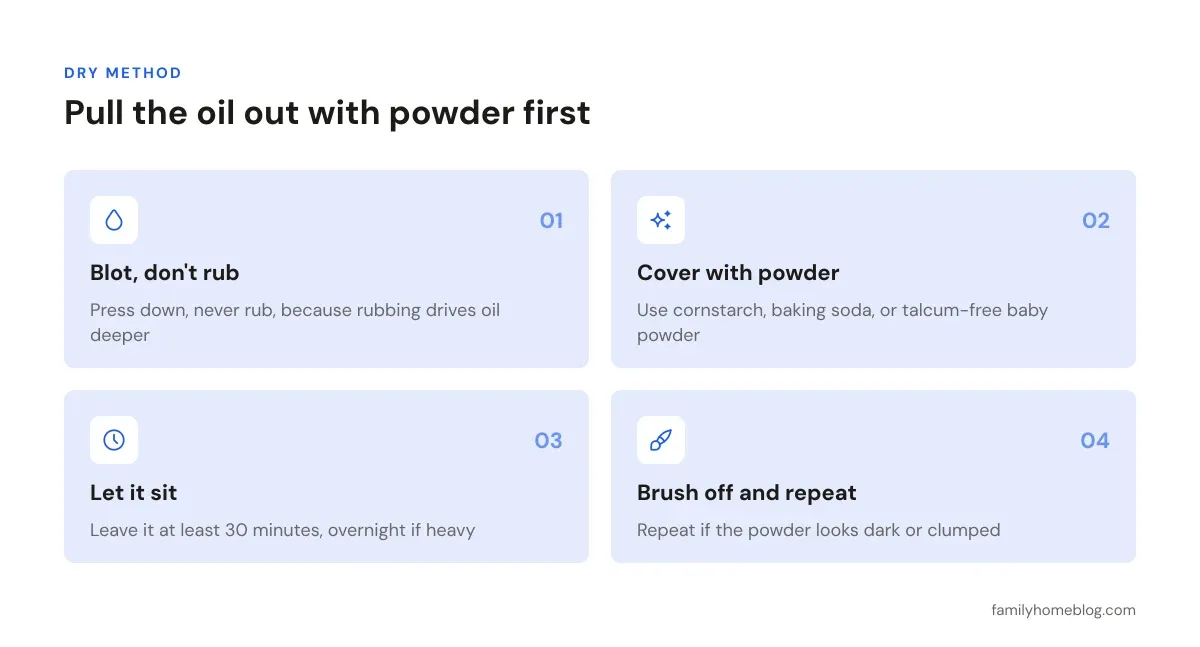
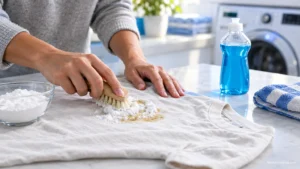
- Blot with a clean paper towel. Press down, never rub, because rubbing drives oil deeper.
- Cover the stain with a thick layer of cornstarch, baking soda, or plain talcum-free baby powder.
- Let it sit at least 30 minutes. For an old or heavy stain, leave it overnight.
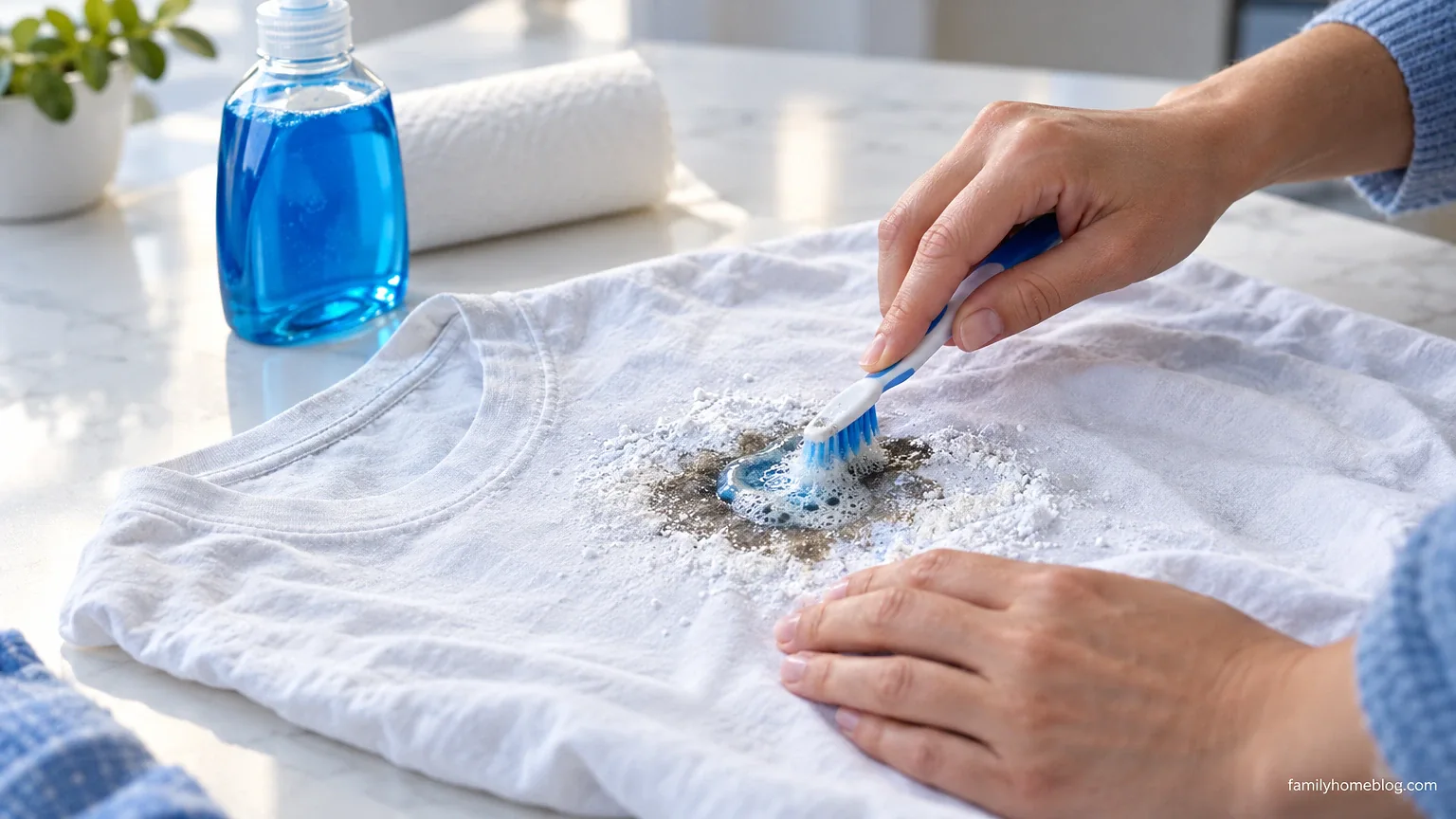
- Brush the powder off with a dry soft toothbrush, then repeat if the powder looks dark or clumped.
Cornstarch works because its fine particles absorb oil into their surface. Skip chalk-based “stain sticks” on dark fabric, since they can leave a white residue of their own.
Treat with dish detergent
Dish soap is built to break grease apart, which makes it the best household option for this job.
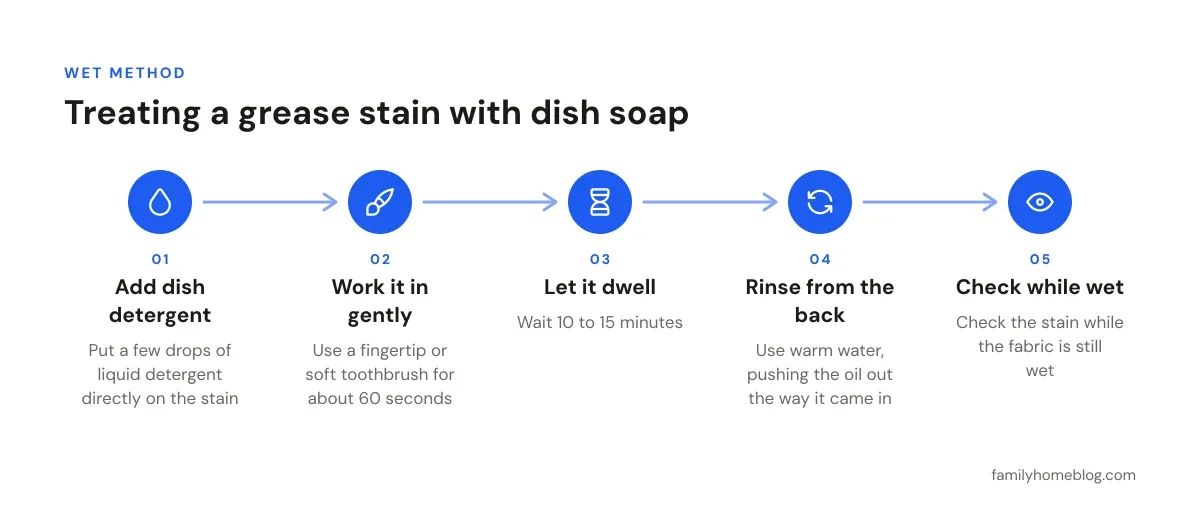
- Put a few drops of liquid dish detergent directly on the stain.
- Work it in gently with your fingertip or a soft toothbrush for about 60 seconds.
- Let it dwell for 10 to 15 minutes.
- Rinse from the back of the fabric with warm water, pushing the oil out the way it came in.
- Check the stain while the fabric is still wet.
If any shadow remains, repeat steps 1 through 4. Do not put the item in the dryer yet. Dryer heat bakes in whatever oil is left, and that is how a fixable stain becomes a permanent one.
Wash it right
Once the stain looks gone when wet, launder the item normally. Use the hottest water the care label permits. The American Cleaning Institute notes that warm to hot water helps detergent lift oily soils, while the label limit protects the fabric.
Add your regular detergent at the full recommended dose. Skip fabric softener, which can coat fibers and trap residue. Before drying, inspect the spot in daylight. Air-dry the item if you are unsure, then retreat if needed.
Match the method to the surface
Not every material tolerates the same treatment. Here is where each approach works and where it causes damage.
| Surface | Best first step | What to avoid |
|---|---|---|
| Cotton, polyester | Powder, then dish soap, then warm wash | Dryer before the stain is gone |
| Silk, wool | Powder only, then dry cleaner | Rubbing, hot water, dish soap soaks |
| Carpet | Powder, vacuum, then diluted dish soap | Soaking the backing |
| Upholstery | Powder, then dry-cleaning solvent if the tag says “S” | Water on tags marked “S” or “X” |
| Suede, leather | Powder, then a specialty cleaner | Any water-based soap |
Check the care tag before you treat anything. A tag marked “W” allows water-based cleaners, “S” calls for solvent only, “WS” accepts either, and “X” means vacuum only, according to the Carpet and Rug Institute and standard upholstery labeling guidance.
Remove grease from carpet and upholstery
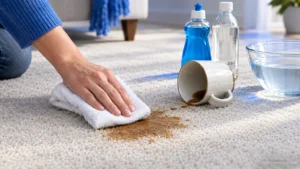
Carpet needs a lighter touch because you cannot toss it in the washer. Blot first, then smother the spot with cornstarch for at least 30 minutes and vacuum it up.
Mix one teaspoon of dish detergent into one cup of warm water. Dab it on with a white cloth, working from the edge toward the center so the stain does not spread. Blot with a second cloth dampened with plain water to pull out the soap. Then press a dry towel on the spot with your full weight.
Use as little liquid as you can. Too much water soaks through to the backing and padding, where it can leave a ring or a musty smell. If a ring appears anyway, it is usually soap residue, so rinse once more with plain water and blot dry.
When the stain won’t budge
Some stains survive the first attempt. Here is what to try next.
Old, set-in stains: Rub dish soap into the dry stain, then soak it for 30 minutes in the warmest water the fabric allows. Apply powder again and repeat the soap step.
Stains that came out of the wash still dark: Do not dry the item. Retreat with a solvent-based pre-treater or an oxygen-based laundry booster, following the product label.
Grease on dark or delicate cloth: Take it to a dry cleaner and point to the spot. The Cooperative Extension at many land-grant universities, including Penn State Extension, recommends professional help for delicate fabrics rather than repeated home treatments.
Never mix cleaners. Do not combine bleach with ammonia, which produces toxic chloramine vapor, or bleach with vinegar or other acids, which releases chlorine gas. The EPA and poison control centers warn against both. Use one product at a time and rinse thoroughly between attempts.
Keep it from happening again
Act within the hour whenever you can. A fresh spot comes out far more often than one that has dried for days. Keep a small container of cornstarch near the kitchen so you can cover a splatter before it sinks in.
If you cook often, wear an apron and keep a pre-wash stain stick in the laundry area. Next time grease lands on your shirt, blot it, bury it in powder, and wait. That single habit saves more clothes than any product on the shelf.
Frequently asked questions
Does baking soda or cornstarch work better on grease?
Both absorb oil. Cornstarch is finer and tends to pull more from fabric, while baking soda is slightly gritty and is handy on carpet. Use whichever you have, and leave it on for at least 30 minutes.
Can I remove a grease stain that has already been through the dryer?
Often, yes, but it takes more effort. Rub dish soap into the dry stain, let it sit 15 minutes, and soak in warm water. Repeat the powder and soap cycle, and wash again without drying until the mark is gone.
Will dish soap damage my clothes?
On washable cotton and synthetics, a few drops used briefly is safe. Avoid it on silk, wool, and leather, where it can strip natural oils or leave residue. Check the care label first.
What about grease stains on wood or concrete?
Cover the spot with cornstarch or kitty litter for several hours, sweep it up, then scrub with diluted dish soap and rinse. On finished wood, wipe rather than soak, and test a hidden area first.