You spill a glass of red on the carpet or your favorite shirt, and the clock starts. Wine pigments (anthocyanins) bond tighter to fibers as they dry, so the first ten minutes decide how easy this will be.
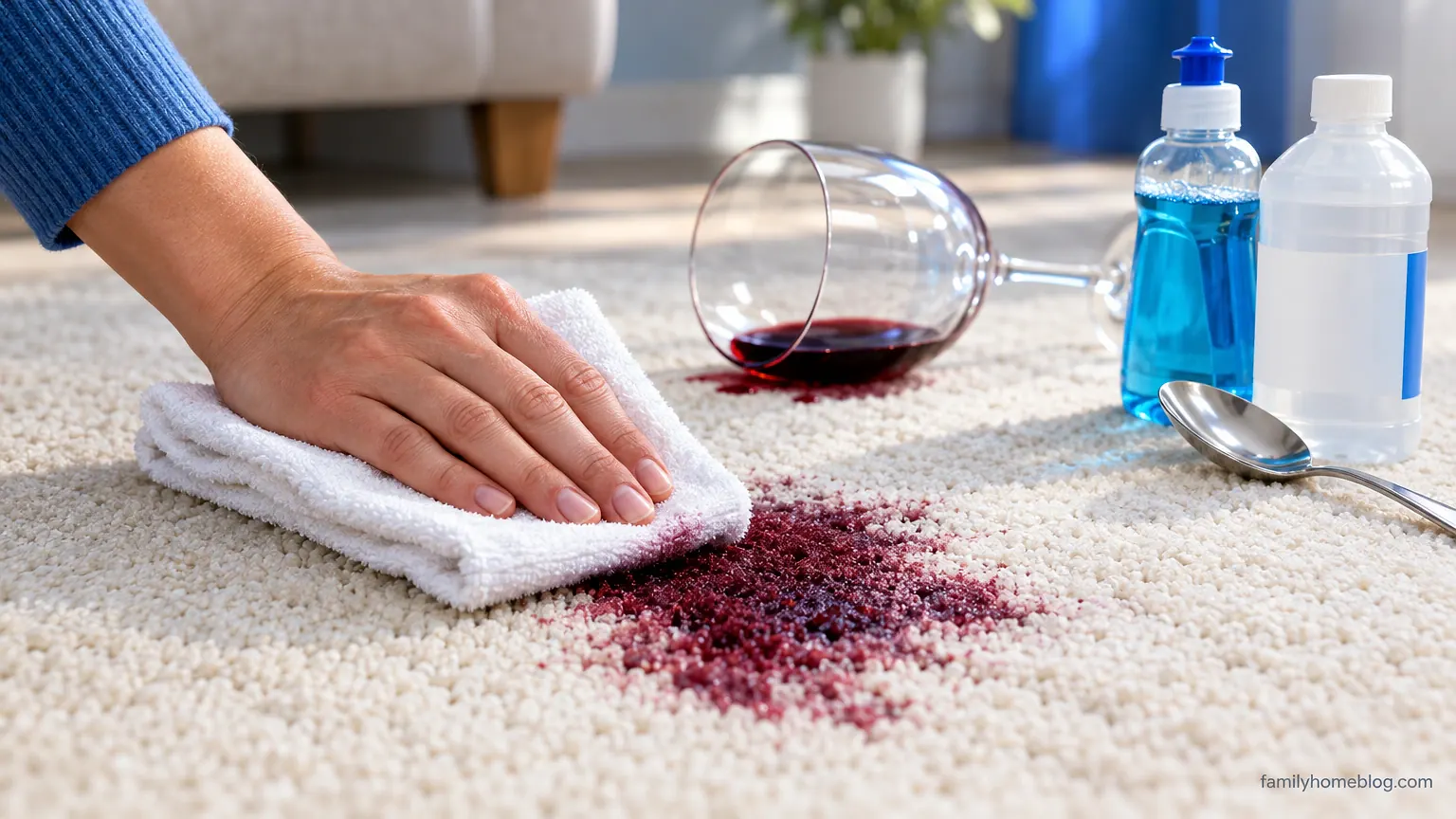
Blot, don’t rub. Press a clean white cloth onto the spill until it stops lifting color. Then work through the steps below, matched to what’s stained.
Do these three things in the first five minutes
Speed matters more than any product. Press a dry white towel on the spot and hold it for 30 seconds. Lift, move to a clean section, and repeat until no more wine transfers.
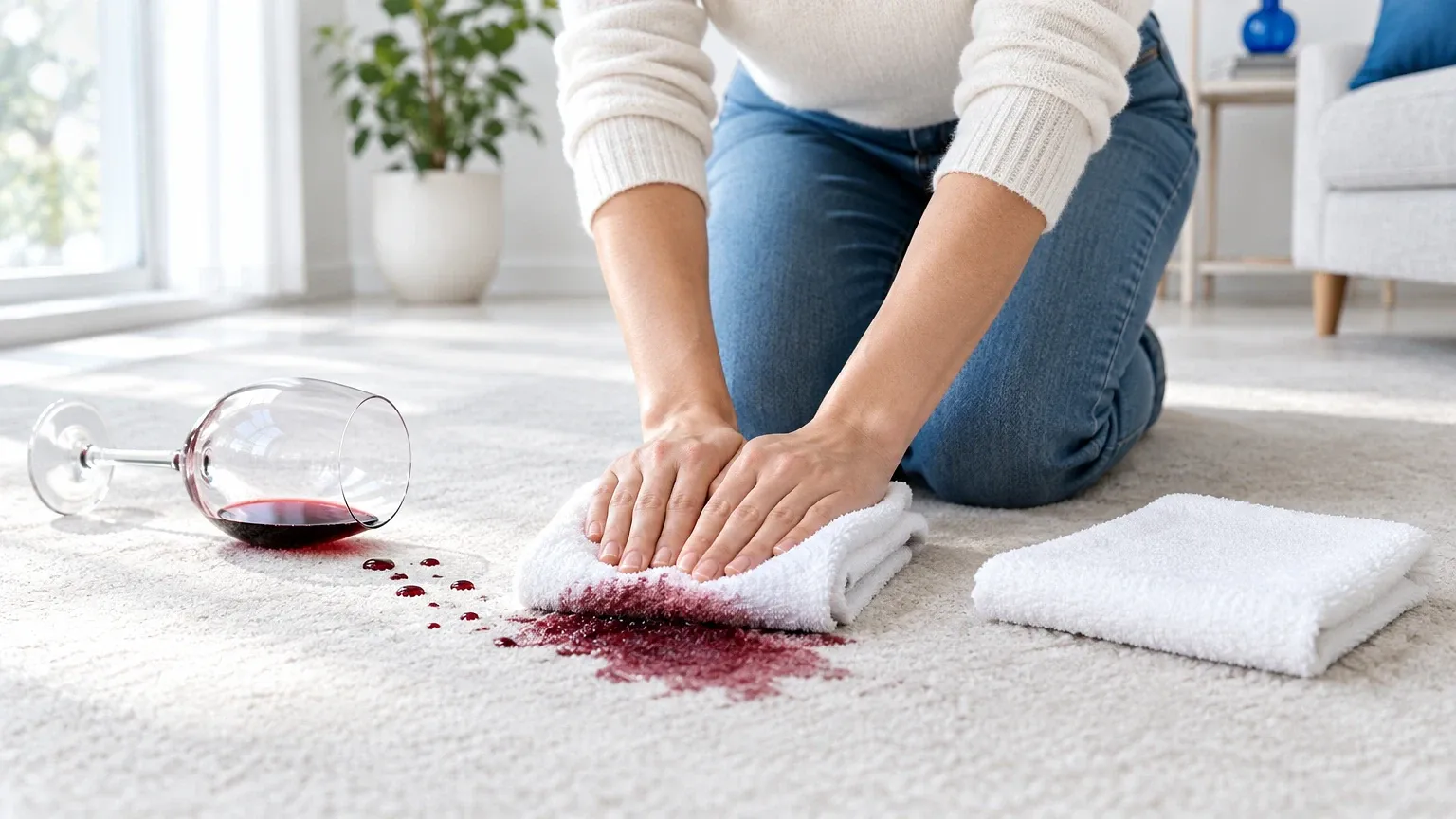
Next, flush with cold water. On clothing, run it through the back of the fabric so the stain pushes out the way it came in. On carpet, pour a small amount and blot again right away.
Skip hot water entirely. Heat can set the pigment into protein fibers like wool and silk. Skip club soda myths too. Plain cold water does the same job.
The dish soap and peroxide method for washable fabrics
This is the standard first attempt on cotton, polyester, and linen. It works on fresh and day-old red wine stains.
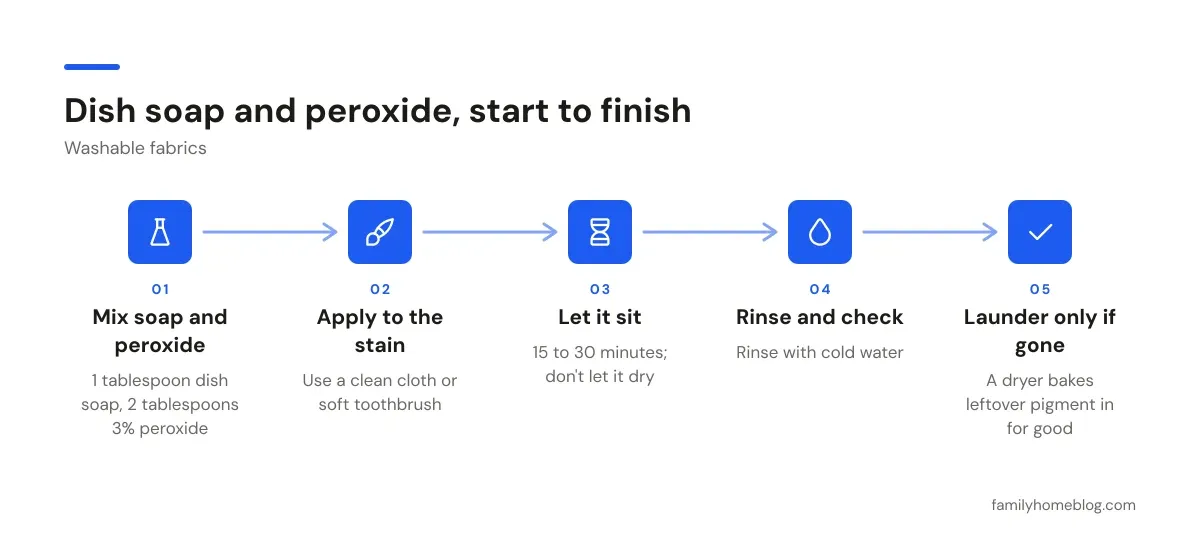
- Mix 1 tablespoon of clear liquid dish soap with 2 tablespoons of 3% hydrogen peroxide.
- Apply it to the stain with a clean cloth or soft toothbrush.
- Let it sit for 15 to 30 minutes. Do not let it dry out.
- Rinse with cold water and check the spot.
- Launder as usual, but only if the stain is gone. A dryer bakes any leftover pigment in for good.
Use clear dish soap, not blue or green. Dyed soap can leave its own tint. Peroxide is a mild bleach, so test it on a hidden seam first. It can lighten dark or brightly dyed fabrics, especially navy, black, and red cotton.
Carpet and upholstery need a gentler approach
Carpet is where most wine spills happen, and where over-wetting causes the second problem: a brown ring that wicks up from the pad as the carpet dries.
Start with a dry-first approach. Blot until the cloth comes up clean, then mist lightly with cold water. Apply a solution of 1/2 teaspoon clear dish soap in 1 cup of cold water, blot for a few minutes, then blot with plain water to rinse.
For a stain that’s already dry, use the peroxide mixture above but apply it sparingly with a spray bottle. Cover the spot with a white towel and press with your palm rather than scrubbing. Scrubbing frays the pile and spreads the stain outward.
The University of Georgia Cooperative Extension and other extension services recommend blotting over rubbing and testing any cleaner in a hidden spot first, since dyes in carpets vary widely. Wool and natural-fiber carpets are the risky ones. Peroxide can bleach them, so on wool, stay with the soap-and-water method and call a pro for stubborn marks.
Which method for which surface
| Surface | Best first move | Avoid |
|---|---|---|
| Cotton, polyester, linen | Dish soap and 3% peroxide, 15-30 min | Dryer before the stain is gone |
| Wool, silk | Cold water, then mild soap solution | Peroxide, hot water, scrubbing |
| Synthetic carpet | Dish soap solution, blot, rinse | Soaking the backing |
| Wool carpet | Cold water and soap only; pro for leftovers | Peroxide, bleach |
| Sealed hardwood | Wipe at once with a damp cloth | Letting wine sit; standing water |
| Marble, granite | Wipe fast, then pH-neutral cleaner | Vinegar, lemon, peroxide |
Acids etch natural stone, so skip vinegar and lemon juice on countertops. Marble in particular dulls on contact.
Never mix these cleaning products
Stain removal tempts people to stack products. Don’t. The CDC warns that mixing bleach with ammonia produces toxic chloramine gas. Bleach plus vinegar releases chlorine gas. The EPA likewise warns against combining bleach with other cleaners.
Peroxide and vinegar in one container make peracetic acid, which irritates skin, eyes, and lungs. Use one product at a time, rinse thoroughly with water between attempts, and keep the room ventilated. If a product label says “do not mix,” believe it.
If the stain survived: second attempts
Some stains need a second round. Choose by what you see.
The stain is faded but still pink
Repeat the dish soap and peroxide mixture for another 30 minutes. A second pass often clears light shadows. Rinse well before checking, because wet fabric always looks darker.
The stain is old, dry, or set by heat
Use an oxygen-based laundry booster (sodium percarbonate) on washable white or colorfast fabrics. Dissolve it in warm water following the manufacturer’s directions and soak for several hours. Never use it on wool or silk. For white cotton only, diluted chlorine bleach can finish the job, but follow the label and never combine it with any other product.
It’s a rug or upholstery you can’t soak
Stop and call a professional cleaner, especially for wool, silk, or anything labeled “dry clean only” or “S” on the care tag. A pro has solvents and extraction tools that a spray bottle can’t match. Tell them what spilled and what you’ve already applied.
White wine leaves much less pigment, but sugar can attract dirt and yellow over time. Treat it with the same cold water and soap steps.
Finish the job without setting the stain
Before you toss anything in the dryer or call the stain gone, air-dry the spot and look at it in daylight. Heat locks in whatever color remains, so if a shadow is still visible, treat again first.
On carpet, place a folded white towel over the damp area and weigh it down with a book overnight. It pulls remaining moisture and pigment upward, which prevents the ring from forming. Replace the towel in the morning if it’s damp.
Next time, keep a small spray bottle of cold water and a white towel near the dining area. Ten seconds of blotting beats an hour of treatment later.
Frequently asked questions
Does salt really remove red wine stains?
Salt can soak up liquid from a fresh spill, which helps a little on carpet. It doesn’t break down the pigment, so it won’t clear a stain on its own. Blot first, then use salt only as a quick absorbent before cleaning with soap and water.
Can I use baking soda on wine stains?
Yes, as a paste of baking soda and water on washable fabrics, though dish soap and peroxide usually performs better. Let the paste sit for 15 minutes, then rinse. Skip it on dark carpet, where residue can show.
How do I get wine out of a stain that’s been there for days?
Start with the dish soap and peroxide mixture, allow 30 minutes, and rinse. If a shadow remains, follow with an oxygen-based booster soak on washable, colorfast items. Old stains often need two or three rounds, and some on wool or silk need a professional.
Will white vinegar remove wine stains?
Diluted vinegar can loosen a stain on some fabrics, but it can damage natural stone and some finishes. Never mix it with peroxide or bleach. Dish soap and peroxide is the safer first choice.