A fall vegetable garden lets you harvest fresh greens, roots, and cole crops well after your summer tomatoes are finished. The trick is timing: you plant most fall crops in mid to late summer, not autumn, so they mature before your first hard freeze. This guide walks through exactly how to count back from your frost date, which vegetables shrug off cold and which ones die at the first chill, and how to keep the harvest going once the weather turns.
What to know first
- Most fall vegetables need to go in the ground 6-14 weeks before your area’s first frost date, not after it.
- Semi-hardy crops like spinach, beets, and lettuce survive light frost down to about 28°F.
- Hardy crops such as kale and cabbage tolerate freezes down to roughly 20°F, per University of Minnesota Extension.
- A simple formula, days to maturity plus a 14-day fall factor plus a 14-day frost buffer for tender crops, gives you a real planting date.
- Row covers and cold frames can add several weeks of harvest once nighttime temperatures drop.
When should you start a fall vegetable garden?
You start a fall garden in mid to late summer, usually 6 to 14 weeks before your area’s average first frost date. That surprises a lot of first-time gardeners, who assume “fall garden” means planting once the air cools. By the time September temperatures actually feel autumnal, quick crops like radishes and lettuce should already be a few weeks old and slower ones like broccoli or cabbage should be nearly full-grown transplants.
The first step is knowing your local frost date. Regional climate centers and cooperative extension offices publish average first-frost dates by county, and that single number drives every planting decision that follows. Extension services describe fall gardening as working backward from that date rather than forward from today’s calendar, which is the opposite of how most people plant in spring.
How to calculate your last planting date for a fall vegetable garden
Piedmont Master Gardeners, a Virginia Cooperative Extension-affiliated program, publishes a straightforward formula for this: take the days to maturity listed on your seed packet, add a 14-day “fall factor” to account for slower growth in shortening daylight, and add another 14-day buffer if the crop is frost-tender. Skip that last 14 days if the vegetable actually tolerates frost.
Here is the math worked out with real numbers. Say your average first frost date is October 15 and you want to plant bush beans, a frost-tender crop with 55 days to maturity. That’s 55 plus 14 plus 14, or 83 days. Counting 83 days back from October 15 lands on roughly July 24, which becomes your last safe planting date for that variety.
Now compare that to a frost-tolerant crop. Kale typically needs about 40 days to maturity and survives temperatures down to around 20°F, according to University of Minnesota Extension, so you drop the 14-day frost buffer entirely. That’s 40 plus 14, or 54 days back from October 15, which puts your planting window around August 22, nearly a month later than the beans. Frost tolerance alone buys you weeks of extra planting time.
Steps to find your own planting date
- Look up your average first frost date through a state or regional extension office.
- Check the seed packet or catalog listing for days to maturity.
- Add 14 days for the fall growth slowdown.
- Add another 14 days only if the crop is frost-tender; skip it for hardy crops.
- Subtract that total from your frost date to get your last planting date.
- Plant a week or two earlier than the calculated date whenever your schedule allows, since a longer runway rarely hurts.
Which vegetables tolerate frost, and which ones don’t?
Frost tolerance splits vegetables into three rough groups, and knowing which bucket a crop falls into changes how much risk you can take with your planting date. Tender crops die outright at the first light frost. Semi-hardy crops shrug off a light frost. Hardy crops keep growing through a real freeze.
According to South Dakota State University Extension, tender vegetables such as beans, sweet corn, peppers, cucumbers, and tomatoes have no frost tolerance and need to be harvested or protected before temperatures dip to 32°F. Semi-hardy vegetables, including beets, carrots, lettuce, peas, radishes, and spinach, tolerate light freezes in the 28°F to 32°F range. Hardy vegetables, mostly cole crops like broccoli, cabbage, kale, and kohlrabi, handle moderate freezes down to 24°F to 28°F, and a few, like Brussels sprouts and parsnips, actually taste better after a freeze because cold converts starches into sugar.
Best fall vegetables by days to maturity
Picking fast-maturing varieties is the single easiest way to guarantee a harvest before winter shuts things down. The table below lists common fall crops with typical days-to-maturity ranges and frost hardiness, based on data from University of Minnesota Extension.
| Vegetable | Days to maturity | Frost tolerance |
|---|---|---|
| Spinach | 35-45 | Survives light frost; may overwinter |
| Mustard greens | 30-40 | Survives light frost |
| Radishes | 30-60 | Harvestable until soil freezes |
| Leaf lettuce | 40-60 | Survives light frost |
| Beets | 50-60 | Survives into the high 20s°F |
| Turnips | 50-60 | Survives light frost |
| Broccoli | 50-70 | Survives light frost |
| Kale | 40-65 | Hardy to about 20°F |
Notice how spinach and mustard greens mature fastest, which makes them forgiving choices if you’re planting later than your ideal window. Kale sits at the other end: it takes longer to reach full size, but its cold tolerance means a late planting still has a real shot at producing, since you can drop the frost-tender buffer from your date calculation.
Preparing your beds for a fall planting
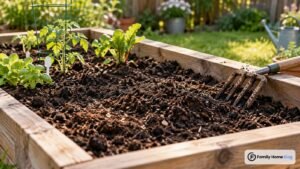
Fall beds usually follow a summer crop, so soil is often depleted and compacted by the time you’re ready to replant. Clear out spent plants, loosen the top 6 to 8 inches with a fork or tiller, and work in a couple inches of finished compost before you sow or transplant. If you’re building new soil rather than reviving an existing bed, our guide to composting for garden soil covers how to turn kitchen and yard scraps into usable material within a season.
Water new fall seedlings more often than you would in spring. August and early September soil dries out fast, and germinating seeds like carrots and beets need consistent moisture in their first two weeks. A layer of straw mulch between rows helps hold that moisture and keeps soil temperature from spiking on hot afternoons. If pest pressure carried over from your summer garden, especially aphids or cabbage worms on young brassicas, our rundown of natural pest control methods covers non-chemical options that won’t harm the crops you’re about to eat.
How to protect a fall garden from frost
Season extenders buy you extra weeks at both ends of the fall garden, and Penn State Extension identifies three main types worth knowing. Low tunnels use fabric or plastic sheeting stretched over hoops, starting with lightweight row cover in early fall and switching to heavier 4 to 6 mil poly as nights get colder. Cold frames are low, boxy structures topped with a clear lid that trap solar heat, while hot beds add an electric heat mat or another outside heat source for extra protection on the coldest nights. Cloches are smaller, single- or multi-plant covers, traditionally glass but now more often plastic or fabric.
Extension research also shows just how much cold some crops can take once established. Bleu de Solaise leeks and Hollow Crown parsnips tolerate temperatures down to 0°F, and Blue Max collards hold up the same. On the other end, Hakurei turnips start struggling below about 10°F. That range explains why experienced fall gardeners plant a mix: quick, tender crops for an early harvest and a few genuinely hardy roots and greens meant to stay in the ground into winter.
Fall vegetable garden mistakes worth avoiding
Planting too late tops the list. Gardeners who wait until the weather actually feels like fall have usually missed the window for anything except the fastest-maturing greens. Work backward from your frost date instead of forward from today’s calendar, and you’ll avoid this almost automatically.
Choosing long-season varieties is another common error. A 90-day pumpkin variety has no business in a fall planting plan; stick to the shorter end of the days-to-maturity range whenever a seed packet lists options. Skipping soil prep is a third mistake gardeners make when they’re in a hurry to get seeds in the ground after clearing summer crops, but depleted soil grows small, stressed plants that mature slower than the packet promises, which throws off your whole frost-date calculation.
Underestimating water needs causes trouble too, since late-summer heat can dry out a seedbed faster than gardeners expect after a summer of established, deep-rooted plants. And ignoring frost tolerance data leads people to pull tender crops too early or leave hardy ones exposed to risk they didn’t need to take. If you’re new to vegetable gardening generally, our guide to tips for a successful vegetable garden covers fundamentals that apply in any season, and our piece on starting a vegetable garden from scratch is a solid starting point if this is your first bed of any kind.
Fall vegetable garden layouts for small spaces
You don’t need a large plot to run a fall garden. Quick crops like radishes, lettuce, and spinach do well in raised beds as small as 4 feet by 4 feet, and many gardeners tuck a fall succession into whatever square footage opened up when summer squash or beans finished producing. If you’re planning your layout from scratch, our collection of garden design ideas for small spaces has practical layouts sized for exactly this kind of replanting.
Succession planting works especially well in a compact space. Sow a new short row of radishes or lettuce every 10 to 14 days through your planting window instead of one large block, and you spread the harvest out over weeks rather than getting everything at once. This also hedges against a single bad week of weather wiping out an entire planting.
A few practical questions
Can I plant a fall vegetable garden after the first frost?
Generally no, not for most crops. Frost-tender vegetables are already finished at that point, and even hardy crops need weeks of pre-frost growth to reach a harvestable size. The exception is very fast, cold-tolerant greens like spinach in mild climates, which can sometimes still be direct-sown a few weeks before a light frost and continue growing slowly afterward.
What is the easiest vegetable to grow in a fall garden?
Radishes are typically the easiest, maturing in as few as 30 days and tolerating light frost. Leaf lettuce and spinach are close behind, both germinating quickly in cooler soil and forgiving a slightly late planting date better than slower crops like broccoli or Brussels sprouts, which need a much longer runway before your first frost.
Do I need to cover my fall vegetables at night?
Only if the forecast calls for temperatures below what your specific crop tolerates. Hardy crops like kale and cabbage rarely need covering until a genuine hard freeze approaches. Tender or semi-hardy crops benefit from a lightweight row cover on nights near or below their frost threshold, which can add several weeks of harvest before you lose the planting entirely.
How do I know my area’s first frost date?
Your state or regional cooperative extension office publishes average first-frost dates by county or climate zone, usually based on decades of historical weather data. These are averages, not guarantees, so many gardeners treat the published date as a planning midpoint and stay ready to cover crops a week or two earlier if a cold snap arrives ahead of schedule.
Can I use the same soil from my summer vegetables for fall planting?
Yes, but it usually needs rebuilding first. Summer crops draw down nutrients and compact the soil surface, so working in a couple inches of compost and loosening the top several inches before fall planting gives new seedlings a real chance to establish quickly during the shorter, cooler growing window ahead.
Start counting back from your frost date this week
The single most useful habit in fall vegetable gardening is doing the frost-date math before you buy seeds, not after. Once you know your last planting date for each crop, the rest of the season becomes a matter of watching the calendar and keeping soil moist while seedlings establish. Pick two or three crops from the table above, run the formula, and get them in the ground on schedule. A modest fall bed of spinach, radishes, and one hardy green is enough to keep fresh vegetables coming well past the point most gardens have gone quiet for the year.