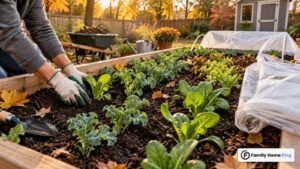
Vegetable garden companion planting pairs specific crops, herbs, and flowers together so they support each other instead of competing for light, nutrients, or pest resistance. Done well, it can ease pest pressure and squeeze more food out of a small bed, though university extension research is clear that not every pairing circulating online has actually been tested. This guide draws from research published by extension services rather than garden folklore alone, so you can tell a pairing with real evidence behind it from one that is mostly tradition. You will find the mechanisms that make these pairings work, a chart of combinations with research support, plants to keep apart, and a step-by-step plan for laying out your own bed this season.
How vegetable garden companion planting actually works
Most effective pairings rely on one of a few mechanisms rather than magic. University of Minnesota Extension groups them into odor masking and repulsion, where a strong-smelling plant confuses pests hunting by scent; attracting predators, where flowers draw in beneficial insects such as hoverflies whose larvae eat aphids; visual distraction, where mixed plantings make it harder for pests to spot their preferred host by sight; and nitrogen fixation, where legumes like beans and peas pull nitrogen from the air and leave some behind in the soil for neighboring plants.
Root structure plays a role too. Deep-rooted crops break up compacted soil and pull nutrients from lower layers that shallow-rooted vegetables never reach, so pairing the two makes better use of one bed. UMN Extension is careful to note that some long-repeated companion planting claims lack solid research behind them, so treat unfamiliar pairings from casual sources with some skepticism until you see them backed by a university or research trial.
What this comes down to
- Basil and marigolds reduced thrip populations on tomatoes in field and greenhouse trials, per University of Minnesota Extension.
- Trap crops work best planted in groups of three or more species, not as a single row, according to the same research.
- Beans should never share a bed with onions, garlic, or gladiolus, since beans release compounds that stunt those crops.
- The three sisters method adds pole beans once corn reaches about 6 inches tall, then plants squash around the base.
- Sunflower seeds contain a compound that can keep nearby potatoes from growing fully, per University of Arizona Extension.
Companion planting chart: pairings backed by research
The table below lists vegetable garden companion planting combinations that extension research or documented pest-reduction trials support, rather than pairings passed along without testing.
| Main crop | Good companion | Why it helps |
|---|---|---|
| Tomato | Basil | Basil is linked to fewer hornworms and whiteflies and may improve tomato growth, per University of Arizona Extension |
| Tomato | Parsley or dill | A traditional pairing recommended alongside basil by West Virginia University Extension |
| Carrot | Onion | Onion’s scent can help mask carrots from carrot flies, per University of Arizona Extension |
| Potato | Marigold | Marigolds are associated with repelling nematodes and certain beetles, per University of Arizona Extension |
| Cucumber | Chamomile | Chamomile draws in hoverflies and wasps that prey on cucumber pests, per University of Arizona Extension |
| Lettuce | Chives | Chives may deter aphids, slugs, and snails while attracting pollinators, per University of Arizona Extension |
| Broccoli or Brussels sprouts | Thyme, onion, and nasturtium together | This three-plant combination reduced cabbage looper and cabbageworm damage in University of Minnesota Extension field trials |
| Squash or pumpkin | Nasturtium | Nasturtium plantings reduced squash bug populations in the same research |
| Corn | Pole beans and squash | The three sisters model: beans fix nitrogen for corn, corn gives beans a trellis, and squash shades the soil, per West Virginia University Extension |
If you are still working out the basics of bed prep and planting dates, our guide to starting a vegetable garden from scratch covers that groundwork in more detail than this article will.
The three sisters and other classic combinations
The three sisters method is the best-documented traditional companion planting system, and it works because each crop does a job the others cannot. Corn goes in first and grows tall enough to act as a living trellis. West Virginia University Extension recommends adding pole beans once the corn reaches roughly 6 inches in height, so the beans have something sturdy to climb without smothering young corn stalks. Squash goes in last around the base, where its broad leaves shade out weeds and its prickly vines discourage some digging pests.
Herb and flower additions worth trying
Beyond the three sisters, a few herb and flower pairings show up repeatedly in extension guidance: borage tucked near strawberries, thyme near eggplant, and calendula near broccoli, all cited by University of Arizona Extension for attracting beneficial insects or masking scent. If you want a deeper dive into which herbs pair well with which vegetables across a full bed, our growing herbs and vegetables guide is a useful companion piece.
Plants to keep apart in your vegetable garden
Companion planting has an equally important flip side. Some combinations actively hurt yields, and skipping them is as valuable as getting the good pairings right.
| Crop | Avoid planting near | Why |
|---|---|---|
| Beans | Onions, garlic, leeks, chives | Beans produce compounds toxic to onion-family plants, per University of Arizona Extension |
| Tomato | Potatoes, fennel, cabbage family | Shared pest and disease pressure, plus growth-inhibiting chemicals, according to West Virginia University Extension |
| Potato | Sunflowers | Sunflower seeds contain a compound that can stunt nearby potato growth, per University of Arizona Extension |
| Corn | Tomatoes | Listed as an incompatible pairing by West Virginia University Extension |
| Cucumber | Potatoes, aromatic herbs | West Virginia University Extension notes reduced performance when planted together |
| Eggplant | Fennel | Fennel produces compounds that inhibit nightshade family growth, per University of Arizona Extension |
Notice that beans show up on both lists in this article, doing well with corn and squash but struggling next to anything in the onion family. That is a good reminder that vegetable garden companion planting is crop-specific, not a single blanket rule you can apply to an entire bed.
Laying out a companion-planted bed
- Sketch the bed and group plants by family first. This makes next year’s crop rotation easier and helps you spot conflicts, like beans planted too close to onions, before you dig.
- Place nitrogen-fixing legumes near heavy feeders. Beans or peas positioned near corn or tomatoes leave nitrogen in the soil those crops can use.
- Reserve the north side of the bed for your tallest plants. Corn, pole beans, and trellised cucumbers belong there so they do not shade shorter crops during the day.
- Tuck pest-deterrent herbs and flowers throughout the bed. Basil, marigold, nasturtium, and chamomile work better scattered among vegetables than lined up along a single edge.
- Time the three sisters correctly if you plant it. Start corn first, add pole beans once it reaches about 6 inches tall, then plant squash around the base.
- Leave space for a fall trap crop. University of Minnesota Extension research found that diverse trap crop plantings of three or more species outperform a single trap species against flea beetles and similar pests.
Common companion planting mistakes
- Copying an online chart without checking the source. University of Minnesota Extension specifically warns that many circulating charts lack research support and occasionally contradict published studies.
- Planting beans next to any onion-family crop. This is one of the most consistently documented incompatible pairings across extension sources.
- Treating marigolds as a cure-all. Extension research notes their pest-repelling reputation is stronger for some pests, like nematodes, than for others where evidence is thinner.
- Dropping crop rotation because companion planting is in place. The two practices solve different problems and work best together, not as substitutes for each other.
- Overcrowding a bed to fit in more companions. Airflow and sunlight still matter more than squeezing in every pairing from a chart.
Beyond companion planting: other layers of pest control
Companion planting is one tool among several, not a replacement for a full pest management plan. Healthy, well-fed soil makes every plant more resistant to stress in the first place, and our guide to composting for a healthier garden covers how to build that foundation. When pest pressure shows up despite good companions, layer in physical and biological controls before reaching for anything stronger; our article on natural pest control methods walks through several of those options. Marigolds and nasturtiums pull extra weight outdoors too, since a few of the same flowers used as companions also show up on lists of mosquito-repellent plants worth growing near a patio. For a broader look at building good habits across a whole growing season, our tips for a successful vegetable garden rounds out the basics this article does not cover.
Quick answers
Does companion planting actually work, or is it mostly folklore?
Some of it works and some of it does not, and the evidence varies by pairing. University of Minnesota Extension has documented real pest reductions from combinations like basil and marigolds with tomatoes, or thyme, onion, and nasturtium together on brassicas. Other popular claims, like marigolds universally repelling every garden pest, have weaker research support, so it pays to check the specific pairing rather than trusting a chart wholesale.
What is the three sisters method?
The three sisters method plants corn, pole beans, and squash together so each supports the others. Corn provides a living trellis for the beans, the beans fix nitrogen in the soil that corn needs, and squash spreads across the ground to shade out weeds. West Virginia University Extension recommends adding beans once corn reaches about 6 inches tall so they climb without overwhelming young stalks.
Can you plant onions and beans in the same bed?
No, keep them apart. University of Arizona Extension explains that beans produce allelopathic compounds, natural chemicals that suppress nearby plant growth, and members of the onion family are particularly sensitive to them. This applies to onions, garlic, leeks, and chives, all of which should be planted in a different section of the garden from any bean crop.
How far apart should companion plants be spaced?
Extension sources generally focus on which plants pair well rather than exact spacing between them, since spacing still depends on each vegetable’s own mature size. One specific figure worth following is the three sisters timing: add pole beans once corn reaches about 6 inches tall, per West Virginia University Extension, so the beans have a sturdy support to climb.
Start small if this is your first season pairing crops on purpose. Pick two or three combinations from the chart above, tomatoes with basil and corn with beans and squash are a solid starting point, and track what actually happens in your beds this year. Keep the plants-to-avoid list nearby when you plan next year’s layout, since steering clear of a handful of bad pairings often prevents more damage than adding good ones ever fixes.